
Makassar, Indonesia. May 4, 2026 | BiMin – Imagine a material that can both clean polluted water and protect us from invisible electromagnetic radiation. Sounds futuristic, right? Yet, recent scientific research shows that this is not only possible but already happening.
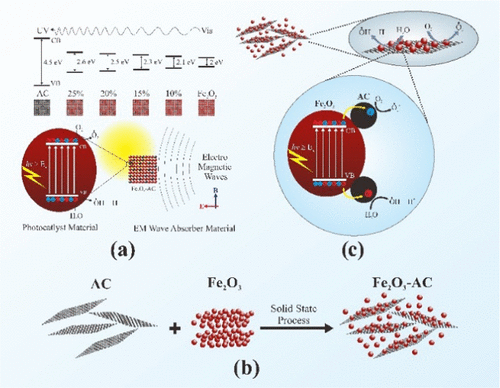
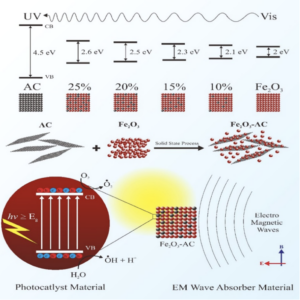
A study titled “Enhanced Visible-Light Absorption of Fe2O3 Covered by Activated Carbon for Multifunctional Purposes: Tuning the Structural, Electronic, Optical, and Magnetic Properties”, published in the journal ACS Omega by the American Chemical Society on October 18, 2021, explores exactly this innovation. The researchers developed a composite material combining iron oxide (Fe2O3) and activated carbon, designed to tackle two modern environmental challenges at once.
Let’s break it down in simple terms.
First, water pollution especially from industries like textiles is a serious global issue. Many dyes used in manufacturing contain harmful chemicals that reduce oxygen levels in water and damage aquatic ecosystems. Worse, these pollutants can affect human health through contaminated water and food.
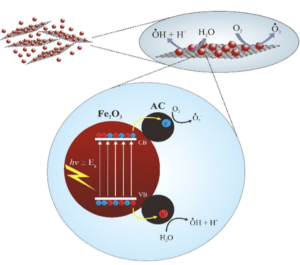
Here’s where the new material shines literally. By enhancing its ability to absorb visible light, the Fe2O3 carbon composite acts as a photocatalyst, meaning it uses light energy to break down pollutants. In the study, the material successfully degraded harmful dye substances into harmless components like water and carbon dioxide, achieving nearly 90% efficiency in just 90 minutes.
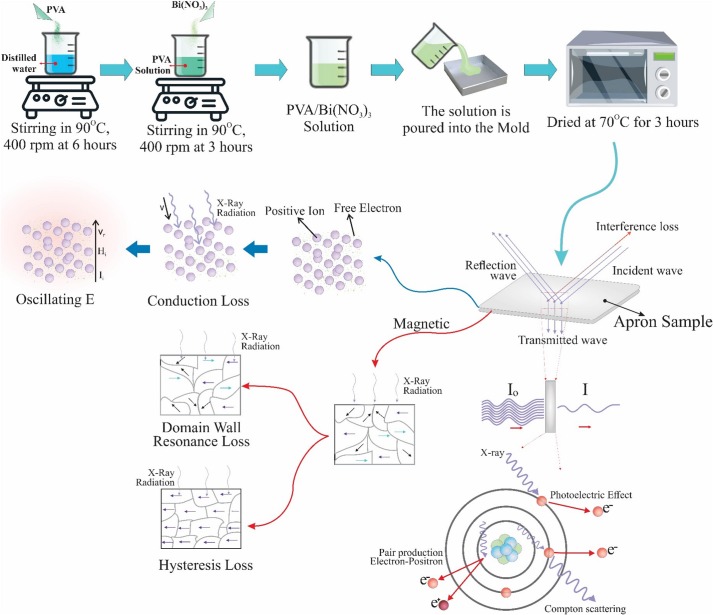
Second, the material also addresses a less visible but growing concern: electromagnetic (EM) pollution. With the rise of electronic devices, EM waves are everywhere. Excessive exposure can interfere with communication systems and may pose health risks. The same material was shown to absorb up to 99% of these waves, acting as a protective shield.
This dual functionality makes the innovation particularly exciting.
From a global perspective, this research strongly connects to Sustainable Development Goals (SDGs) especially SDG 3 (Good Health and Well-being) and SDG 6 (Clean Water and Sanitation). Cleaner water directly improves public health, while reducing harmful radiation contributes to safer living environments. Additionally, the study aligns with SDG 9 (Industry, Innovation, and Infrastructure) by promoting advanced materials for sustainable industrial processes. This aligns strongly with SDG 17: Partnerships for the Goals, which emphasizes the need for global cooperation in achieving sustainable development. The event served as a catalyst for building long-term partnerships, encouraging participants to move beyond individual research efforts toward collective innovation.
What makes this approach even more promising is its efficiency. By simply adjusting the amount of activated carbon, scientists can “tune” the material’s properties making it more effective depending on the need. This flexibility opens doors for scalable, real-world applications.
In a world facing increasing environmental pressure, solutions like this remind us that science doesn’t just explain problems it actively builds answers. The ability to clean water and reduce invisible pollution using a single material is not just innovative; it’s transformative.
Reference : https://doi.org/10.1021/acsomega.1c04526
Contact:
Prof. Dahlang Tahir
+62 853-9418-8647
dtahir@fmipa.unhas.ac.id