Makassar, Indonesia. May 6, 2026 | BiMin – What if the tea you drink every morning could one day help clean polluted water? It may sound surprising, but researchers have discovered that used tea waste combined with activated carbon from bamboo fibers can become a powerful eco-friendly material for removing dangerous lead contamination from water. This innovation not only reduces waste but also opens new opportunities for sustainable environmental protection.
Lead, or Pb(II), is one of the most harmful heavy metals found in industrial wastewater. Long-term exposure to lead can damage the brain, reduce children’s cognitive development, and even cause severe health disorders. Unfortunately, many developing regions still struggle with water contamination caused by industrial activities, cosmetics production, mining, and chemical waste. Because of this, scientists around the world are racing to develop affordable and environmentally friendly water purification technologies.
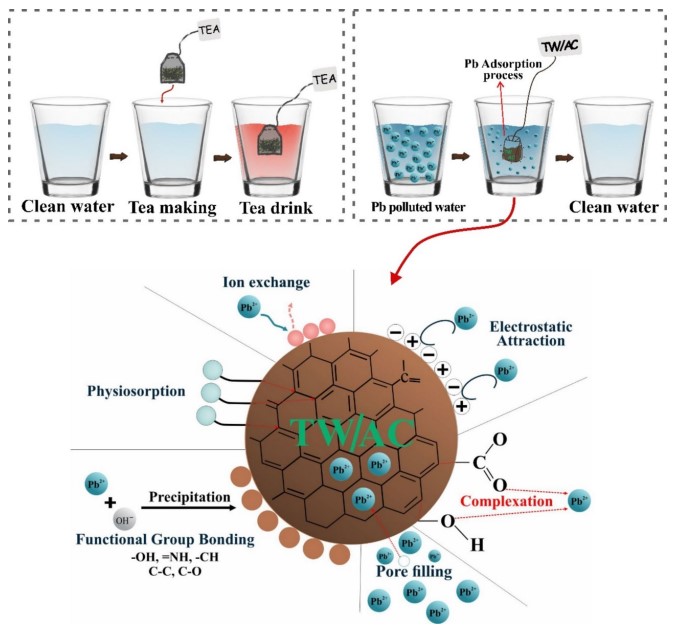
A recent published study explored a “green composite” material made from tea waste and activated carbon derived from bamboo fibers. The researchers discovered that this natural composite could adsorb lead ions very effectively from contaminated water. Interestingly, the best performance came from a composition containing 80% tea waste, achieving an adsorption capacity of 167.7 mg/g with an efficiency of nearly 89.18%. In simple terms, the material acted like a sponge that traps toxic lead particles inside its porous structure.
The science behind this innovation is fascinating. Tea waste naturally contains functional chemical groups such as hydroxyl (-OH), carbonyl (C=O), and aromatic carbon structures that can chemically bind with heavy metals. Meanwhile, bamboo-based activated carbon contributes a large surface area and porous texture, allowing more lead ions to be captured. Together, these materials create an efficient, biodegradable, and low-cost adsorbent for wastewater treatment.
What makes this research even more meaningful is its strong connection to the United Nations Sustainable Development Goals (SDGs). Most importantly, this innovation directly supports SDG 6: Clean Water and Sanitation because the technology focuses on removing toxic lead contamination and improving water quality through sustainable treatment methods. Cleaner water means safer communities, healthier ecosystems, and reduced environmental pollution.
The study also contributes to SDG 3: Good Health and Well-Being, since reducing lead exposure can prevent neurological disorders and other severe health problems. Furthermore, it aligns with SDG 14: Life Below Water, as minimizing heavy metal pollution helps protect aquatic organisms and marine ecosystems from toxic contamination. The reuse of tea waste and bamboo fiber additionally supports SDG 15: Life on Land by encouraging sustainable waste management and reducing environmental burden from agricultural residues. Finally, the collaborative nature of the research reflects SDG 17: Partnerships for the Goals, highlighting the importance of cooperation among universities, researchers, and scientific institutions in addressing global environmental challenges.
Beyond its scientific value, this research sends a powerful message: waste materials should not always be seen as useless. Everyday organic waste, such as used tea leaves, can become part of innovative environmental solutions when combined with scientific creativity. Instead of ending up in landfills, tea waste may help communities access safer and cleaner water in the future.
Reference : https://doi.org/10.1007/s10450-024-00558-4
Contact:
Prof. Dahlang Tahir
+62 853-9418-8647
dtahir@fmipa.unhas.ac.id