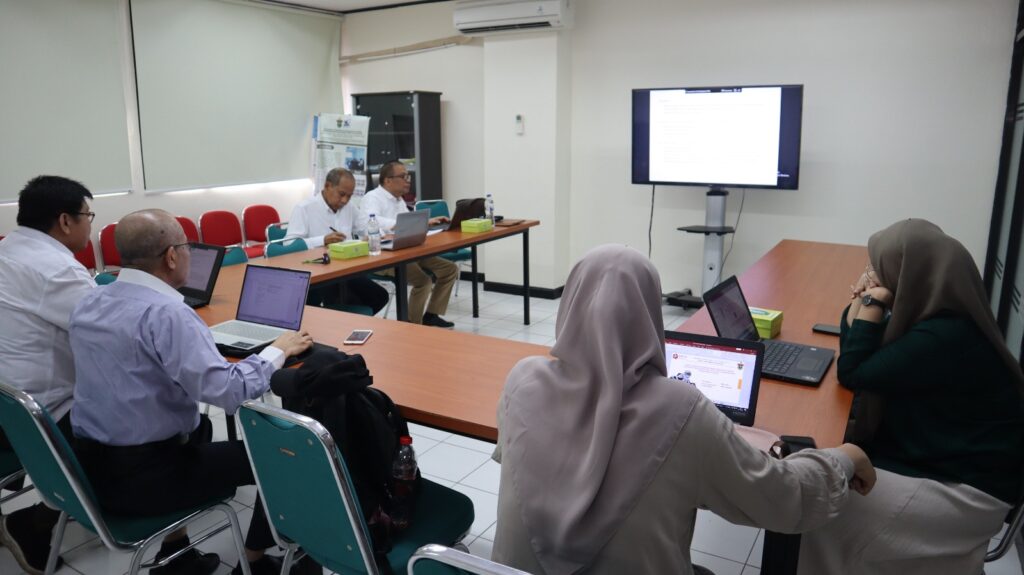
On January 7, 2025, the Institute for Research and Community Service (LPPM) at Universitas Hasanuddin (UNHAS), Makassar, Indonesia, organized a Monitoring and Evaluation (M&E) activity focusing on research outcomes funded by KEMDIKBUDRISTEK through the 2024 BIMA program. The activity involved approximately 60–80 participants, including principal investigators, faculty members, institutional representatives, and external stakeholders who contributed to the implementation of the program.
The primary objective of this activity was to review and assess the outcomes of funded research projects, provide constructive and evidence-based feedback, and strengthen collaboration among researchers and stakeholders to enhance the quality, relevance, and sustainability of research outputs. In this context, the role undertaken was as a reviewer, responsible for critically evaluating research performance and ensuring alignment with scientific standards and national research priorities.
During the activity, the review process covered 12 selected researchers, each of whom presented their research progress and findings. These presentations were followed by interactive review sessions, where methodological approaches, data interpretation, and potential applications were discussed in depth. This process enabled the identification of key strengths as well as areas requiring improvement, thereby supporting continuous enhancement of research quality.
This Monitoring and Evaluation activity contributes directly to several Sustainable Development Goals (SDGs), particularly SDG 1: No Poverty, SDG 4: Quality Education, and SDG 17: Partnerships for the Goals. Through the reviewer’s role in guiding research toward impactful and applicable outcomes, the activity supports SDG 1 by encouraging innovations that can contribute to poverty reduction and community empowerment. In relation to SDG 4, the rigorous review process strengthens the quality of higher education and research by promoting academic excellence, accountability, and continuous improvement. Furthermore, the collaborative nature of the event reflects SDG 17, as it fosters partnerships among universities, researchers, and stakeholders in achieving shared development goals.
Throughout the session, participants engaged in dynamic discussions and knowledge exchange. As a reviewer, constructive feedback was provided on research design, analytical approaches, and the potential for real-world application. This interactive environment not only ensured accountability but also encouraged reflective learning and innovation among researchers.
Overall, this activity highlights the critical role of collaborative review in ensuring that publicly funded research delivers meaningful and sustainable impacts. By integrating scientific assessment with stakeholder engagement, the Monitoring and Evaluation process at LPPM UNHAS contributes to strengthening the research ecosystem and advancing sustainable development at both national and global levels.