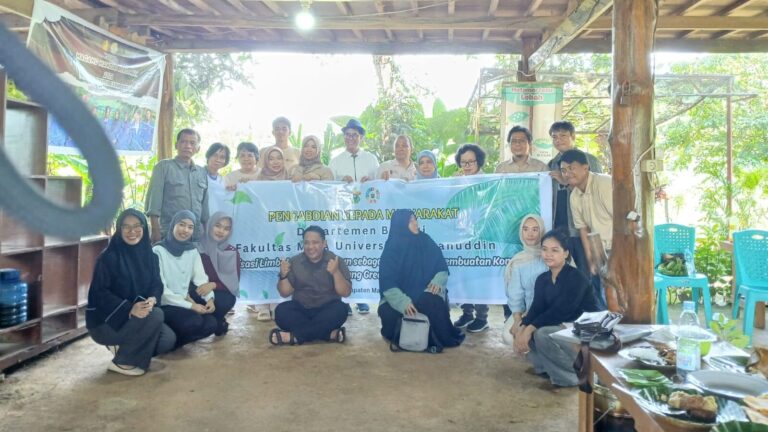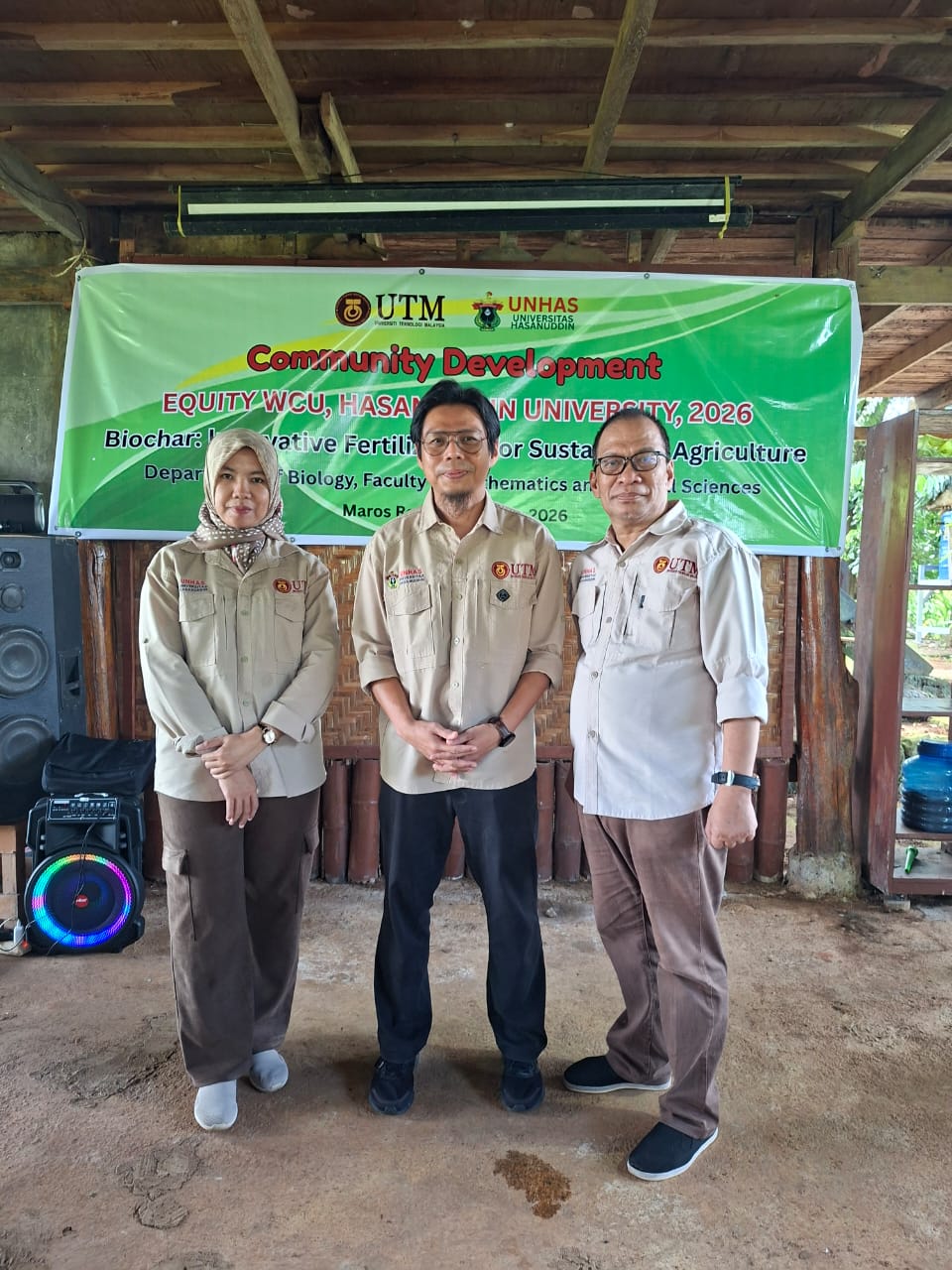

Sustainable agriculture requires more than increasing agricultural productivity; it also calls for innovative approaches that make effective use of local resources while protecting the environment. In this context, biochar technology offers a promising pathway for transforming locally available biomass into a valuable resource for sustainable soil management. Building on this approach, Universitas Hasanuddin (Unhas), in collaboration with Universiti Teknologi Malaysia (UTM), initiated an international community development program to introduce biochar technology and strengthen community capacity in utilizing local biomass for sustainable agriculture.
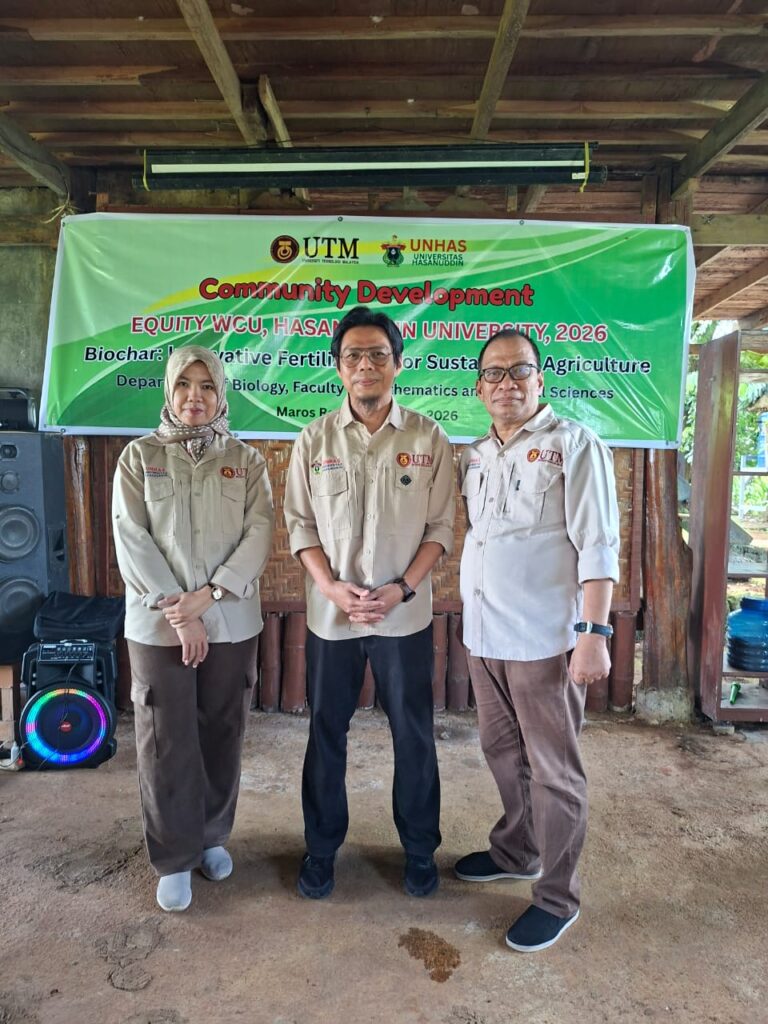
The activity, themed “Biochar: Technological Innovation for Sustainable Agriculture,” was conducted on 16 May 2026 in Pucak Village, Tompobulu District, Maros Regency, South Sulawesi, Indonesia. It involved 30 participants, consisting of local farming community members and students from undergraduate, master’s, and doctoral programs in Biology at the Faculty of Mathematics and Natural Sciences, Universitas Hasanuddin. The activity was part of the Community Development Grant Program (ComDev) – EQUITY World Class University (WCU) Hasanuddin University 2026, implemented by Unhas in collaboration with Universiti Teknologi Malaysia (UTM) as an international academic partner. The program was led by Prof. Fahruddin, M.Si., as the Team Leader, with Dr. Mustika Tuwo, S.Si., S.Pd., M.Sc., as a team member, and supported by Assoc. Prof. Dr. Zainul Akmar Zakaria as the International Collaborator from UTM. The activity also actively involved students from different academic levels in the Biology program. The undergraduate (S1) students involved were Rifki (H041221035), Diah Nurul Irawan (H041221092), and Siti Faqihah Nahdah (H041221082). The master’s (S2) student involved was Nurhidayah (H052221011), while the doctoral (S3) students involved were Rusmadi Rukmana (H043252001), Ulfa Triyani A. Latif (H043252002), and Alhidayatullah (H043252003). Their involvement supported the implementation of the activity through community engagement, knowledge exchange, field assistance, and documentation, while also providing an opportunity for students to gain practical experience in applying biochar technology for sustainable agriculture and community development.
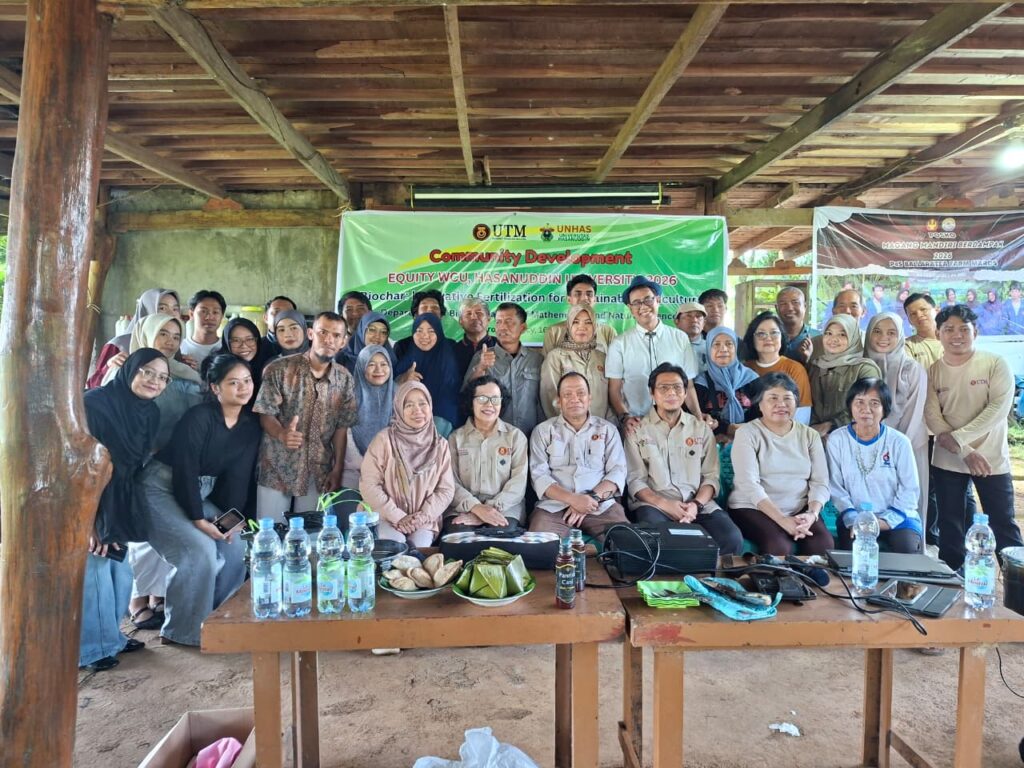
The main objectives of the activity were to strengthen community knowledge and practical skills in converting locally available biomass, particularly leaf litter, into biochar through pyrolysis; to introduce biochar as an environmentally friendly approach to sustainable soil management; and to encourage the community to recognize locally available biomass as a resource that can generate value for sustainable agricultural development.
The activity combined scientific presentations, discussions, demonstrations, and hands-on practice. Participants were introduced to the basic principles of biochar production, including the conversion of biomass through pyrolysis under limited oxygen conditions. Through direct practice, participants gained experience in processing biomass into biochar and learned about its potential application in agricultural soils. This approach was designed to bridge scientific knowledge with practical community needs and encourage the use of environmentally responsible technologies at the local level.
Biochar is a carbon-rich material with considerable potential for sustainable soil management. Its application may contribute to improvements in soil pH, nutrient retention, organic carbon content, and water-holding capacity. The utilization of leaf litter and other locally available biomass as feedstock also provides an opportunity to reduce organic waste while producing a potentially valuable soil amendment. Thus, biochar technology offers an integrated approach linking biomass utilization, soil improvement, environmental sustainability, and agricultural productivity.
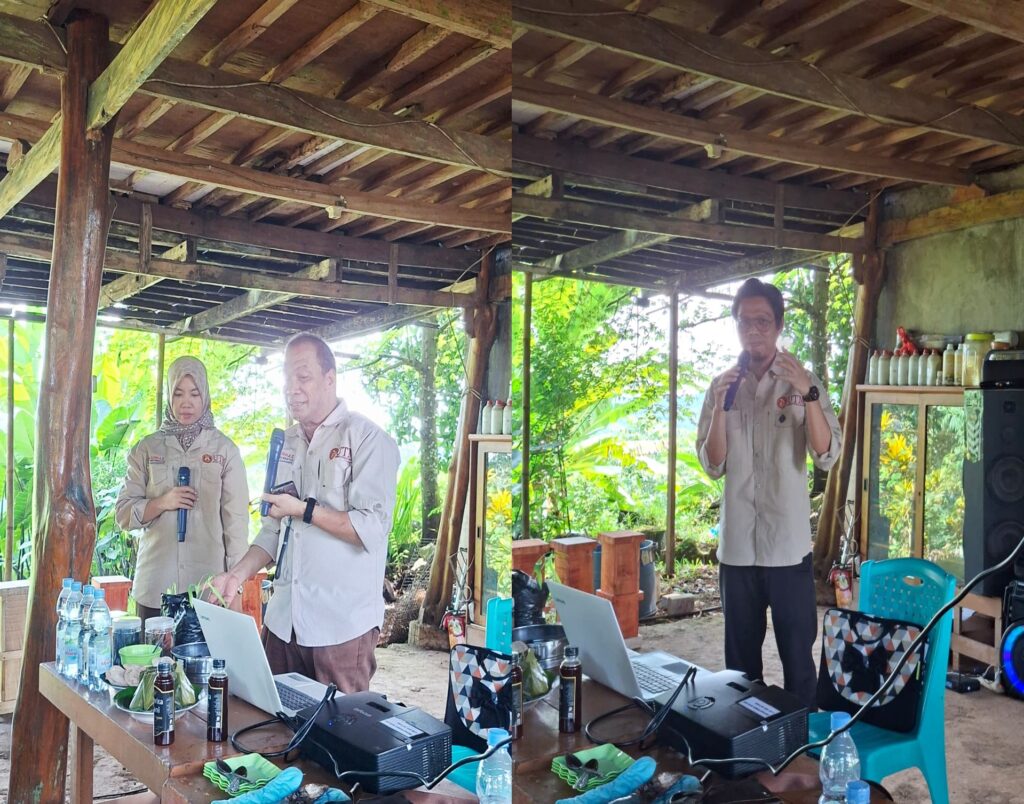
The participation of community members and students created an important platform for knowledge exchange. Local communities gained practical knowledge that can potentially be adapted to their agricultural conditions, while students had the opportunity to connect academic concepts with real-world environmental and agricultural challenges. The involvement of Assoc. Prof. ChM. Dr. Zainul Akmar Zakaria, AMIC, as the International Collaborator from UTM further strengthened the international dimension of the program through the exchange of scientific knowledge, experience, and perspectives on biochar technology and sustainable agriculture.
This initiative contributes to Sustainable Development Goal (SDG) 1 – No Poverty by promoting knowledge and technologies that may support more productive and sustainable agricultural practices and local resource utilization. It also supports SDG 4 – Quality Education through community-based learning, practical training, and knowledge transfer. The utilization of locally available leaf litter as a feedstock for biochar also contributes to SDG 15 – Life on Land by promoting sustainable land management, reducing organic biomass waste, and supporting the improvement of soil quality and ecosystem health. Furthermore, the partnership between Unhas and UTM directly reflects SDG 17 – Partnerships for the Goals, demonstrating the importance of international academic collaboration in strengthening community empowerment and sustainable development.
Through this international community development program, Prof. Fahruddin, M.Si., Dr. Mustika Tuwo, S.Si., S.Pd., M.Sc., and Assoc. Prof. Dr. Zainul Akmar Zakaria, together with the participating academic and community partners, reaffirm their commitment to connecting research, education, innovation, international collaboration, and community empowerment. The activity is expected to provide a foundation for further research and development on biochar characterization, soil improvement, plant responses, and locally appropriate technologies for sustainable agriculture.