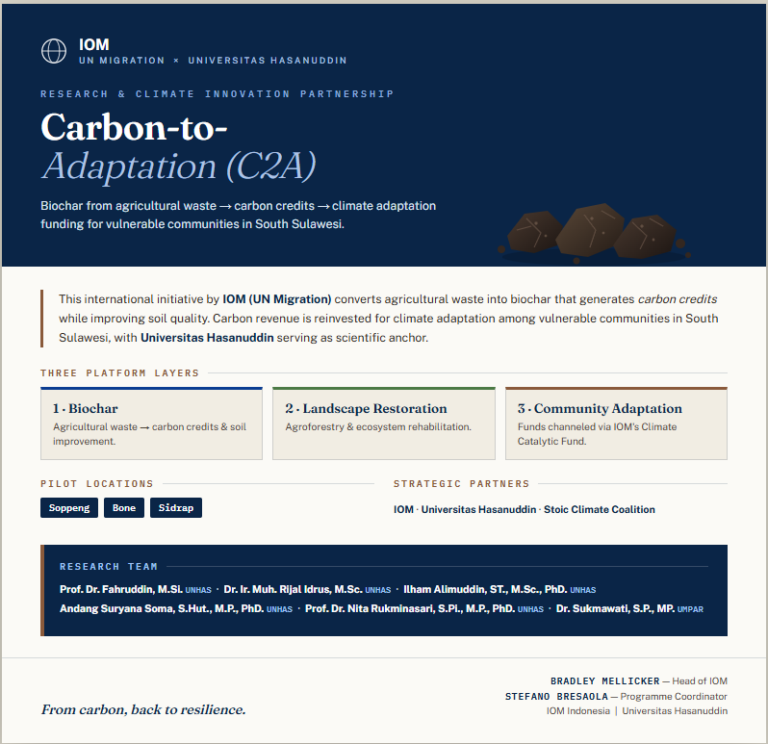
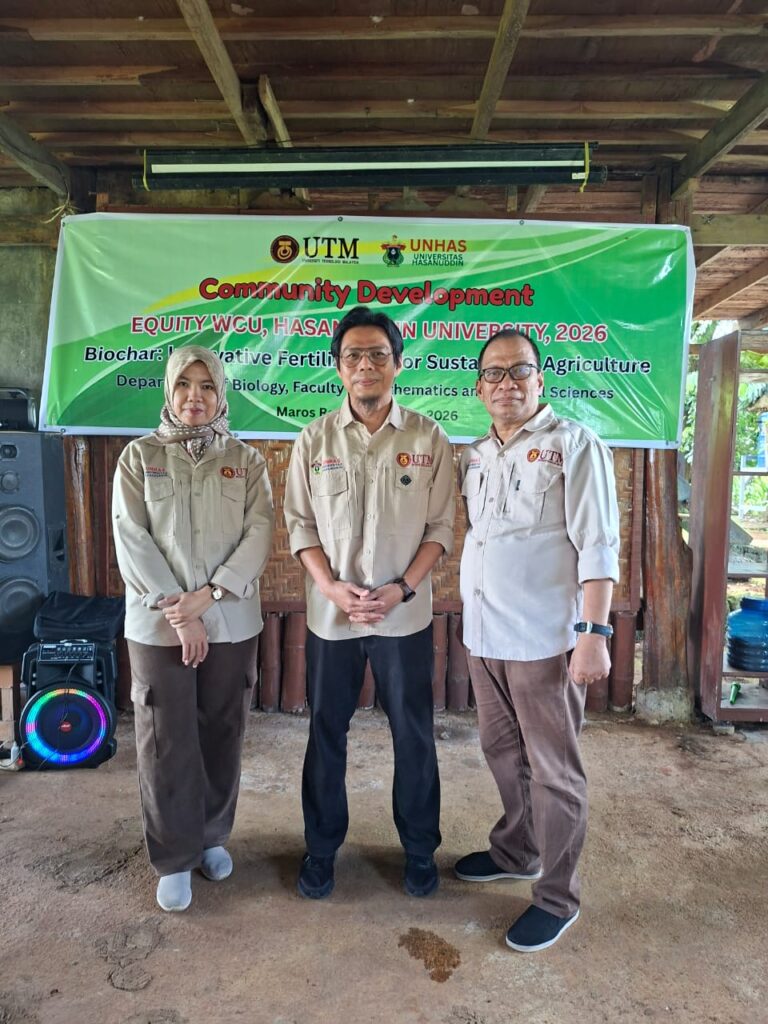
Universitas Hasanuddin (Unhas) strengthened its commitment to sustainable environmental management through an international collaborative activity entitled “International Collaboration for Optimizing Leaf Litter Waste as Compost Raw Material to Support a Green Environment.” The activity was conducted on 16 May 2026 in Pucak Village, Tompobulu District, Maros Regency, South Sulawesi, as part of the Community Development Grant Program (ComDev) – EQUITY World Class University (WCU) Hasanuddin University 2026.
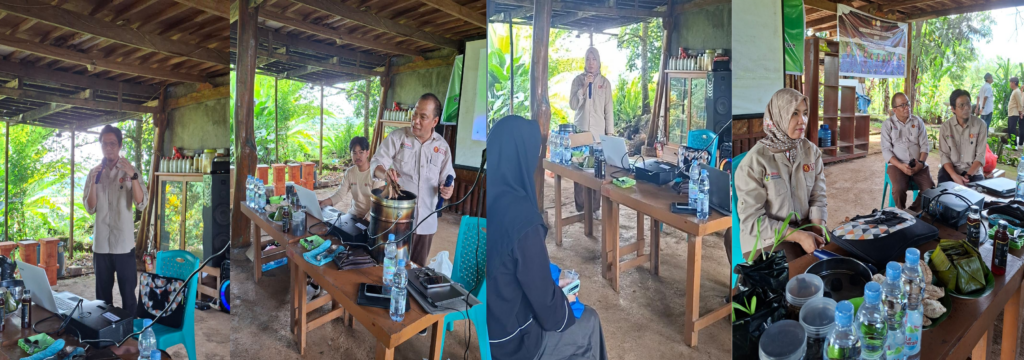
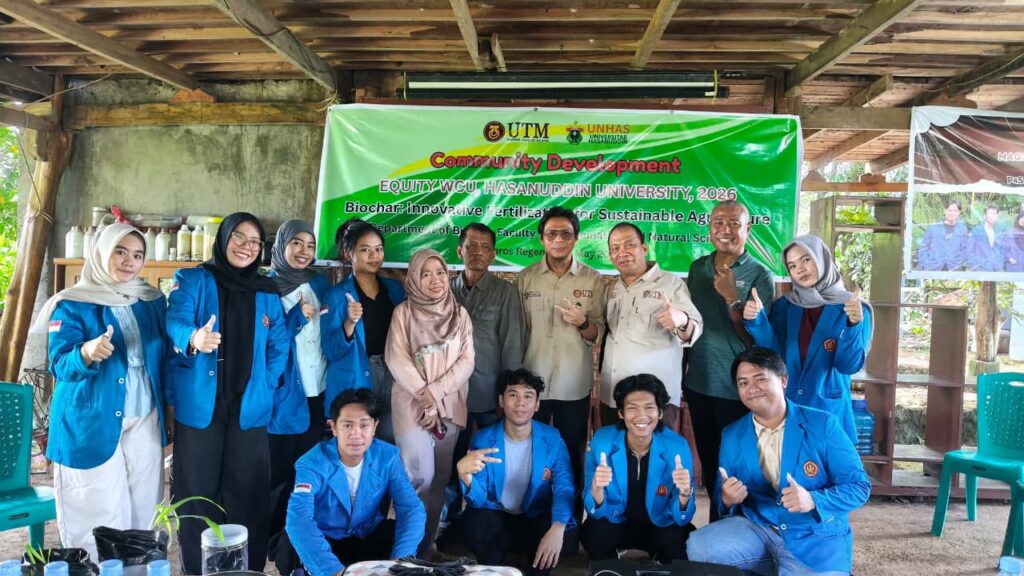
The activity aimed to enhance community knowledge and practical skills in utilizing locally available leaf litter as an organic resource for compost production. Instead of being regarded as waste or disposed of through environmentally harmful practices, leaf litter can be transformed into compost that supports soil fertility, sustainable agriculture, and environmentally responsible waste management. The initiative therefore promoted a circular approach in which local organic waste is converted into a beneficial resource for agricultural and environmental purposes. A total of 30 participants took part in the activity, consisting of local farmer groups, internship students from Universitas Tadulako, Palu, Central Sulawesi, as well as undergraduate, master’s, and doctoral students from the Department of Biology, Faculty of Mathematics and Natural Sciences, Hasanuddin University. The internship students from Universitas Tadulako included Siti Nurfakhriyani Bakhtiar, Avrilia Puteri, Nadjwa Aprilia, Nurafifah H., Putri Marsella A., Iksan, Rivaldy Saputra, Moh. Rizky Atjo, and Shohibul Wafa. The activity also involved undergraduate students from the Department of Biology, Faculty of Mathematics and Natural Sciences, Hasanuddin University, namely Rifki, Diah Nurul Irawan, and Siti Faqihah Nahdah. At the postgraduate level, the participating master’s student was Nurhidayah, while the doctoral students were Rusmadi Rukmana, Ulfa Triyani A. Latif, and Alhidayatullah. Their participation contributed to the exchange of knowledge and practical experience throughout the activity, while strengthening the connection between academic learning, community engagement, and environmentally sustainable practices. The participation of diverse groups created an interactive learning environment that connected local knowledge, academic perspectives, and practical experience in sustainable resource management. Through this collaborative approach, participants gained a better understanding of how locally available leaf litter can be managed as a valuable organic resource rather than treated as waste, supporting both sustainable agriculture and environmental conservation.
The program was led by Prof. Fahruddin, M.Si., as Team Leader, with Dr. Mustika Tuwo, S.Si., S.Pd., M.Sc., as a team member, and supported by Assoc. Prof. Dr. Zainul Akmar Zakaria from Universiti Teknologi Malaysia (UTM) as the International Collaborator. The program was implemented by Unhas in collaboration with UTM as an international academic partner. The Department of Biology, Faculty of Mathematics and Natural Sciences, Hasanuddin University, also played an important role by providing scientific expertise, facilitating student engagement, supporting community-based learning, and strengthening knowledge transfer related to biological resources and environmental sustainability.
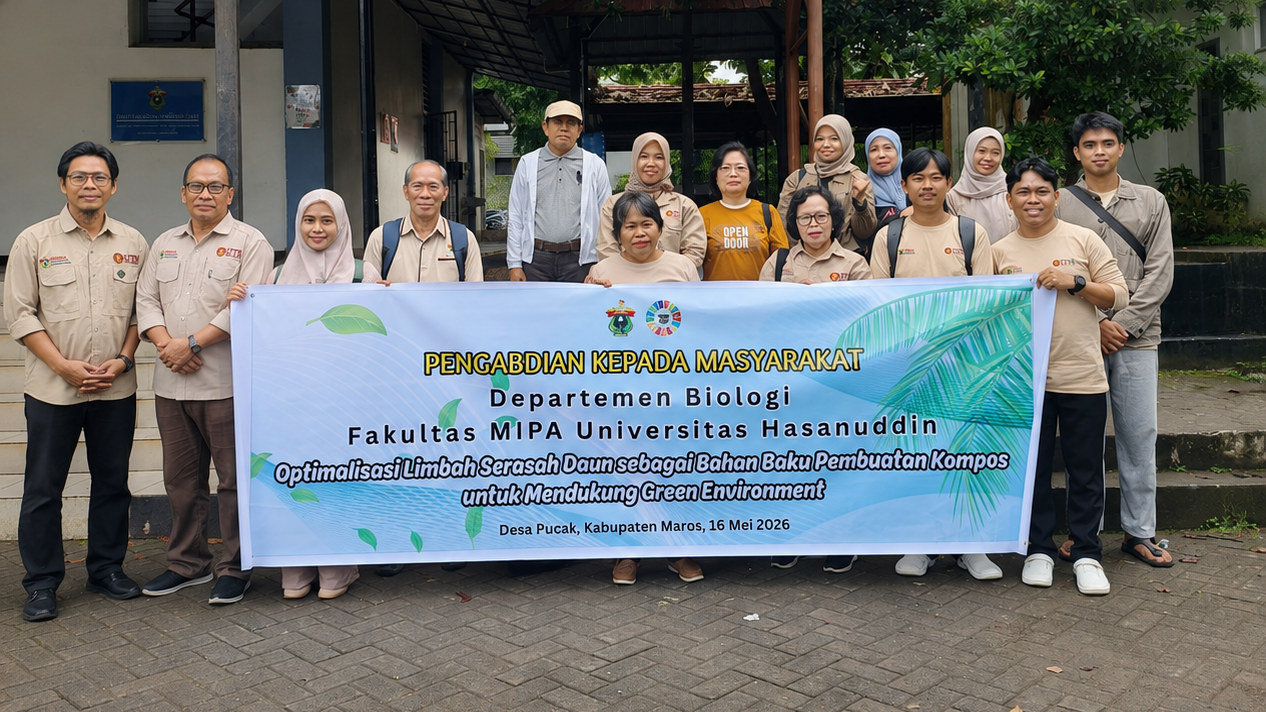
The initiative contributes directly to Sustainable Development Goal (SDG) 1 – No Poverty by promoting the utilization of locally available resources that can support sustainable agricultural practices and potentially create community-based economic opportunities. It supports SDG 4 – Quality Education through practical learning, knowledge exchange, and collaboration among farmers, students, academics, and international partners. The activity also contributes to SDG 15 – Life on Land by encouraging responsible management of organic biomass, improving soil health, and promoting environmentally sustainable practices that support terrestrial ecosystems. Furthermore, the international partnership between Unhas and UTM directly advances SDG 17 – Partnerships for the Goals.
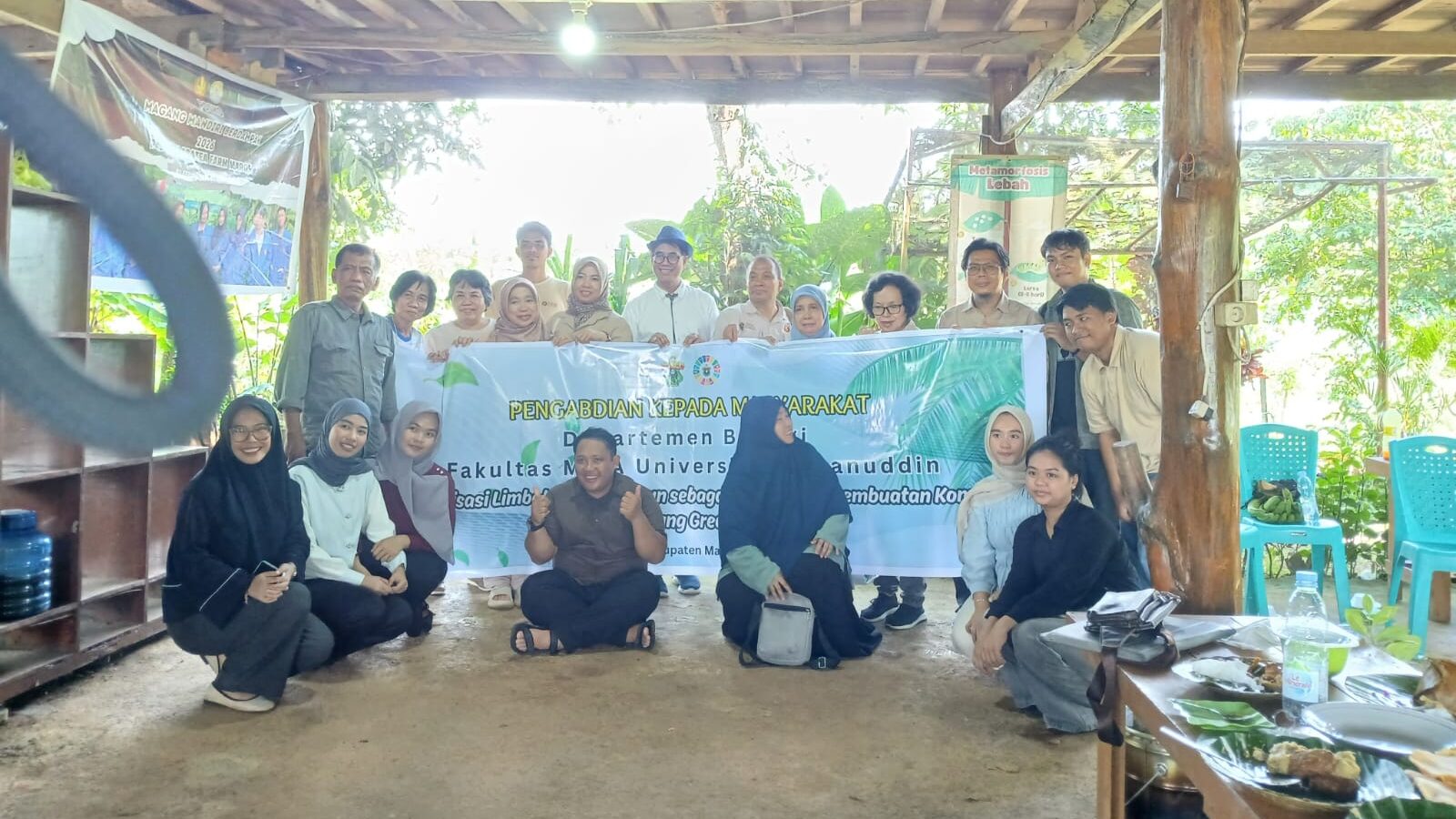
Through this initiative, leaf litter is repositioned from a commonly overlooked waste material into a valuable resource for sustainable agriculture, environmental education, and community empowerment. The international collaboration also demonstrates how universities can work together across borders while engaging local communities to develop practical solutions for environmental challenges and contribute to a greener and more sustainable future.