
In Indonesia, where public trust in institutions continues to evolve, the need for transparent and accountable governance has become more urgent than ever. Organizations both public and private are increasingly expected to demonstrate not only financial performance but also ethical responsibility. One approach that is gaining attention in this context is responsibility accounting, a system that aligns organizational performance with accountability at every managerial level.
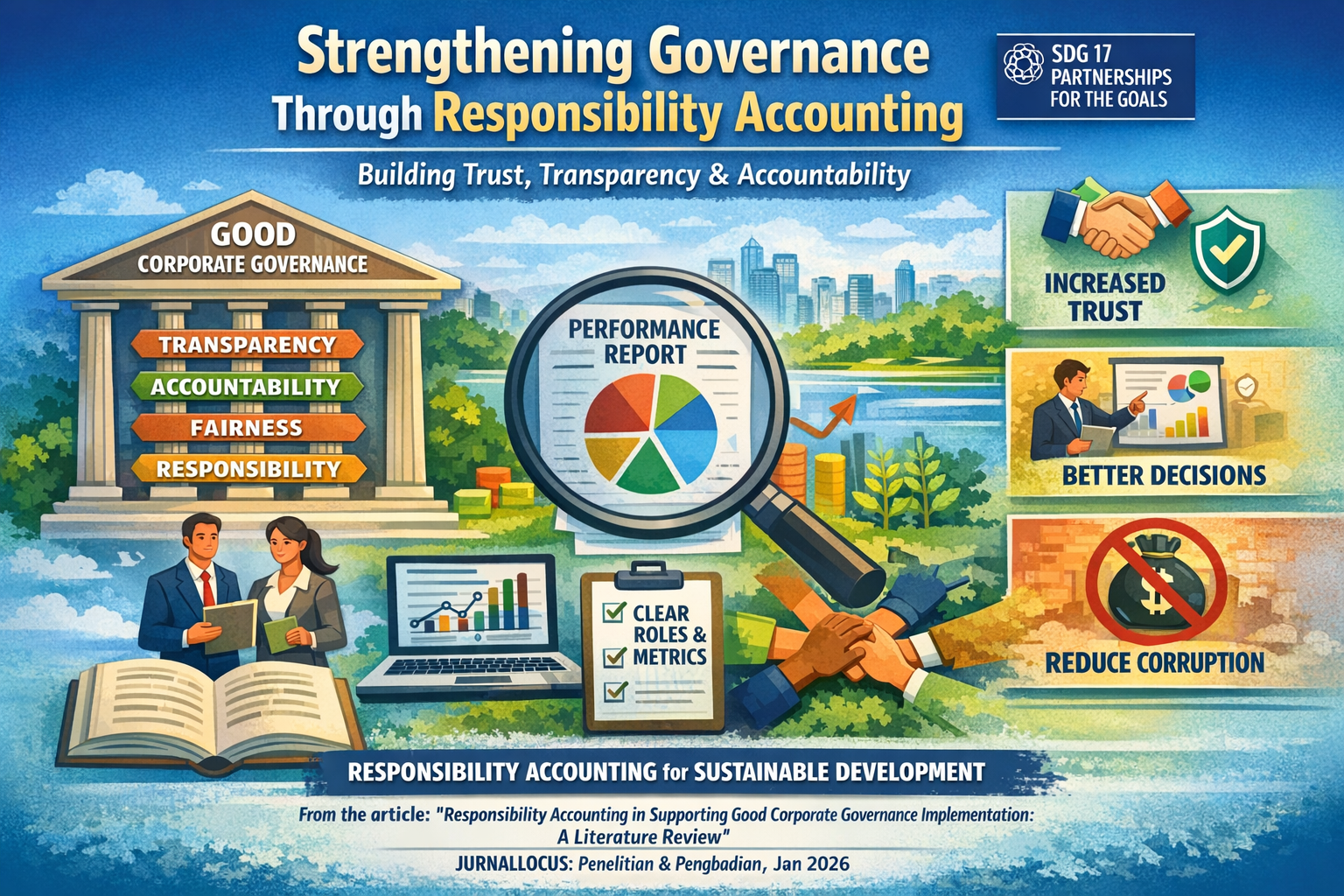
Responsibility accounting is not just about tracking numbers; it is about ensuring that every decision-maker is answerable for the outcomes under their control. By clearly defining roles, responsibilities, and performance indicators, organizations can create a culture of transparency and integrity. This is particularly important in supporting Good Corporate Governance (GCG), which emphasizes fairness, accountability, transparency, and responsibility as its core principles.
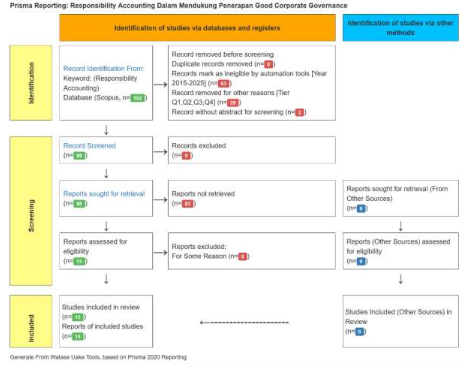
The relevance of this approach is highlighted in an academic publication titled “Responsibility Accounting in Supporting the Implementation of Good Corporate Governance: A Literature Review,” published in JURNALLOCUS: Research & Service by JURNALLOCUS: Research & Service, Volume 5 Number 01, January 2026. The article explores how responsibility accounting serves as a fundamental tool in strengthening governance systems by ensuring that every unit within an organization operates efficiently and ethically.
From a broader perspective, the application of responsibility accounting directly contributes to SDG 17: Partnerships for the Goals. Strong governance systems enable better collaboration between institutions, stakeholders, and communities. When organizations are transparent and accountable, they build trust an essential ingredient for effective partnerships. Without trust, even the most well-designed development programs can fail.
Moreover, responsibility accounting supports better decision-making. Managers can identify which departments are performing well and which need improvement. This not only enhances operational efficiency but also reduces the risk of corruption and mismanagement. In developing countries like Indonesia, where governance challenges still exist, such systems can play a transformative role.
Another important aspect is its impact on organizational culture. When employees understand that their performance is being evaluated fairly and transparently, they are more likely to act responsibly. This creates a positive feedback loop: accountability leads to better performance, which in turn strengthens governance and public trust.
However, implementing responsibility accounting is not without challenges. It requires a strong commitment from top management, adequate training, and a reliable information system. Organizations must also ensure that performance metrics are fair and aligned with organizational goals. Without these elements, the system may become ineffective or even counterproductive.
In conclusion, responsibility accounting is more than a technical accounting tool it is a strategic approach to building better organizations. By supporting Good Corporate Governance, it helps create transparent, accountable, and trustworthy institutions. In doing so, it contributes to the achievement of SDG 17 by fostering stronger partnerships and more effective collaboration. As organizations continue to navigate complex challenges, adopting such systems is no longer optional it is essential for sustainable development.
Reference
mediaty
mediaty
mediaty@unhas.ac.id