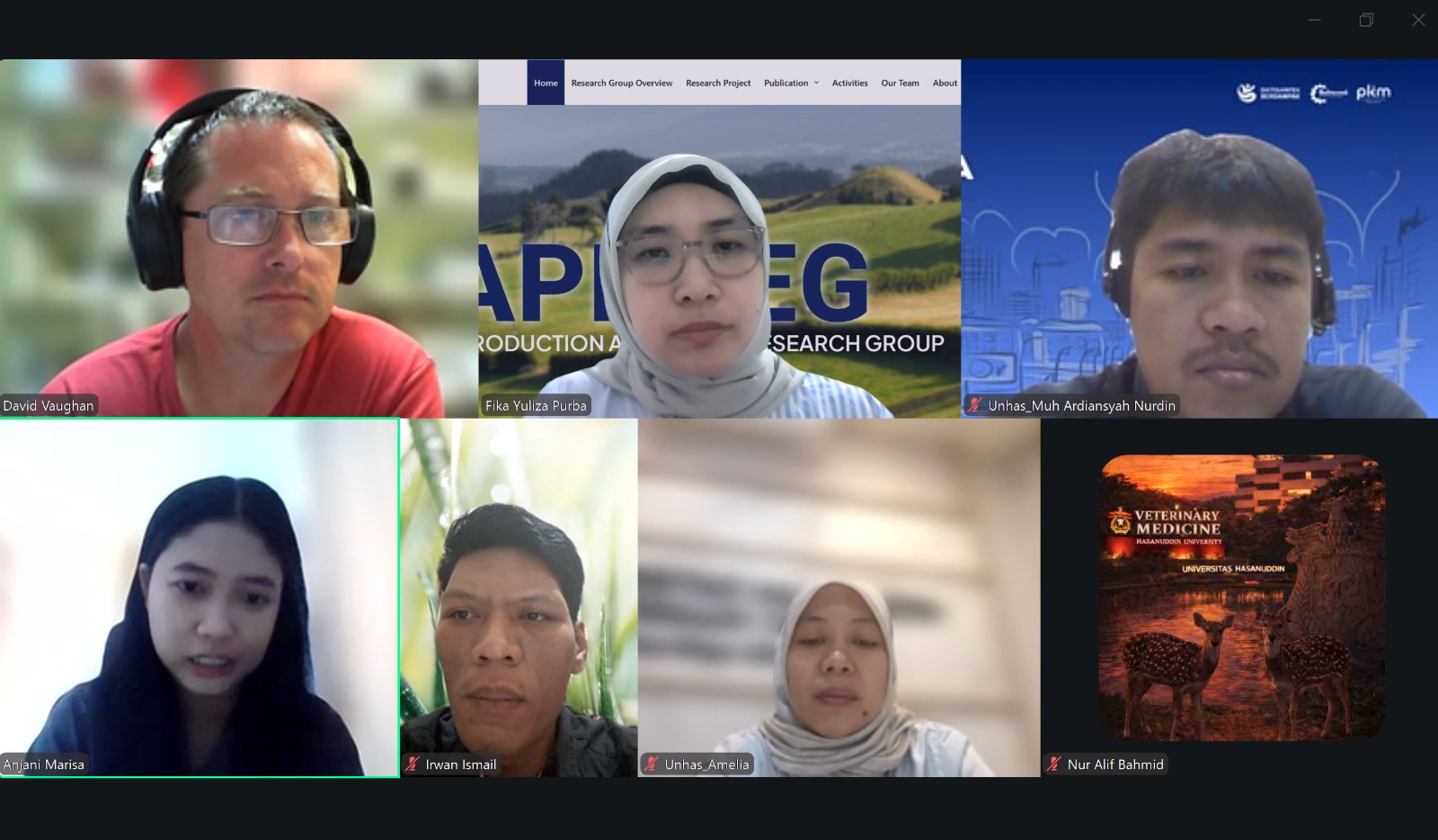

Makassar, Indonesia — September 18th 2026 — Researchers from Animal Production and Health Research Group Hasanuddin University [APHREG-UNHAS] and CQUniversity Australia have held talks on a new research collaboration focused on the parasites of sharks, an under-studied field with direct implications for understanding and conserving Indonesia’s elasmobranch populations.
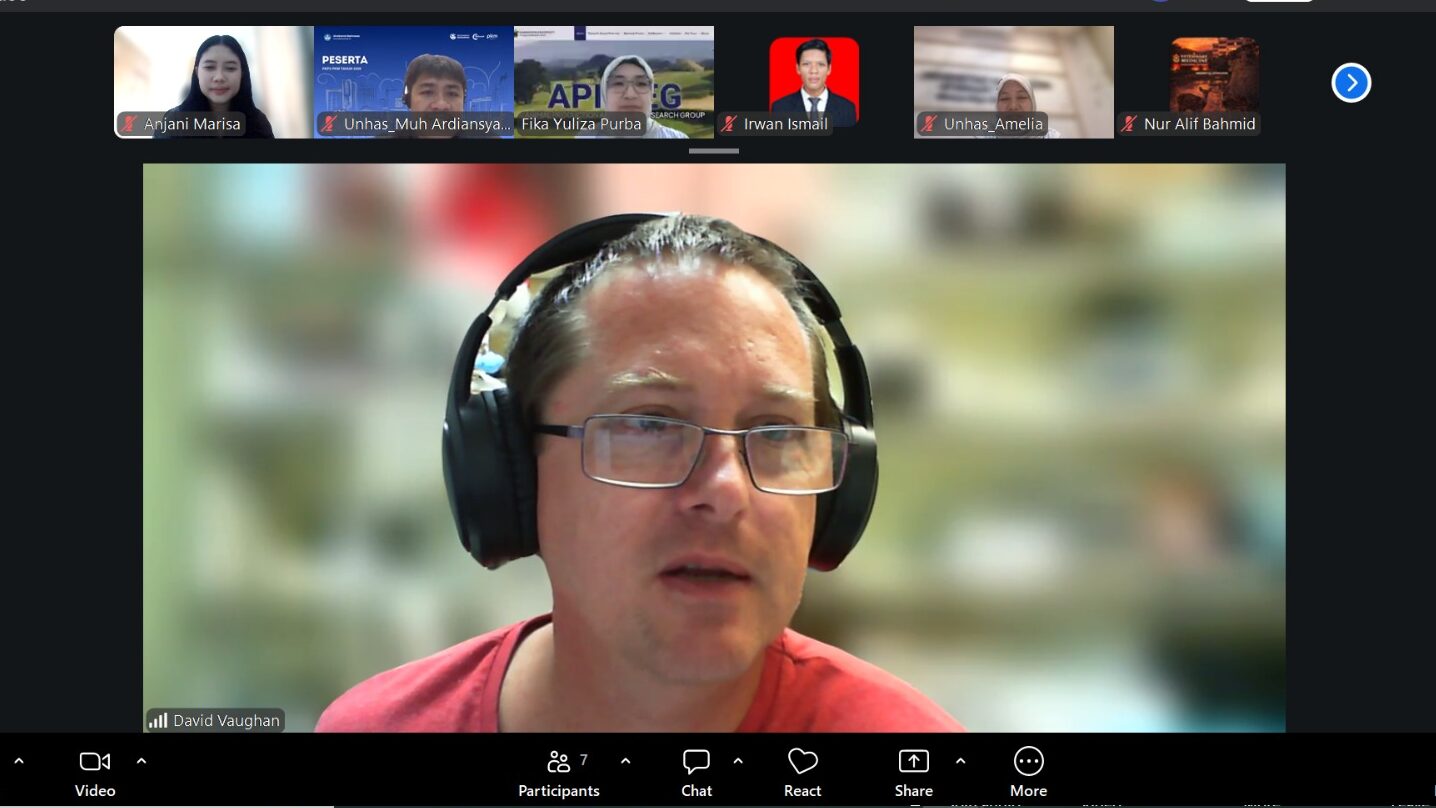
The meeting brought together Dr David B. Vaughan of CQUniversity’s Coastal Marine Ecosystems Research Centre (CMERC) with Dr Fika Yuliza Purba, and team of APHREG-UNHAS.
Discussions centred on monogeneans — a group of parasitic flatworms that live on the skin and gills of fish. Because many monogenean species are highly specific to a single host, they can reveal information about their hosts that is difficult to obtain by other means, including population structure and connectivity between regions. Mapping which species occur in Indonesian waters, and which are shared with Australia, would strengthen the scientific basis for regional shark conservation.
“There is a huge potential for research on monogeneans, and there are undoubtedly many undiscovered species of monogeneans in Indonesia,” Dr Vaughan said. “I am very pleased to offer my expertise in monogenean taxonomy and systematics to broaden our understanding of the shared species between Australia and Indonesia and how this could feed into support for shark conservation.”
Dr Vaughan is a specialist in the taxonomy and systematics of fish parasites and serves as subject editor for Platyhelminthes at the international zoological journal Zootaxa. The proposed collaboration would also include the co-supervision of Indonesian MSc and PhD candidates working on monogenean research, with Dr Vaughan available to supervise students and assist in developing project ideas.
“This collaboration will give our students access to world-class expertise in monogenean taxonomy and helps us build a clearer picture of parasite diversity in Indonesian waters that has never been systematically studied,” Dr Fika said.
Indonesia is among the world’s largest shark fishing nations and sits within one of the most biodiverse marine regions on Earth, yet the parasite fauna of its elasmobranchs remains largely undocumented. Both parties expressed a shared interest in closing that gap.
This collaboration contributes to SDG 14: Life Below Water by advancing research on shark parasites, marine biodiversity, and elasmobranch conservation in Indonesian and Australian waters.
It also supports SDG 4: Quality Education through research-based learning, international knowledge exchange, and opportunities for co-supervision of Indonesian MSc and PhD students.
Furthermore, the partnership between APHREG-UNHAS and CQUniversity Australia contributes to SDG 17: Partnerships for the Goals by strengthening international research collaboration and building long-term scientific networks for marine conservation.
Media contact: Dr Fika Yuliza Purba [fikapurba@med.unhas.ac.id]