Makassar, Indonesia June 30 2025/APHREG. For cattle farmers, getting a cow pregnant is not simply a reproductive issue—it can directly affect the productivity and profitability of a farm. Some cows repeatedly fail to become pregnant even after several attempts at artificial insemination. These animals are known as repeat breeder cows, and understanding why they fail to conceive can be a major challenge.
A recent study offers an interesting clue: sometimes, the answer may be hidden in the cow’s blood.
The study, titled “Hematological and serum biochemical profiles at the time of artificial insemination based on pregnancy outcomes in repeat breeder beef cows,” was published in the Open Veterinary Journal, a veterinary scientific journal, on 30 June 2025. The article was published in Eldaghayes Publisher Volume 15, Issue 6, pages 2602–2609. The research was conducted by Fika Yuliza Purba and colleagues from Universitas Hasanuddin and collaborating institutions.
The researchers studied 14 repeat breeder beef cows. The cows underwent estrous synchronization before artificial insemination. Pregnancy was checked 60 days after insemination. Interestingly, 7 of the 14 cows, or 50%, became pregnant.
But the researchers found something even more interesting.
The timing of artificial insemination significantly influenced pregnancy outcomes. This makes sense because successful fertilization depends on synchronizing insemination with the cow’s reproductive cycle. In other words, even when the reproductive system appears ready, when insemination is performed can make a difference.
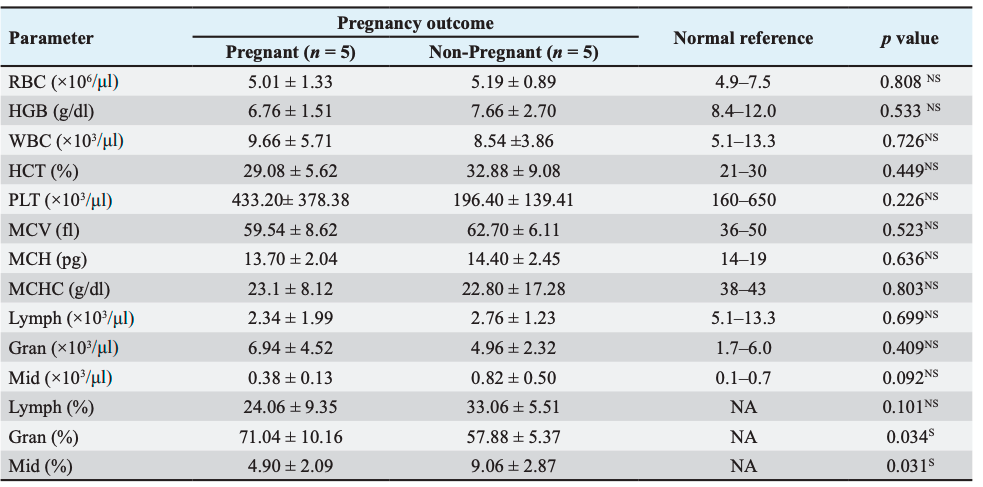
Blood tests also revealed differences between cows that became pregnant and those that did not. The percentages of granulocytes and midcells, components measured in a hematological examination, differed significantly between the two groups. More notably, nonpregnant cows had significantly higher levels of blood urea nitrogen (BUN) and the BUN-to-creatinine ratio.
Why does this matter? Blood chemistry provides a window into an animal’s physiological and metabolic condition. Higher BUN may be associated with nutritional or metabolic problems, suggesting that the cow’s internal condition could influence reproductive success.
However, the findings should not be interpreted as meaning that BUN alone determines whether a cow will become pregnant. Fertility is complex and can be affected by nutrition, reproductive management, health status, environmental conditions, and the timing of artificial insemination.
The study therefore highlights an important message: successful reproduction begins with understanding the animal as a whole. Regular health monitoring, appropriate nutrition, careful reproductive management, and accurate timing of artificial insemination may help improve fertility in repeat breeder cows.
This research directly supports Sustainable Development Goal (SDG) 3: Good Health and Well-being. Although SDG 3 primarily focuses on human health, healthier livestock contribute to healthier agricultural systems, better animal welfare, and more sustainable livelihoods for farming communities.
For farmers, the lesson is simple: fertility problems should not always be judged only by what we can see. Sometimes, the clues are already circulating in the blood.
Reference
DOI: 10.5455/OVJ.2025.v15.i6.31
Contact:
Drh. FIka Yuliza Purba
+62 812-6388-348
fikapurba@med.unhas.ac.id