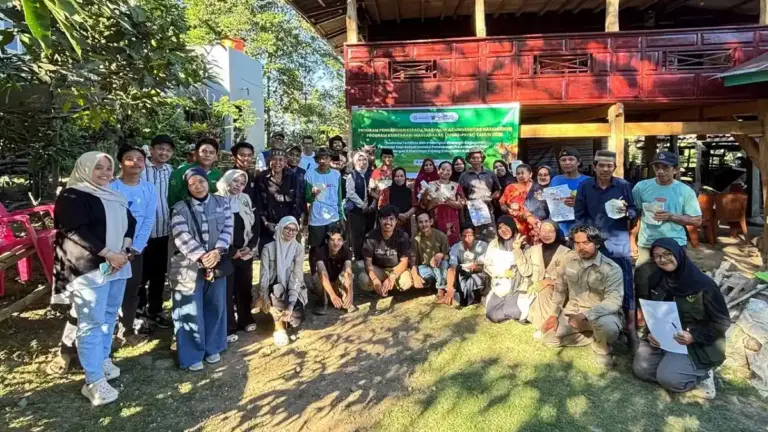

Enrekang, May 17th 2026 – A community service team from the Veterinary Medicine Study Program, Faculty of Medicine, Hasanuddin University (FK UNHAS), conducted a series of empowerment and mentoring activities for dairy farmers in Pinang Village, Cendana District, Enrekang Regency, from May to August 2026.
The activities were part of the Hasanuddin University Community Service Program funded through the 2026 Kemdiktisaintek Community Service Grant under the Community Partnership Empowerment (PKM) scheme. The program, entitled “Implementation of Good Dairy Farming Practices Based on Integrated Health Management and Reproductive Biotechnology in the Enrekang Dairy Farming Center” (Contract No. 151/C3/DT.05.00/PM/2026), targeted the Mabarakka Farmers’ Group, which consists of 25 dairy farmers.
The empowerment program was designed to address various challenges faced by local farmers, particularly those related to feed quality and availability, animal health, reproductive management, barn sanitation, as well as milk business management and marketing. Cendana District is one of the major dairy farming areas in Enrekang Regency, while Pinang Village has an integrated agricultural system combining food crop cultivation and livestock production.
To strengthen farmers’ capacity, the community service team conducted socialization and training on feed technology, animal health, Good Milking Practices, barn sanitation, reproductive management, and farm record-keeping. The activities adopted a Participatory Rural Appraisal and Learning by Doing approach, enabling farmers to become directly involved in the learning process and the practical implementation of the technologies in the field.
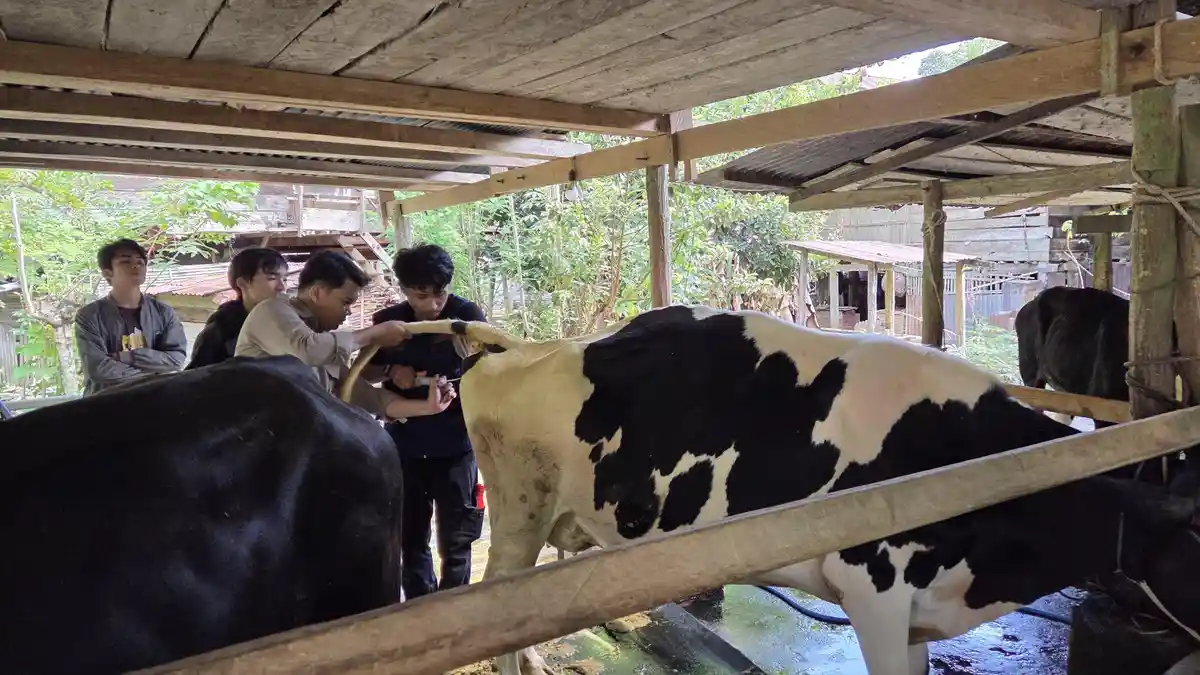
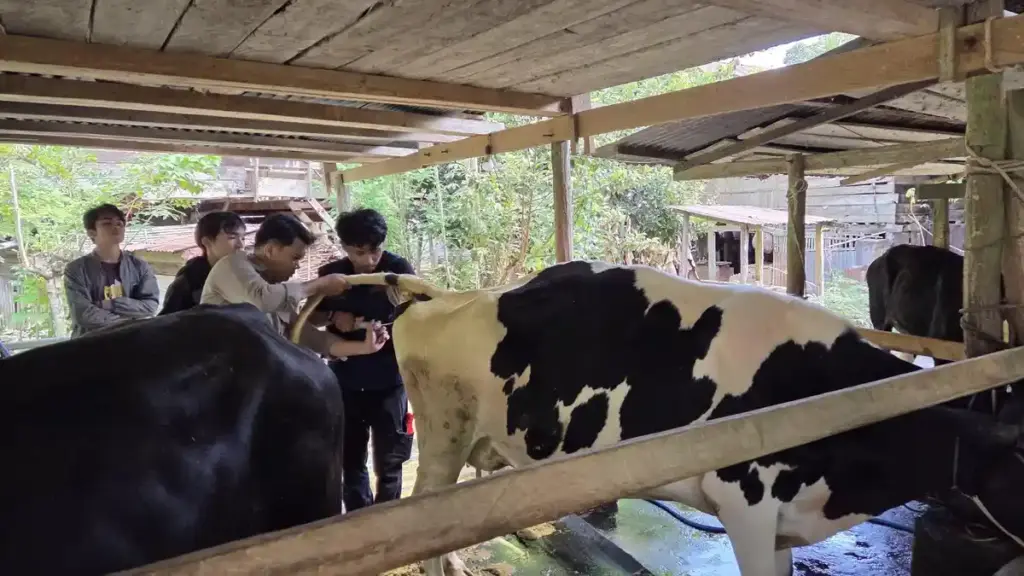
From 15–17 May 2026, the team provided animal health services, including health examinations and mastitis screening using the California Mastitis Test (CMT), treatment of identified health problems, and assistance in implementing teat dipping after milking. Farmers also received education on barn sanitation and hygienic milking procedures as part of efforts to improve milk quality and safety.
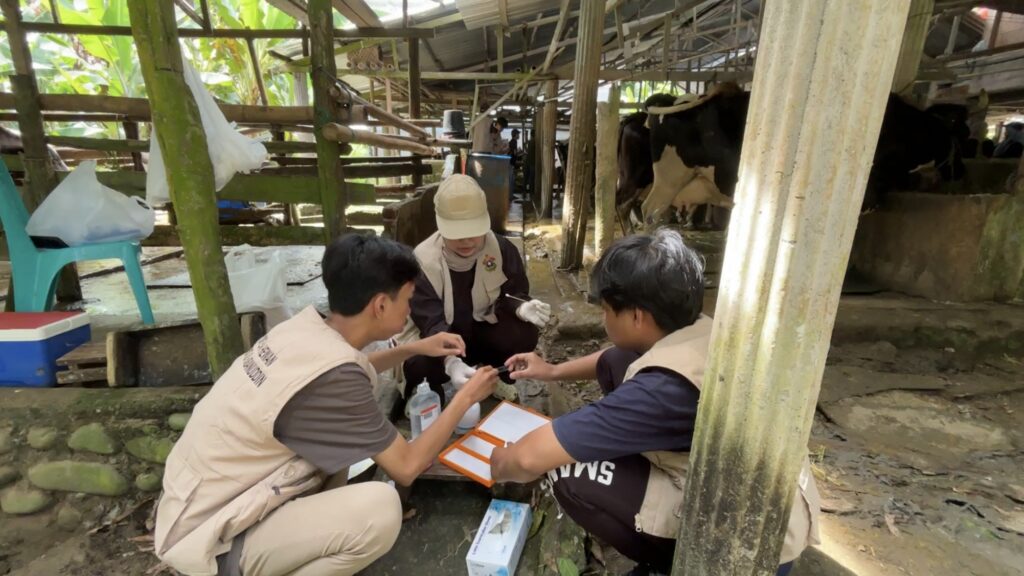
The activities also focused on strengthening reproductive management through reproductive health examinations and the implementation of artificial insemination using sexed frozen semen in selected animals. This technology is intended to increase the likelihood of producing female calves, thereby supporting the availability of replacement stock for the development of a productive dairy cattle population at the farm level.
From 29–31 May 2026, follow-up examinations and mentoring were conducted to support the implementation of Good Milking Practices, barn sanitation, and farm record-keeping. The records included information on milk production, animal health, and reproductive performance, which can serve as a basis for farmers to make better management decisions.
The team also encouraged improvements in post-harvest milk handling, diversification of dairy products, and marketing strategies to increase the added value of dairy products. In the area of feed management, farmers received training on utilizing corn stover through silage technology with probiotic inoculants. This technology is expected to improve the utilization of agricultural residues as preserved feed and help farmers cope with fluctuations in forage availability.
The planting of forage crops, establishment of a demonstration plot or feed bank, and processing of livestock manure are scheduled for September as part of the next stage of the program.
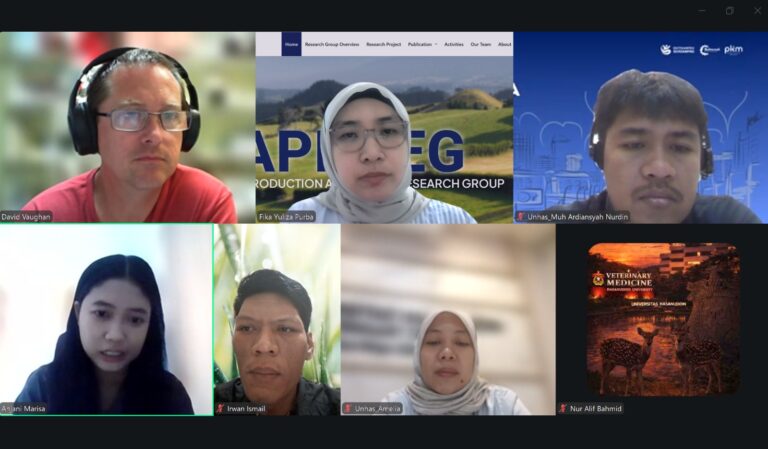
The Head of the Community Service Team, Dr. drh. Fika Yuliza Purba, M.Sc., stated that the program represents an implementation of the Tri Dharma of Higher Education and reflects the university’s contribution to strengthening smallholder livestock farming in South Sulawesi.
“Through this program, we are not only providing services and introducing technologies, but also mentoring farmers so that they can independently implement better practices in animal husbandry, health, reproduction, and farm management. We hope that productivity and milk quality will improve, animal health problems can be reduced, and dairy farming businesses can become more sustainable,” said Fika.
The program also involved team members Ichlasul Amal, S.Pt., M.Si., from the Animal Feed Technology Study Program, Vocational Faculty, Hasanuddin University, and Drh. Muhammad Ardiansyah Nurdin, M.Si., from the Veterinary Medicine Study Program, Faculty of Medicine, Hasanuddin University, as well as students who participated in field activities.
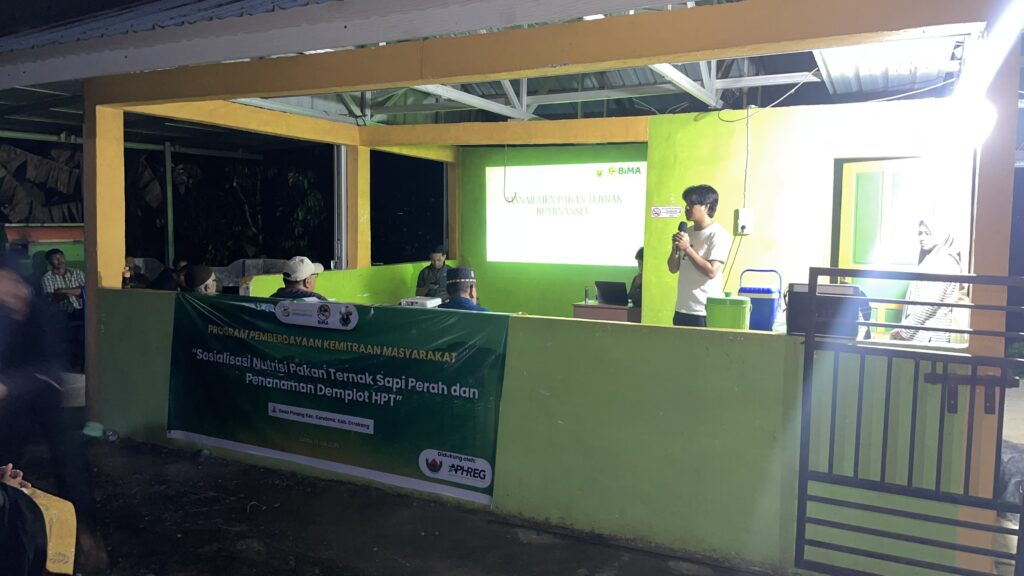
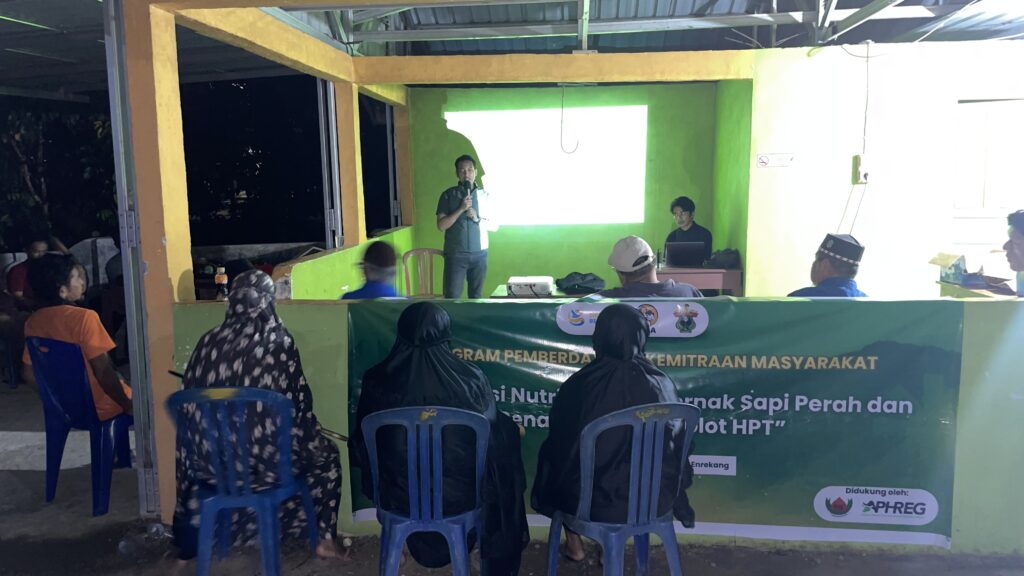
Students were involved in various stages of the program, including preparation, animal health services, technology implementation, and farmer mentoring. Their involvement served as an important component of off-campus learning and contributed to the achievement of Key Performance Indicator (IKU) 2 through the recognition of field-based learning activities.
Program evaluation was conducted by monitoring the implementation of the introduced technologies, improvements in farmers’ knowledge and skills, changes in animal health conditions, milk production, reproductive performance, and the implementation of farm record-keeping. Regular mentoring will continue to ensure that the introduced technologies can be sustainably adopted by the farmers’ group.
Through this program, the Mabarakka Farmers’ Group is expected to improve livestock productivity, maintain milk quality, strengthen reproductive and animal health management, and improve overall farm business management. In the long term, the program is expected to contribute to the development of a more independent and sustainable dairy farming sector in Pinang Village and Cendana District.
Dr. drh. Fika Yuliza Purba, M.Sc.
Veterinary Medicine Study Program
Faculty of Medicine, Hasanuddin University
Email: fikapurba@med.unhas.ac.id