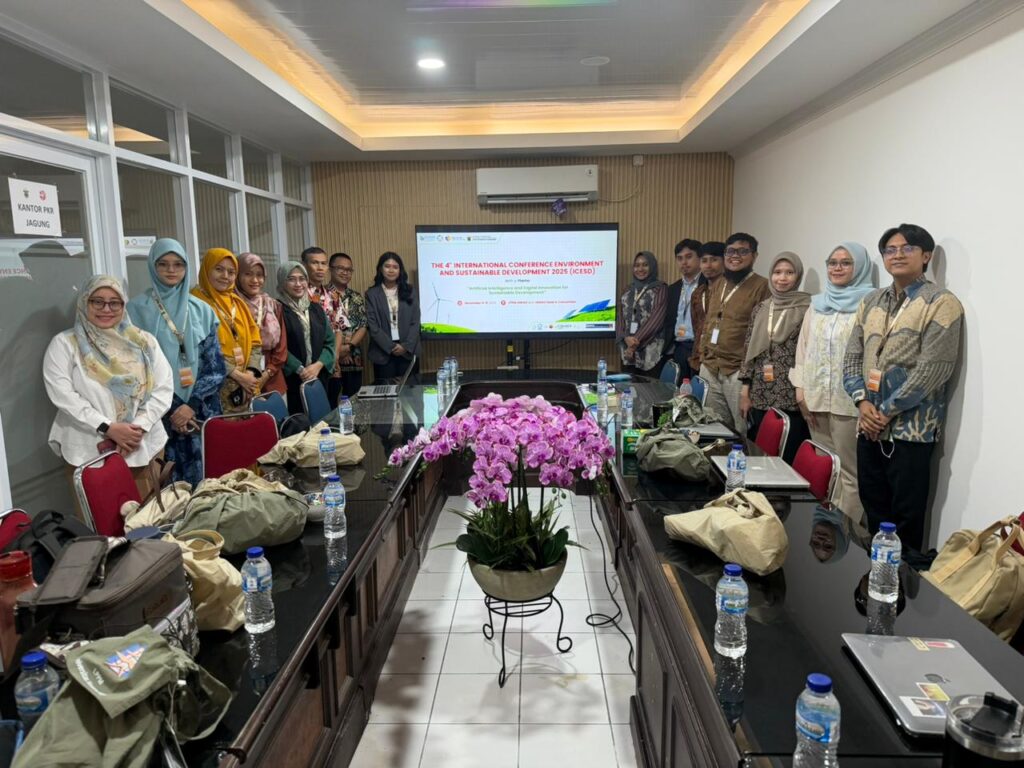
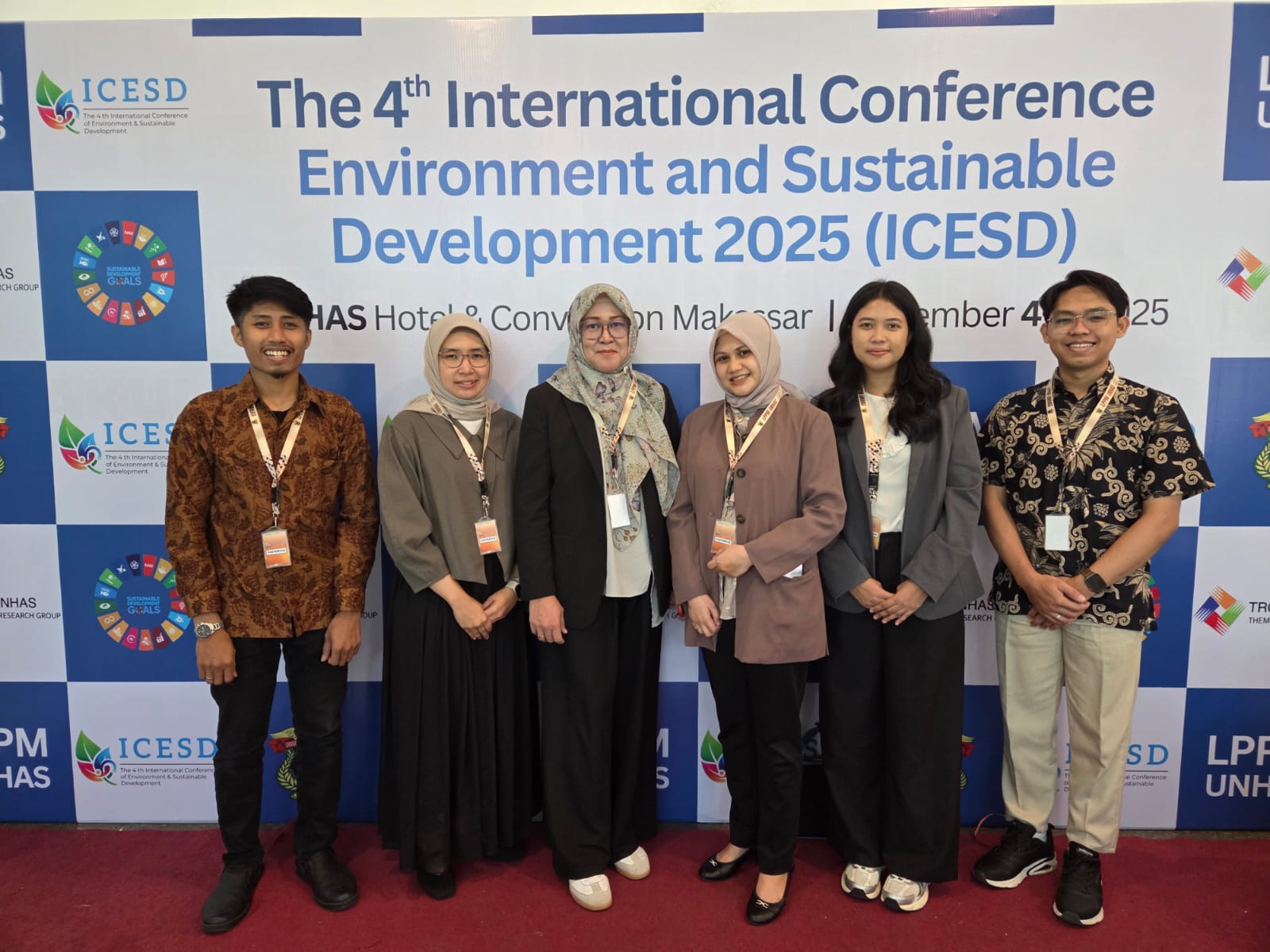
Makassar, December 2nd 2025. The academic atmosphere at Hasanuddin University reached a global crescendo as the institution hosted The 4th International Conference on Environment and Sustainable Development 2025 (ICESD). Set against the professional backdrop of the Unhas Hotel & Convention and the LPPM Unhas Building, this prestigious gathering served as a vital nexus for thinkers, researchers, practitioners, and policymakers from across the globe. The primary objective was to forge a collective response to increasingly complex global environmental challenges, including the climate crisis, ecosystem degradation, and the urgent need for sustainable natural resource management.
The conference underscored the university’s commitment to high-level scientific discourse. Representing the specialized expertise of the Aphreg team, four distinguished academics contributed their latest findings to the global stage. Dr. drh. Fika Yuliza Purba, M.Sc. and Prof. Dr. drh. Dwi Kesuma Sari engaged in the dynamic poster session, visually presenting innovative data to fellow experts. Meanwhile, the oral presentation sessions featured the work of rising scholars, as drh. Nur Alif Bahmid, M.Si. and drh. Adyatma, M.Si. successfully delivered presentations on their beginner lecturer research, showcasing the next generation of veterinary and reproductive science integration in environmental sustainability.
In its essence, ICESD 2025 was a physical manifestation of SDG 17: Partnerships for the Goals. By bringing together diverse stakeholders in the halls of Unhas, the conference facilitated the cross-border collaboration necessary to tackle systemic environmental issues. This international synergy ensures that local research finds global relevance, creating a shared repository of knowledge that empowers nations to achieve sustainability through mutual support and technological exchange.
Furthermore, the participation of these faculty members directly advances SDG 4: Quality Education. By actively presenting peer-reviewed research and engaging in rigorous academic debate, these educators ensure that the pedagogy at Hasanuddin University remains at the cutting edge of scientific discovery. This commitment to excellence trickles down to the classroom, equipping students with the literacy and analytical skills required to solve the environmental problems of tomorrow.
The conference also deeply integrated the principles of SDG 1: No Poverty. While environmental in focus, the discussions highlighted that ecological degradation disproportionately affects the most vulnerable populations. By advocating for sustainable resource management and resilient ecosystems, the participants addressed the root causes of resource-based poverty, ensuring that environmental health translates into economic stability for communities relying on the land and sea.
Ultimately, ICESD 2025 proved that scientific inquiry is the most powerful tool for global change. Through the dedicated contributions of participants like the Aphreg team, Hasanuddin University continues to lead the way in harmonizing human progress with the preservation of our planet, ensuring a sustainable legacy for generations to come.