



Brand " Tri-Po". Registration Number IDM001095945
Read More
Tri-Po is an organic compost-based fertilizer enriched with two types of beneficial fungi, namely Trichoderma spp. and Pleurotus spp.. This product is designed to enrich the soil, increase microbial activity, and naturally suppress the growth of soil-borne pathogens. The combination of Trichoderma as a biocontrol agent and Pleurotus as a superior decomposer makes Tri-Po an integrated solution for environmentally friendly agriculture. https://pdki-indonesia.dgip.go.id/detail/e3b0c44298fc1c149afbf4c8996fb92427ae41e4649b934ca495991b7852b855

Brand "Pro Compost". Registration Number IDM000615003
Read More
Pro Compost is an organic compost-based fertilizer enriched with selected antagonistic fungi such as Trichoderma spp. and Aspergillus spp.. This product is designed not only to improve soil fertility and plant growth naturally, but also to suppress the population of soil-borne pathogens that cause plant diseases, such as Fusarium, Pythium, and Rhizoctonia. https://pdki-indonesia.dgip.go.id/detail/e3b0c44298fc1c149afbf4c8996fb92427ae41e4649b934ca495991b7852b855
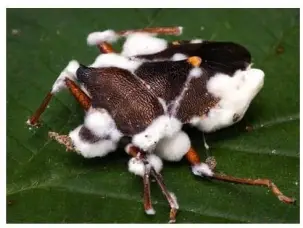
COMPOSITION OF RICE SEED COATING WITH ENTOMOPATHOGENIC FUNGI TO CONTROL RICE PEST. Patent Number IDS000010014
Read More
Rice (Oryza sativa L.) is a major food commodity for the Indonesian population, so its availability needs to be increased. However, there is an obstacle in the form of high levels of brown planthopper infestation, which causes rice plants to lose productivity. The use of the entomopathogenic fungus Beauveria bassiana is one environmentally friendly biological control alternative for managing rice stem borers. This invention relates to the composition of rice seed coating with the entomopathogenic fungus B. bassiana. Specifically, the rice seed coating composition functions as a biological control agent for rice stem borers on rice plants, consisting of a B. bassiana suspension at a concentration of 10⁸, 60% corn flour, 30% sweet potato flour, and 10% tapioca flour. The rice seed coating process begins with the preparation of the entomopathogenic fungus B. bassiana on PDA medium. For the propagation of B. bassiana, it is grown on sterile corn medium and incubated for two weeks, then dried and ground using a blender until it becomes powder. The coating process involves mixing corn flour, sweet potato flour, and tapioca flour, then coating the seeds for 7 hours. After the seeds germinate, they are planted. The results of testing the rice seeds according to this invention against the mortality of green leafhoppers at the 10-day nymph stage or instar IV proved to be able to kill green leafhoppers with an average cumulative rate of 46%. https://pdki-indonesia.dgip.go.id/detail/e3b0c44298fc1c149afbf4c8996fb92427ae41e4649b934ca495991b7852b855
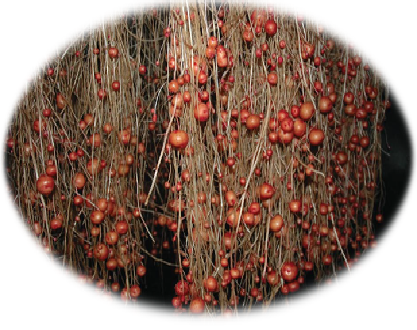
PROCESS OF PRODUCTION AND FORMULATION OF BIOPESTICIDES FROM ANTAGONISTIC CLOSTRIDIUM SP BACTERIA FOR CONTROL OF WILT DISEASE IN AEROPONIC POTATO CULTIVATION. Patent Number IDP000043183
Read More
This invention relates to the process and formulation of a biopesticide as a biological control agent for bacterial wilt disease in potato plants, with the active ingredient being a consortium of four antagonistic Clostridium spp. isolates: Isolate NS01, G06, NG01, and S04, each with a density of 1 x 10⁶ CFU/ml, using the following carrier medium: 1% CMC, 1% glycerol, 0.1% sodium alginate, 0.2% Tween 80, and 1% sorbitol. The advantages of this biopesticide formulation over other antagonistic microbial formulations are that it can survive under anaerobic conditions, withstand extreme environments, and be stored long-term due to its endospore structure. In addition to controlling bacterial wilt disease, this microbial formulation can also promote potato tuber growth and production. https://pdki-indonesia.dgip.go.id/detail/e3b0c44298fc1c149afbf4c8996fb92427ae41e4649b934ca495991b7852b855
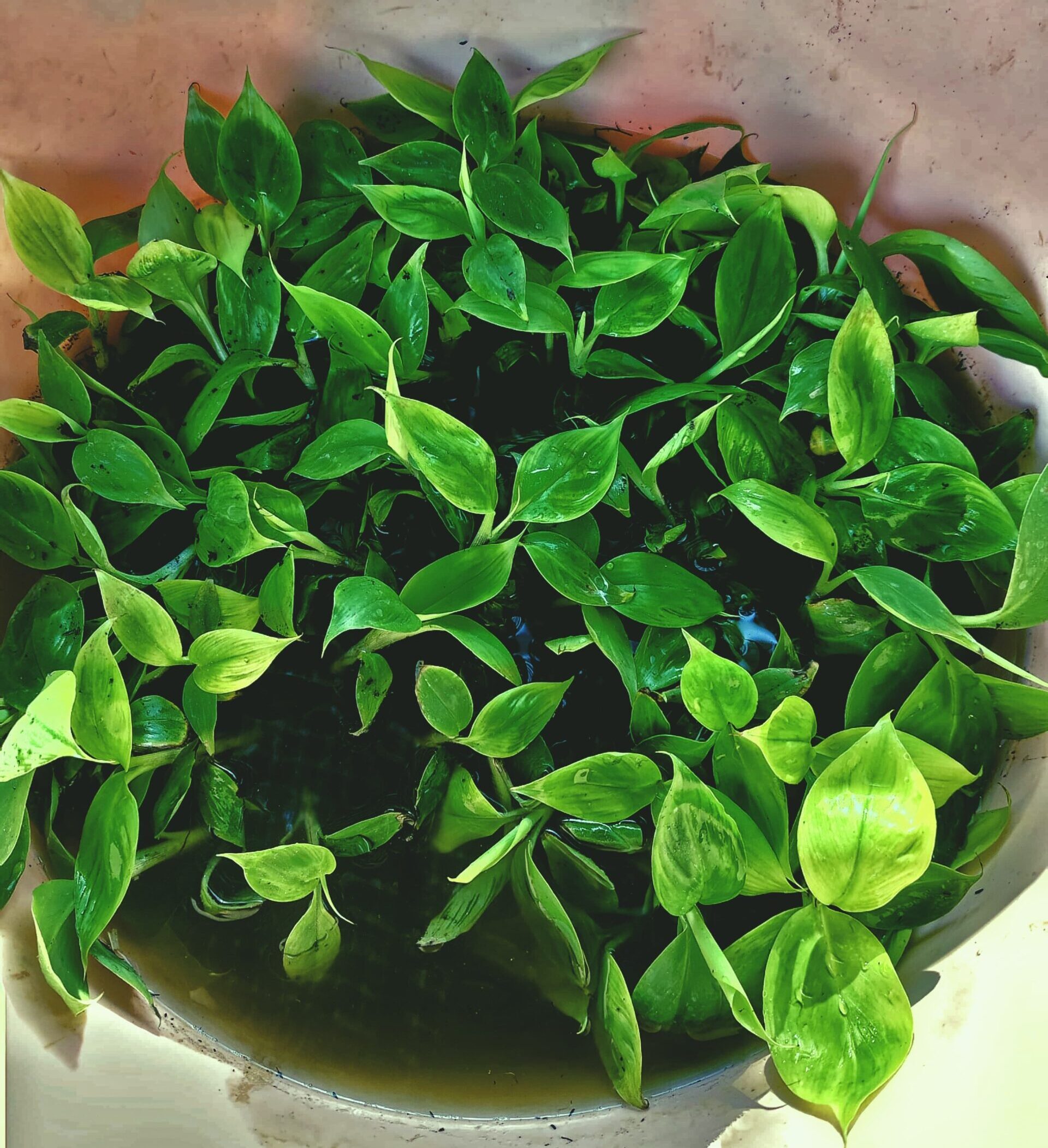
PROCESS OF PRODUCING SEEDLINGS RESISTANT TO WILT DISEASE (Fusarium oxysporum f.sp cubense) AND BLOOD DISEASE (BLOOD DISEASE BACTERIA) THROUGH RESISTANCE INDUCTION TECHNIQUES. Patent Number IDP000045426
Read More
A production process for banana seedlings resistant to wilt disease (Foc) and blood disease (BDB) has been revealed. Plant propagation through tissue culture involves the following steps: a. Cultivation of the inducing agents, namely Fusarium oxysporum f.sp cubense (Foc) race 4 and BDB bacteria (Blood Disease Bacteria); b. Extraction of filtrates from Foc and EPS from BDB; c. Application of Foc filtrates and BDB EPS to tissue culture media; d. Induction of banana tissue culture media using Foc filtrates and BDB EPS; e. Observation of physiological changes after induction; f. Propagation of banana plantlets on rooting medium; g. Acclimatization of plantlets; and i. Obtaining banana seedlings resistant to Fusarium wilt disease and blood disease bacteria. https://pdki-indonesia.dgip.go.id/detail/e3b0c44298fc1c149afbf4c8996fb92427ae41e4649b934ca495991b7852b855
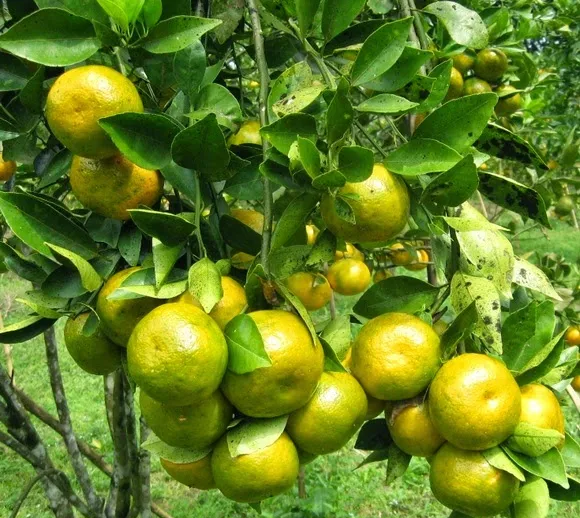
COMBINATION OF ANTAGONISTIC MICROORGANISMS AND MO PLUS BIOLOGICAL FERTILIZER AS BIOLOGICAL CONTROL AGENTS FOR STEM ROT DISEASE CAUSED BY P. palmivora IN SIEM MALANGKE CITRUS nobilis L. Patent Number IDP000096593
Read More
This invention relates to the use of a combination of antagonistic microbes and biofertilizers as biological control agents for P. palmivora stem rot disease in Malangke oranges. One of the obstacles in orange production is stem rot disease, which causes a yield reduction of up to 80%. Antagonistic microorganisms can be utilized as biological control agents and can be combined with biofertilizers, so it is necessary to explore the utilization and synergy of antagonistic microorganisms with biofertilizers. This invention successfully applied antagonistic microorganisms combined with biofertilizers through compatibility tests, observations of germinating conidia, and tests of the effectiveness of the formulation of antagonistic microorganisms and biofertilizers. With the implementation of this invention, the combination of T. harzianum + P. ostreatus + MO Plus can act as a biological control agent for citrus stem rot disease in Malangke. https://pdki-indonesia.dgip.go.id/detail/e3b0c44298fc1c149afbf4c8996fb92427ae41e4649b934ca495991b7852b855
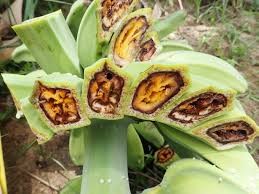
ISOLATION PROCESS OF ENDOPHYTIC AND RHIZOSPHERE BACTERIA OF BANANA (MUSA SPP) PLANTS AS BLOOD DISEASE CONTROL AGENTS. Patent Number IDP000083616
Read More
This invention relates to the isolation process of endophytic and rhizosphere bacteria in banana plants in order to find an effective and environmentally friendly way to control blood disease. Blood disease is a major disease of banana plants that is difficult to control with chemicals (pesticides) or other methods, because the causative bacteria Ralstonia syzygii subsp celebensis (Rsc) spreads systemically on all parts of the banana plant and is easily transmitted through saplings, vector insects, water and soil as well as through contaminated agricultural equipment. Endophytic and rhizosphere bacteria have the potential to be used as biological control agents because they can develop around plant roots and in tissues so that they can prevent and suppress the transmission of blood diseases in the field. For this reason, it is necessary to explore the diversity of bacteria in the tissues and rhizosphere of banana plants. This invention succeeded in isolating and selecting three isolates of the genus Bacillus sp, namely isolates PKA3, PKT3 and PAT1 through the process of isolation, identification of bacteria based on morphological and physiological characteristics and effectiveness testing against R. solanacearum in vitro based on the dual culture method. https://pdki-indonesia.dgip.go.id/detail/e3b0c44298fc1c149afbf4c8996fb92427ae41e4649b934ca495991b7852b855
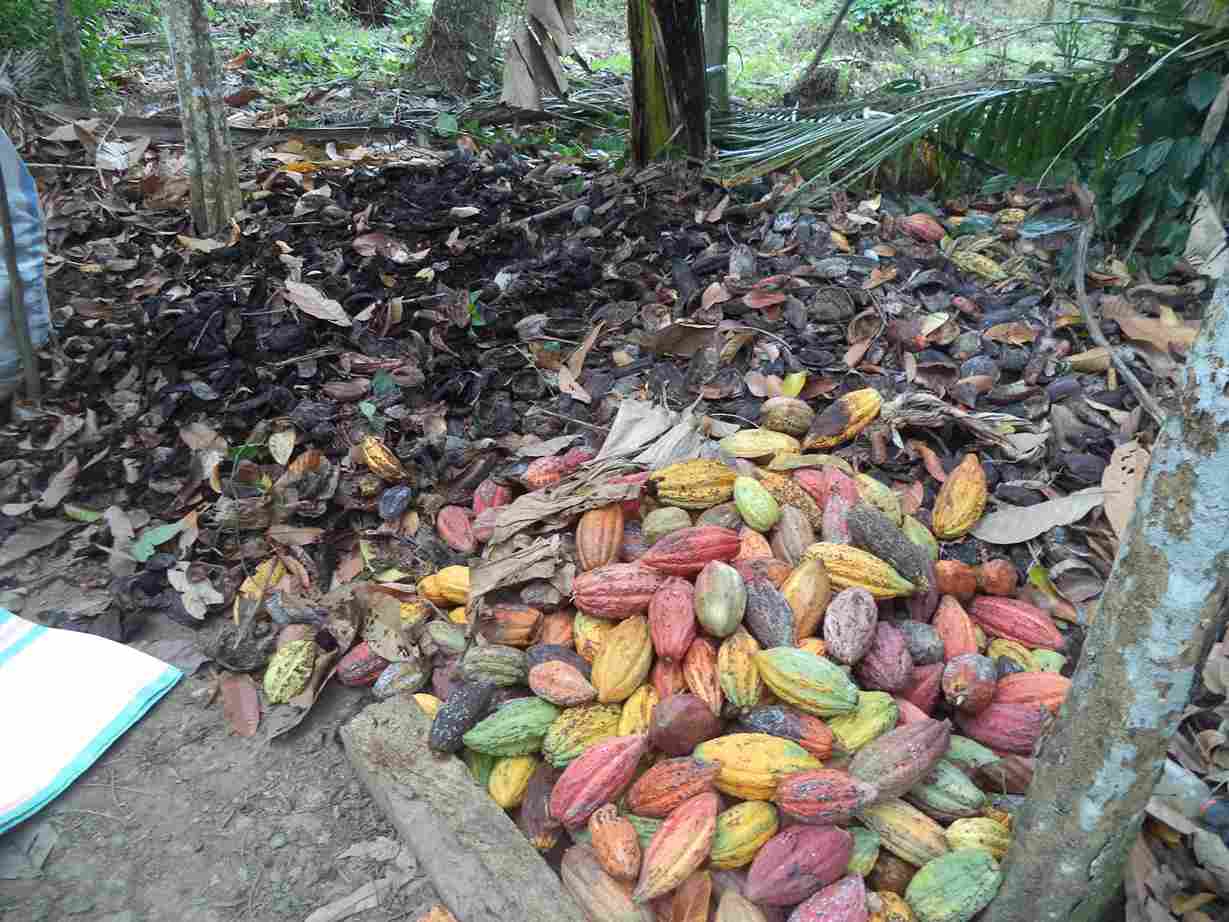
BIODECOMPOSER FROM COCOA SHELL WASTE, MANUFACTURING PROCESS AND USE. Patent Number IDP000083775
Read More
This invention relates to a biodecomposer made from Trichoderma harzianum TH03 and Pleurotus ostreatus PO02 fungi that can stimulate the growth of cocoa plants, and can also protect plants from pathogens. This invention relates to a biodecomposer made from the active fungi Trichoderma harzianum TH03 and Pleurotus ostreatus PO02 with the ratio of Trichoderma harzianum TH03 to Pleurotus ostreatus PO02, being 1:1, Trichoderma harzianum TH03 and Pleurotus ostreatus PO02 grown on organic media of sawdust + bran and lime in the ratio of 5:1:0. 05 w/b, and fillers consisting of bentonite, kaolin and tapioca with a ratio of 1:2:0.015 w/b. The use of biodecomposer on cocoa seedlings can spur the growth of cocoa plant seedlings. https://pdki-indonesia.dgip.go.id/detail/e3b0c44298fc1c149afbf4c8996fb92427ae41e4649b934ca495991b7852b855
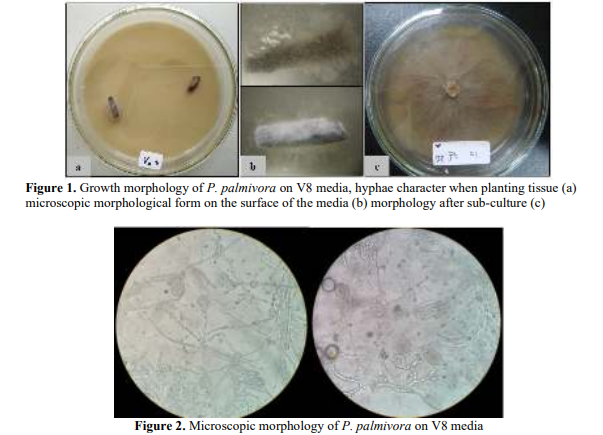
FORMULATION OF MODIFIED MEDIA MADE FROM VEGETABLE EXTRACTS TO REPLACE V8 JUICE AS A GROWTH MEDIUM FOR FUNGI. Patent Number IDP000081099
Read More
Cocoa pod rot caused by Phytophthora palmivora is a pathogen that requires specialized media in its growth process. The lack of availability of the main media to grow the pathogen is a considerable obstacle that causes a lack of research related to the pathogen. The formulation of modified media from vegetable materials used to grow Oomycota group fungi, especially P. palmivora, is expected to be a solution in the field of plant protection because it can be an optional media that can be used so that it helps in researching this type of pathogen. This invention produces a new formulation of modified media that will further streamline the cost of ordering the main ingredients of the media from abroad which takes a long time and is relatively expensive. The formulation and composition of the modified media is made from extracts from 10 types of vegetables as a substitute for V8 juice, which is the main ingredient for growing media for fungi from the Oomycota group. This formulation is very useful because in addition to easily obtaining raw materials it is also very easy to manufacture so that it can be applied on an industrial scale. The results of laboratory tests using modified media can grow Phytophthora palmivora from three cocoa plantations in South Sulawesi, which microscopically each isolate shows the growth of hyphae, sexual and asexual spores. https://pdki-indonesia.dgip.go.id/detail/e3b0c44298fc1c149afbf4c8996fb92427ae41e4649b934ca495991b7852b855
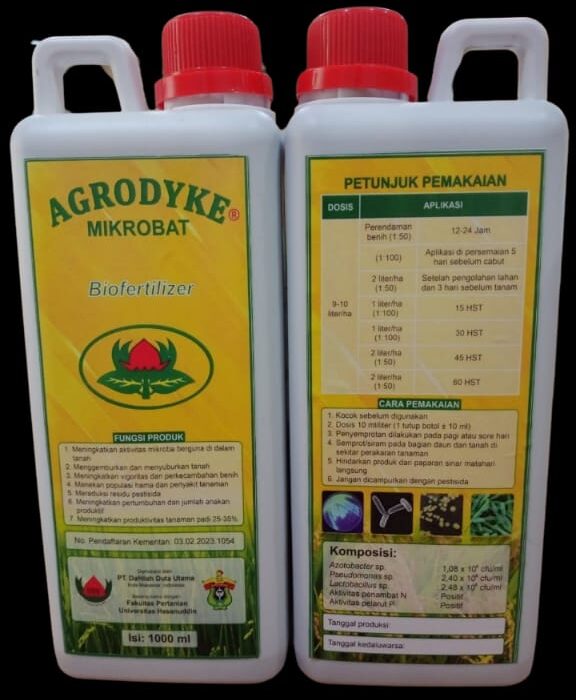
LIQUID BIOFERTILIZER MADE FROM A CONSORTIUM OF FIVE BACTERIA AND ITS MANUFACTURING PROCESS. Patent Number IDP000059255
Read More
This invention relates to a liquid biofertilizer containing active microbial agents including Azotobacter sp. isolate SA11, Pseudomonas sp. isolate SP23, Lactobacillus sp. isolate SL27, Bradyrhizobium japonicum isolate SBr05, and Streptomyces sp. isolate SS53, with the following formulation: Azotobacter sp. isolate SA11 at a concentration of 10⁸ cfu/ml Pseudomonas sp. isolate SP23 at a concentration of 10⁷ cfu/ml Lactobacillus sp. isolate SL27 at a concentration of 10⁷ cfu/ml Bradyrhizobium japonicum isolate SBr05 at a concentration of 10⁸ cfu/ml Streptomyces sp. isolate SS53 at a concentration of 10⁷ cfu/ml Molasses = 5% CMC (Carboxymethyl Cellulose) = 1% Glycerol = 1% Sodium Alginate = 0.1% Tween 80 = 0.2% Furthermore, this invention also concerns the process of producing the liquid biofertilizer, which comprises the following stages: a. Preparation of bacterial starters for five microbial strains (Azotobacter sp. isolate SA11, Pseudomonas sp. isolate SP23, Lactobacillus sp. isolate SL27, Bradyrhizobium japonicum isolate SBr05, and Streptomyces sp. isolate SS53) using Nutrient Broth medium supplemented with 5% glucose; b. Mixing of the microbial starters from stage a. into a propagation medium containing 5% molasses along with the addition of binders, protectants, and fillers, followed by fermentation to produce the liquid biofertilizer. https://pdki-indonesia.dgip.go.id/detail/e3b0c44298fc1c149afbf4c8996fb92427ae41e4649b934ca495991b7852b855