Makassar, Indonesia, Oktober 23 2026/albiorg – The global search for renewable energy sources has driven scientists to explore unique biological resources. A prominent study published in the scientific journal BIODIVERSITAS, titled “Evaluation of a newly isolated thermophilic microalga Chlorella sorokiniana UNM-IND1 as biodiesel feedstocks,” offers a promising solution. Published on 04-Oktober-2024 by the Departemen Biologi, FMNS, Universitas Sebelas Maret dan Perhimpunan Keanekaragaman Hayati Indonesia, this research highlights how extremophilic microalgae can revolutionize future green fuels.
Fossil fuel depletion and escalating environmental degradation demand immediate alternatives. Biodiesel derived from vegetable oils and microorganisms serves as an eco-friendly option because it drastically reduces greenhouse gas emissions and burns cleaner than petroleum diesel. Unlike conventional oil crops, microalgae do not require fertile agricultural land and can multiply rapidly every day. However, scaling up microalgae production cost-effectively remains a major technological hurdle worldwide.
To address this, researchers from Universitas Hasanuddin and Universitas Negeri Makassar investigated a newly discovered thermophilic microalga strain, Chlorella sorokiniana UNM-IND1, isolated from the Waepella Hot Spring in Sinjai Regency, South Sulawesi, Indonesia. Because hot springs present extreme thermal environments, organisms thriving there develop natural resilience, heat-resistant enzymes, and unique metabolic adaptations.
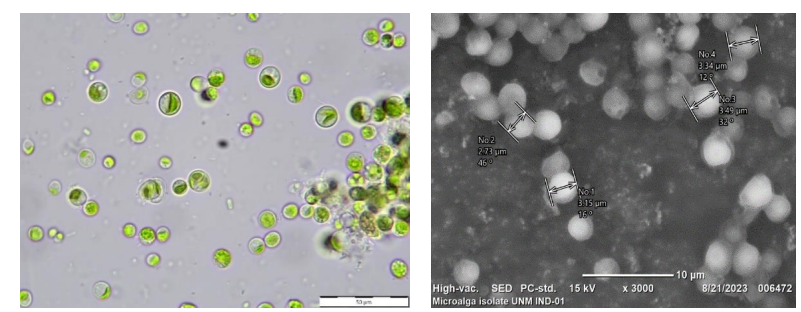
The scientific study evaluated how different temperature conditions affect the growth, biomass accumulation, and lipid production of this microalga. In phase one, cultures were tested across three distinct temperature regimes: culture room temperature, ambient room temperature, and high drying room temperatures ranging up to 48 degrees Celsius. Results revealed that Chlorella sorokiniana UNM-IND1 is remarkably adaptable, achieving its highest specific growth rate of 0.790 day^-1 and peak biomass productivity under high drying room temperatures.
Furthermore, the researchers implemented an innovative temperature-stress strategy in phase two by shifting cultures to cooler environments. This thermal shift successfully stimulated substantial lipid accumulation as a protective cellular adaptation. The lipid content surged up to nearly 43 percent of dry weight biomass, with lipid productivity reaching impressive levels. Gas chromatography-mass spectrometry analysis of its fatty acid composition showed a strong dominance of palmitic acid, linolenic acid, and linoleic acid. These specific fatty acid chains are ideal building blocks for high-quality biodiesel production, closely mirroring traditional plant oils like palm oil while avoiding deforestation concerns.
This pioneering biotechnology initiative directly aligns with SDG 17: Partnerships for the Goals, as it exemplifies collaborative inter-institutional research between regional universities joining forces to tackle global energy challenges. By transforming resilient microorganisms from local natural thermal springs into viable energy feedstocks, this study paves the way toward a cleaner, greener, and more sustainable energy future for Indonesia and the global community.
DOI: 10.13057/biodiv/d250956
Dr.rer.nat. Elmi Nurhaidah Zainuddin, DES.
elmizainuddin@unhas.ac.id