

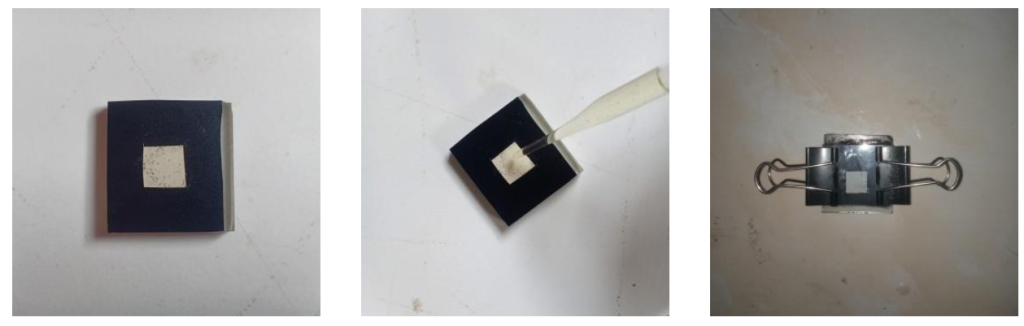
What if plants commonly found around us could help generate electricity? This question lies behind an interesting study on Dye-Sensitized Solar Cells (DSSCs), a type of solar technology that uses dyes to capture light and convert it into electrical energy. Unlike conventional solar technologies that often rely on complex and expensive materials, DSSCs can explore natural dyes obtained from plants.
The study discussed in this article is titled “Fabrication and Characterization of DSSC Using Natural Dyes from Purple Sweet Potato (Ipomoea Batatas L.) and Papaya Leaf (Carica Papaya) with Cocktail Dye Method.” The research was published in the International Journal of Design & Nature and Ecodynamics, by IIETA, and was published on 23 June 2025. The study investigates whether natural pigments from purple sweet potato and papaya leaves can be combined to improve the performance of DSSCs.
The idea is surprisingly simple. Purple sweet potato contains anthocyanin, a natural pigment responsible for its characteristic purple color, while papaya leaves contain chlorophyll. These two pigments absorb different parts of visible light. By combining them through a “cocktail dye” method, researchers attempted to broaden the range of light that could be captured by the solar cell.
In the experiment, the researchers prepared three dye combinations: purple sweet potato to papaya leaf ratios of 1:3, 1:1, and 3:1. The dyes were then applied to a titanium dioxide (TiO₂) layer, which forms an important part of the DSSC. The cells were tested after different immersion times of 12, 24, and 48 hours.
The results provide an encouraging finding. The best performance was achieved by the 1:3 purple sweet potato-to-papaya leaf mixture after 48 hours of immersion, reaching an efficiency of 0.607%. This represented an improvement of 133% compared with the purple sweet potato single-dye cell and 197% compared with the papaya leaf single-dye cell. The researchers also found that longer immersion generally improved the cell’s electrical output.
Why is this important? Natural dyes are abundant, relatively inexpensive to extract, biodegradable, and potentially less environmentally harmful than some synthetic dye materials. Although the efficiency achieved is still modest and further research is needed to improve durability and performance, the study demonstrates how agricultural plant materials can become part of innovative renewable-energy research.
This research contributes directly to SDG 7: Affordable and Clean Energy, by exploring an environmentally friendly approach to solar electricity generation. It also illustrates how scientific innovation can transform familiar natural resources into materials with technological value. With continued research, improvements in dye stability, electrolyte formulations, and device protection could make natural-dye solar cells increasingly relevant to the transition toward more sustainable energy technologies.