

Solar Cell Renewable Electricity and Off-Grid Internet Network for an Isolated School
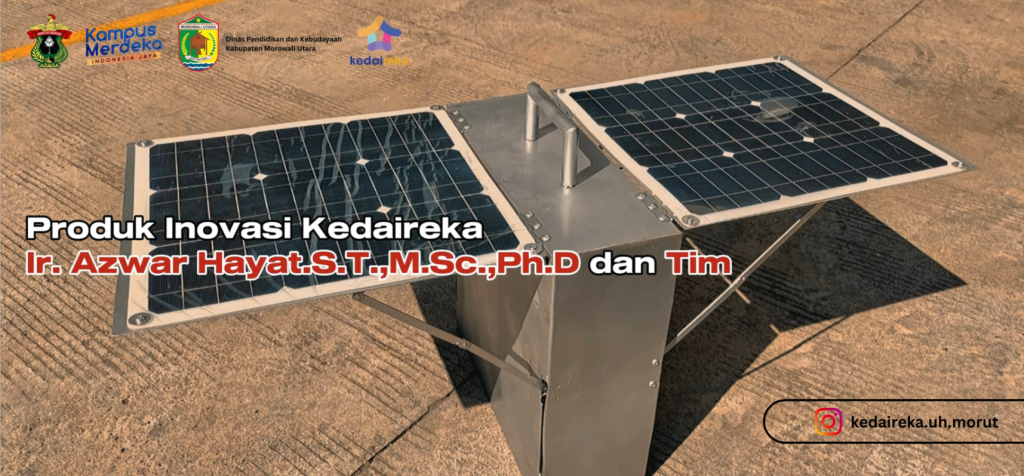
Access to reliable electricity and internet connectivity remains an important challenge for schools located in remote and isolated areas. Limited access to these basic infrastructures can affect the quality of education, restrict access to learning resources, and create disparities between students in urban and rural communities. To address this challenge, the Kedaireka program implemented an initiative focusing on renewable electricity production using solar cell technology and the development of an off-grid internet network router at SD Negeri Makoto, North Morowali Regency.
The activity was conducted in 2023, involving 100 teachers as participants. The program was designed as a collaborative effort between academics and the local education community to introduce and implement appropriate technologies that can provide practical solutions to infrastructure limitations in isolated schools.
The main technology introduced through this activity was a solar photovoltaic (PV) system capable of generating electricity from sunlight. As a renewable energy source, solar energy provides an environmentally friendly alternative to conventional electricity sources, particularly in areas where access to the electricity grid remains limited. The generated electricity can support essential school activities, including the operation of electronic learning equipment, lighting, communication devices, and internet network infrastructure.
In addition to renewable electricity generation, the program developed an off-grid-based internet network router to improve digital connectivity at the school. This technology is expected to provide teachers with better access to digital educational resources, online information, and communication platforms. By combining solar energy with independent internet infrastructure, the program demonstrates how renewable energy and digital technology can be integrated to support educational development in remote communities.
The initiative directly contributes to SDG 1: No Poverty, particularly by reducing infrastructure and digital access inequalities that can limit educational and economic opportunities in disadvantaged communities. Improving access to electricity and information technology can strengthen the capacity of communities to participate in the digital economy and access broader sources of knowledge.
The program also strongly supports SDG 4: Quality Education. Reliable electricity and internet access create opportunities for teachers to utilize digital learning materials, improve teaching methods, and expand educational resources beyond conventional classroom materials. The involvement of teachers is particularly important because they play a central role in ensuring that technological innovations are effectively integrated into the learning process.
Furthermore, the activity reflects SDG 17: Partnerships for the Goals through collaboration between academic institutions, teachers, and the local community. Such partnerships demonstrate that addressing infrastructure challenges in isolated areas requires cooperation among multiple stakeholders. Through the Kedaireka program, academic knowledge and technological innovation can be translated into practical solutions that respond directly to community needs.
Overall, the implementation of solar cell technology and an off-grid internet network at SD Negeri Makoto represents a meaningful step toward more inclusive, sustainable, and technology-supported education. The initiative demonstrates that renewable energy and digital connectivity can work together to strengthen educational opportunities and promote sustainable development in remote areas.