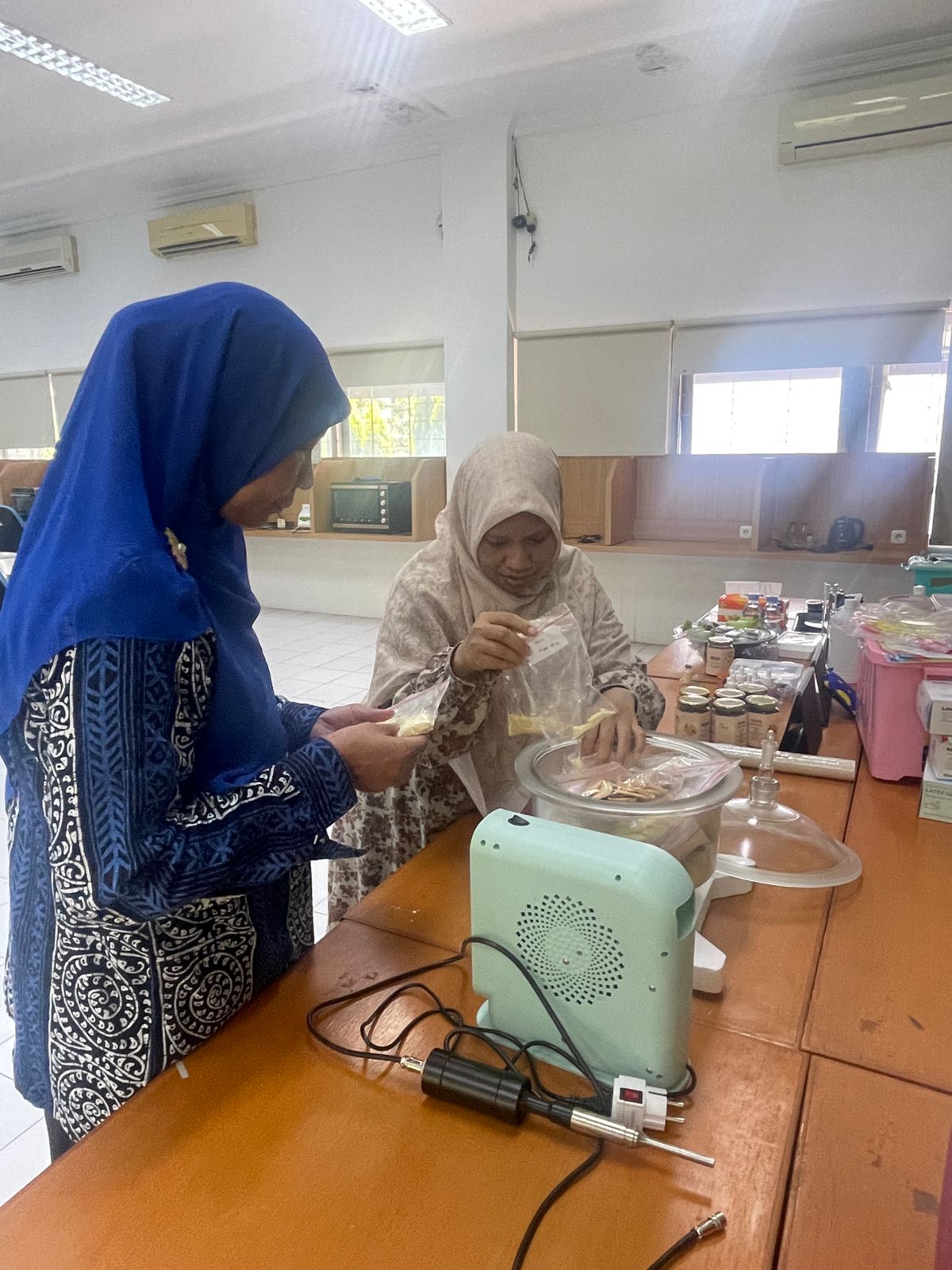

Makassar, 09 May 2025 As part of its commitment to advancing research and innovation based on natural products, the Women’s Health Concern Research Group (WHCRG) of the Graduate School, Hasanuddin University, organized a scientific discussion entitled “Finalization of Ginger Honey Powder Product through Nanotechnology.” The activity was conducted at the Integrated Laboratory of the Graduate School, Hasanuddin University, particularly at the Women’s Health Concerns Research laboratory, which serves as one of the centers for interdisciplinary research and product development.
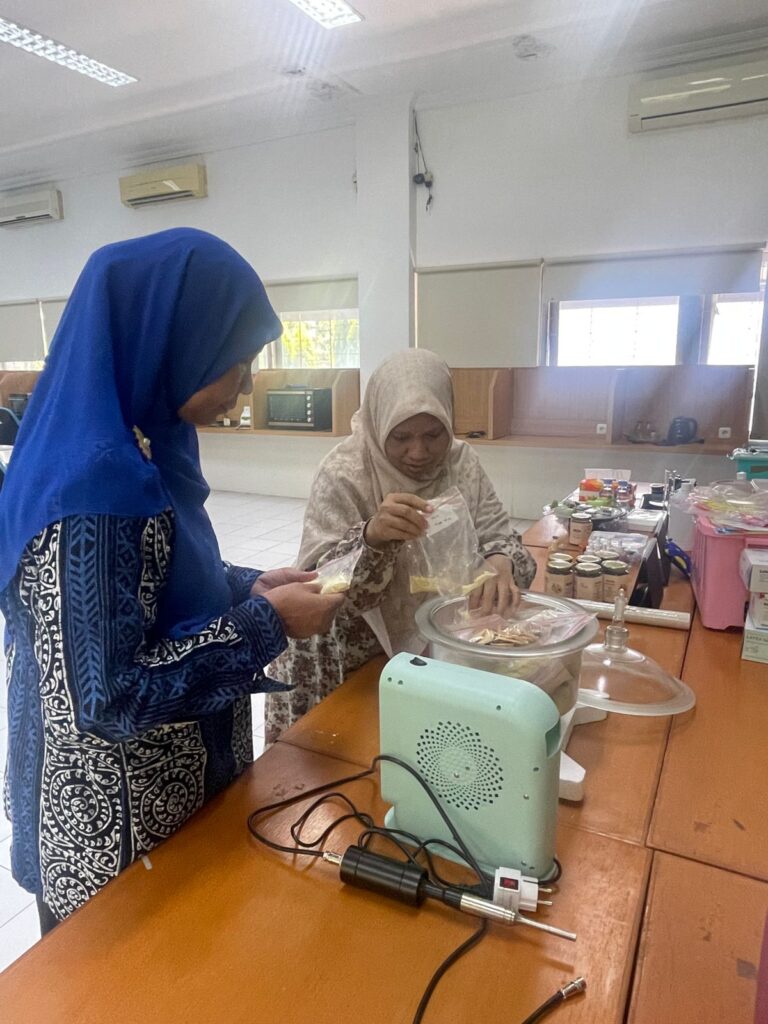
The primary objective of this activity was to finalize the formulation of ginger honey powder developed using nanotechnology-assisted equipment. The application of nanotechnology in functional food development represents a promising approach to improving particle characteristics, enhancing bioavailability, increasing product stability, and preserving the bioactive compounds contained in honey and ginger. Through this technology, the resulting product is expected to possess improved physicochemical properties and greater potential for future health-related applications.
The discussion session provided an opportunity for researchers to evaluate the latest formulation results and exchange scientific perspectives regarding processing parameters, particle size optimization, and the prospects for further product development. Such collaborative discussions are essential to ensuring that the formulation process is based on sound scientific principles and meets the standards required for future translational research and product commercialization.
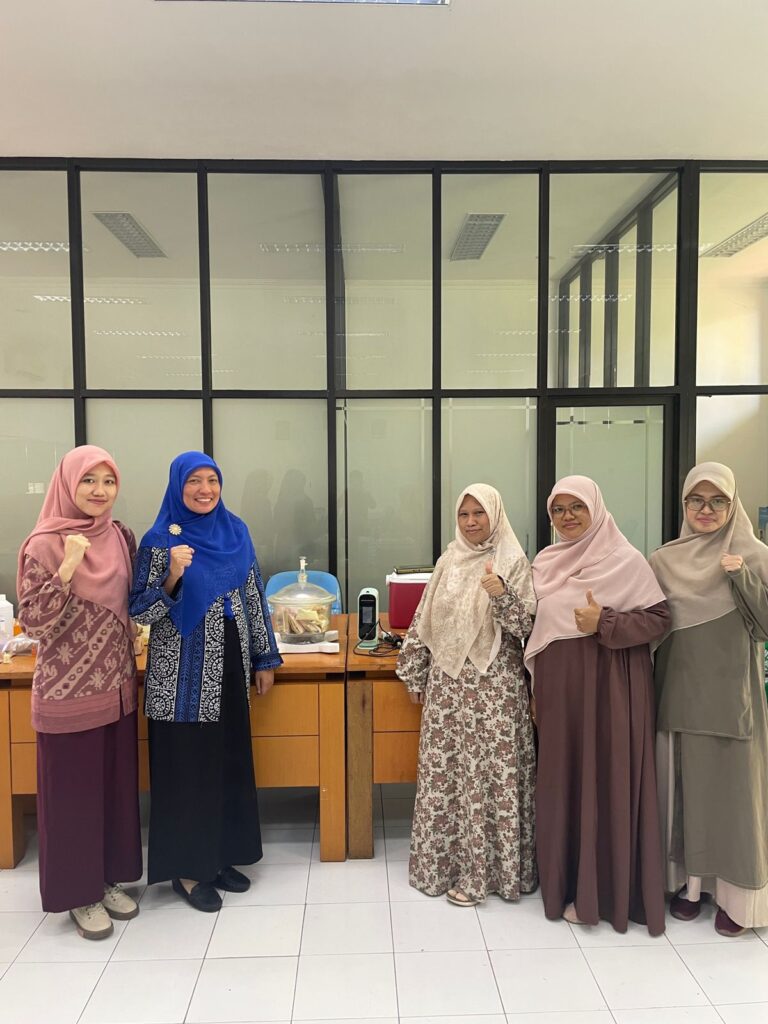
The activity was attended by five participants from different scientific backgrounds, including Dr. Amina Dalimunthe, a lecturer from the Faculty of Pharmacy, Universitas Sumatera Utara (USU), whose expertise in pharmaceutical sciences contributed valuable insights to the refinement of the formulation and future research directions. The meeting also strengthened academic networking and opened opportunities for broader interdisciplinary collaboration between institutions.
Beyond its scientific significance, the activity reflects the commitment of the Graduate School of Hasanuddin University to supporting the achievement of the United Nations Sustainable Development Goals (SDGs). In particular, the activity contributes to SDG 1 (No Poverty) by encouraging the development of value-added products derived from natural resources that may provide economic opportunities for communities. It also supports SDG 3 (Good Health and Well-being) through the development of functional products with potential health benefits. Furthermore, the activity aligns with SDG 4 (Quality Education) by promoting research capacity building, scientific discussion, and knowledge sharing among academics and researchers.
Importantly, this collaborative effort embodies the spirit of SDG 17 (Partnerships for the Goals) through the active involvement of researchers from Hasanuddin University and Universitas Sumatera Utara. Such partnerships are essential in accelerating scientific innovation and generating impactful solutions to address health-related challenges.
Through this activity, the Women’s Health Concern Research Group of the Graduate School, Hasanuddin University, reaffirmed its dedication to fostering innovation, strengthening research collaborations, and contributing to sustainable development through evidence-based scientific advancements.