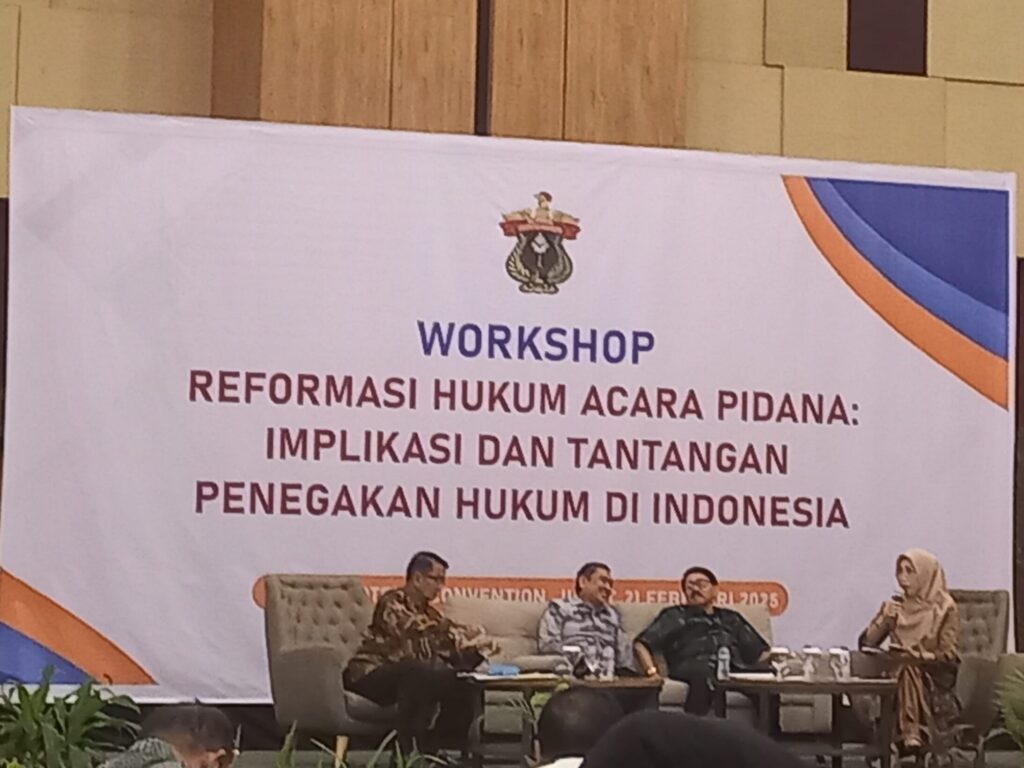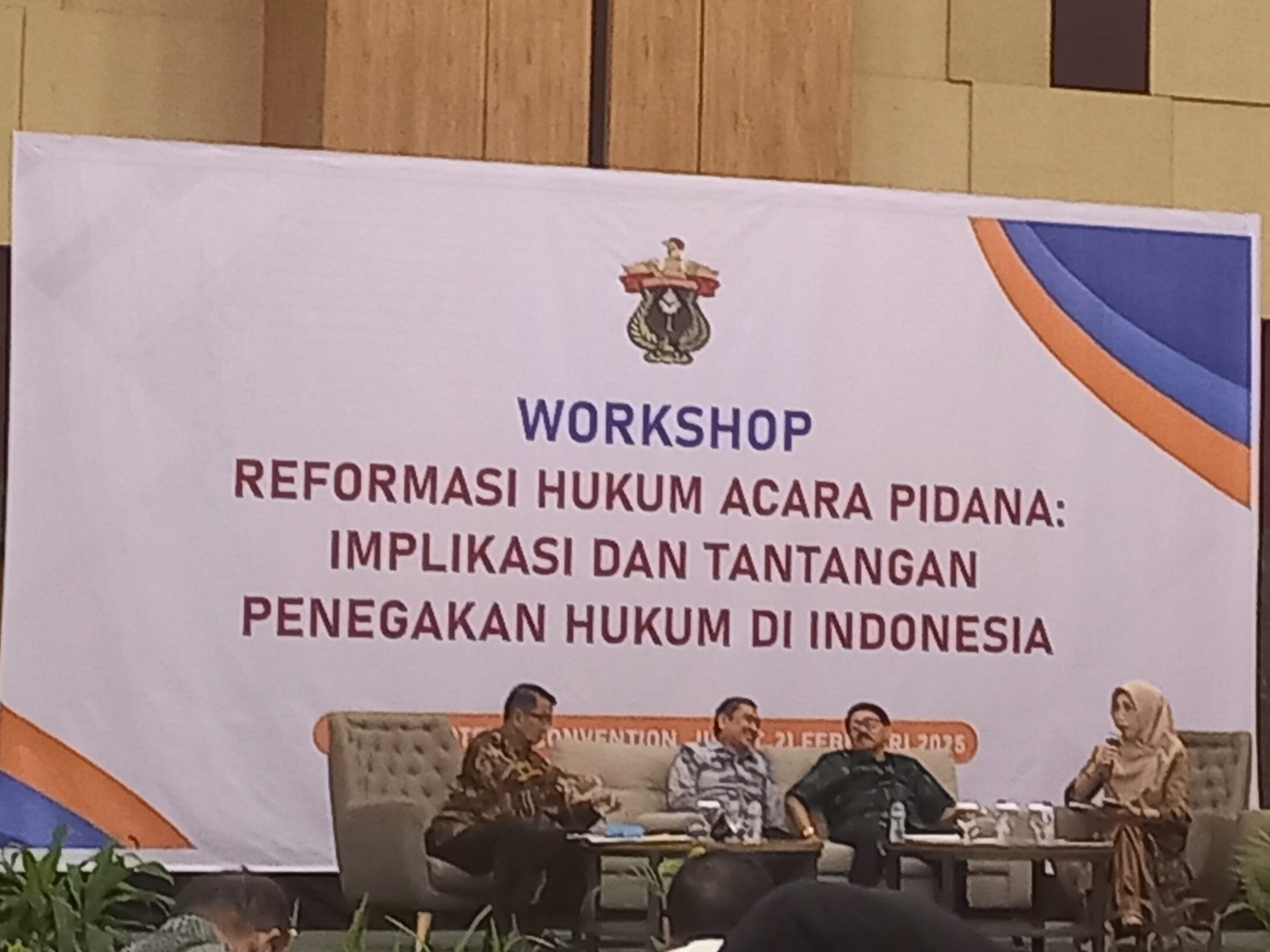

Dr. Nur Azisa, S.H., M.H., moderated the FGD session on the Draft Criminal Procedure Bill at Unhas Hotel on February 21, 2025, under the theme “Criminal Procedure Law Reform: Implications and Challenges of Law Enforcement in Indonesia.” The session featured five expert speakers in criminal law: Prof. Dr. Aswanto, S.H., M.Si., DFM. (Unhas); Prof. Dr. H.M. Said Karim, S.H., M.H. (Unhas); Prof. Dr. Hambali Talib, S.H., M.H. (Rector of UMI); Prof. Dr. Heri Tahir, S.H., M.H. (UNM); and Prof. Dr. Sabri Samin, S.H., M.H. (UIN Alauddin).
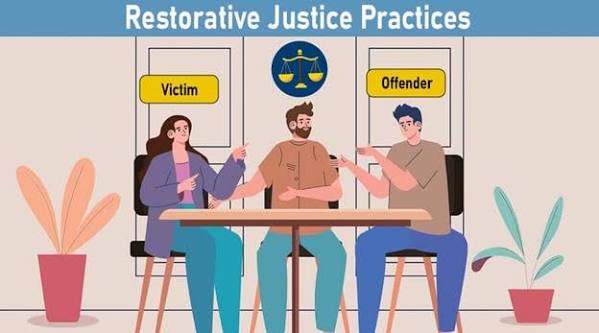
With the enactment of Law No. 1 of 2023 on February 2, 2025, which will take effect on February 3, 2026, the Draft Criminal Procedure Bill, as the foundation for law enforcement, must be promptly promulgated. Numerous paradigm shifts exist in the New Criminal Code and the SPP, including changes in Rj, Strafshoort, and Strafmaat, additional criminal sanctions for restitution/compensation payments, and the fulfillment of customary obligations related to strengthening customary offenses that remain valid in several customary regions—all of which require formal legal instruments for law enforcement. In principle, the future Criminal Procedure Code must incorporate a more effective and efficient case resolution mechanism, a system of checks and balances, and a reinforced human rights framework to ensure justice for perpetrators (suspects/defendants), victims of criminal acts, and third parties with a stake in the SPP. Additionally, the restorative justice mechanism requires robust legal standing in its regulations to achieve legal certainty, legal benefits, and justice.