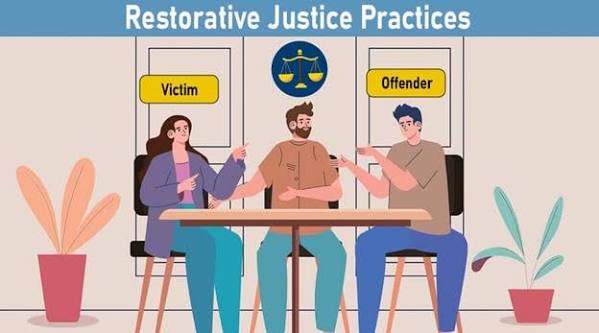

MAKASSAR, Indonesia 18 Juli 2026/VICTORY/ – Restorative justice is often described as a humane alternative to conventional criminal punishment. Instead of focusing only on sending an offender to prison, it brings victims, offenders, and the community into a process aimed at accountability, reconciliation, and repairing harm. Yet a signed peace agreement does not automatically mean that a victim has recovered. A case may be legally closed while fear, anger, trauma, and insecurity remain.
This popular-science article is based on the research article “Psychological Recovery of Crime Victims within Contemporary Restorative Justice: An Islamic Legal Perspective,” written by Nur Azisa, Audyna Mayasari Muin, M. Aris Munandar, Muhammad Mutawalli Mukhlis, and Aspalella A. Rahman. The article was published in MILRev: Metro Islamic Law Review, Volume 4, Number 2, pages 1098–1127. The journal is published by the Faculty of Sharia, Institut Agama Islam Negeri (IAIN) Metro, and the article was officially published on 3 September 2025.
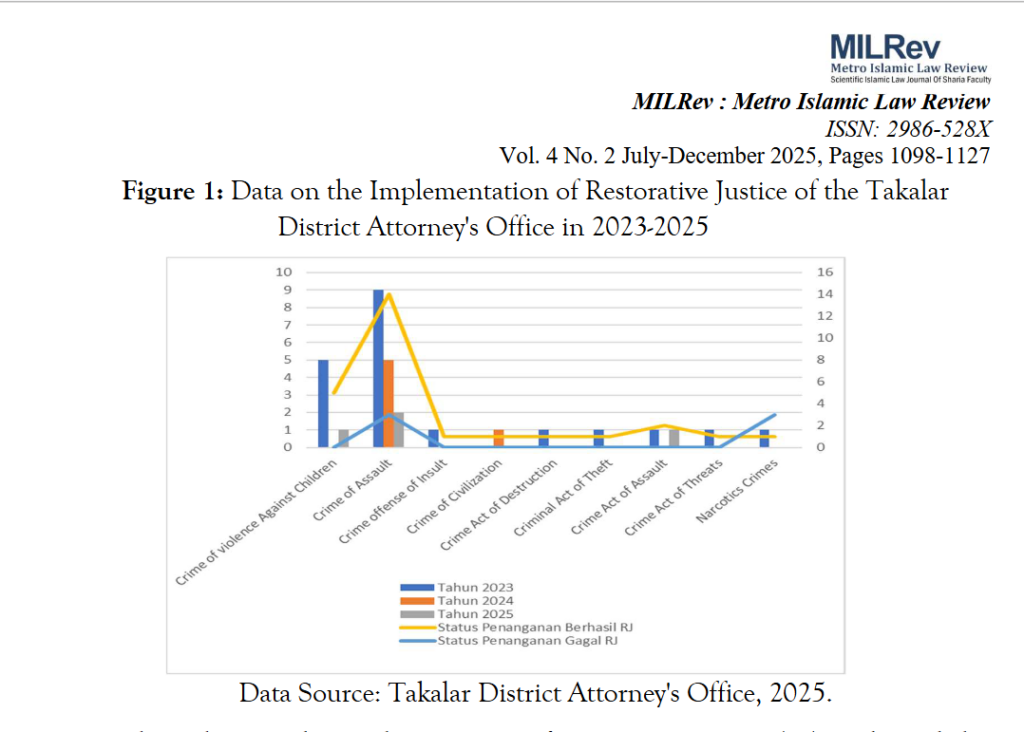
The study examines restorative justice practices in Indonesia, using experiences from Takalar Regency to show why procedural success can differ from genuine recovery. Interviews revealed that some victims agreed to reconciliation because they felt psychological pressure in formal mediation settings. The presence of uniformed law-enforcement officers could create an unequal atmosphere, making victims reluctant to reject an agreement even when they were not emotionally ready to forgive.
The article also identifies wider weaknesses. Psychological assessments are not mandatory before mediation, mental-health professionals are rarely involved, and monitoring often stops once an agreement is signed. Victims may therefore continue to experience trauma without structured support. Social pressure, victim blaming, family interference, unrealistic compensation demands, and the limited time available for mediation can further weaken the process.
From an Islamic legal perspective, reconciliation is not simply about ending a dispute. Concepts such as ṣulḥ, or peaceful settlement, and ʿafw, or forgiveness, should protect dignity, repair relationships, and promote public welfare. Forgiveness must arise freely; it loses its restorative meaning when produced by pressure, fear, or administrative convenience.
The researchers propose practical reforms: mandatory psychological assessments, the involvement of psychologists throughout the process, trauma-informed training for facilitators, stronger post-mediation monitoring, and specialised Crime Victim Recovery Centres. They also suggest that facilitators avoid symbols of authority that may intimidate victims.
This research directly supports SDG 3: Good Health and Well-Being by placing victims’ mental health at the centre of justice. It advances SDG 4: Quality Education by improving public and professional understanding of trauma-sensitive justice. It also strengthens SDG 17: Partnerships for the Goals by encouraging cooperation among courts, prosecutors, police, psychologists, universities, victim-support organisations, and communities.
The central message is clear: restorative justice should not be judged only by how quickly a case ends. Its true success lies in whether victims feel safe, respected, heard, and genuinely supported in rebuilding their lives.
Reference:
Contact :
Dr. Nur Azisa
+62 896-5492-8727
nur.azisa@unhas.ac.id