
MAKASSAR, Indonesia, April 2026/UFRG/ ─ What if catching up in growth after a period of poor nutrition could leave behind a hidden metabolic problem? This question is at the heart of a recent study using tiny fruit flies to explore a phenomenon known as catch-up growth—rapid growth that occurs after a period of undernutrition.
Published in ACS Omega on April 7, 2026, by the American Chemical Society (ACS), the study titled “Clomiphene Citrate Ameliorates Hyperglycemic Phenotype Induced by Catch-Up Growth in Stunting-Like Drosophila” investigated whether catch-up growth could affect glucose regulation and whether an existing medicine, clomiphene citrate, could help counter these effects.
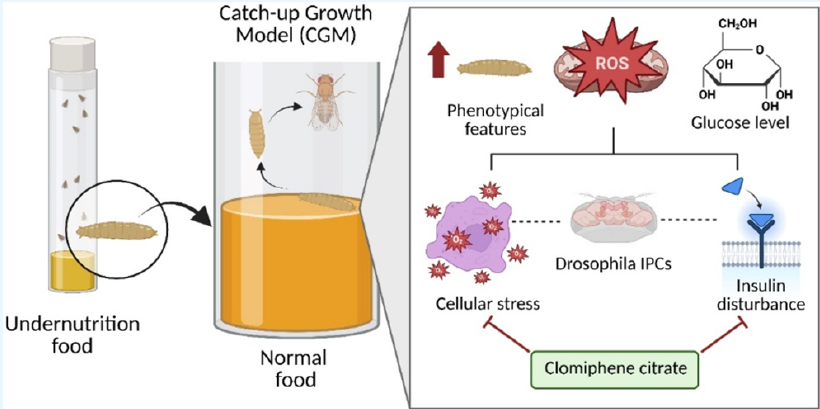
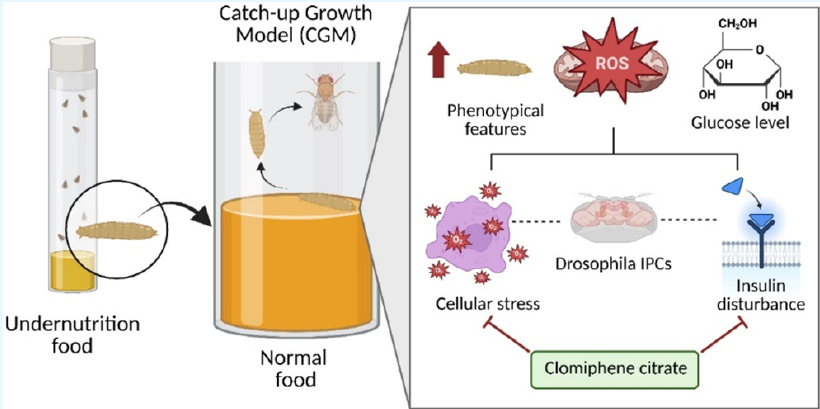
The researchers first placed Drosophila melanogaster larvae on a low-calorie diet to create a stunting-like condition. When the larvae were later returned to a normal diet, they experienced catch-up growth and eventually reached a body size similar to normally fed flies. However, their recovery in size came with a metabolic cost: glucose levels remained elevated, while triglycerides and oxidative stress also increased. These changes suggest that the flies may have developed an early form of metabolic imbalance despite appearing to recover physically.
The researchers then tested clomiphene citrate, a medicine better known for its use in fertility treatment. Interestingly, adding clomiphene citrate to the flies’ diet was associated with lower glucose levels and reduced oxidative stress, while also altering genes involved in insulin and hormone-related metabolic regulation. Importantly, the treatment did not cause obvious toxicity or impair the flies’ movement at the concentrations tested.
Beyond the laboratory, this research connects strongly with Sustainable Development Goal 3 (SDG 3): Good Health and Well-Being. By exploring how early nutritional challenges may influence metabolic health later in life, the study contributes to a broader effort to understand—and ultimately prevent—health problems linked to childhood undernutrition and metabolic dysfunction.
Reference
DOI:
https://doi.org/10.1021/acsomega.5c12117
Contact: Prof. Firzan Nainu
Email: firzannainu@unhas.ac.id
Mobile: +6282191310384