MAKASSAR, Indonesia, June 2025/UFRG/ ─ Antibiotics have transformed modern medicine by helping us treat bacterial infections that were once life-threatening. However, antimicrobial resistance is making some infections increasingly difficult to treat. One bacterium of particular concern is Pseudomonas aeruginosa, a Gram-negative bacterium that can cause serious infections, especially in healthcare settings. Because some strains can resist multiple antibiotics, scientists are searching for new ways to make existing antibiotics more effective.
What If an Antibiotic Had a Partner?
One possible strategy is combination therapy, in which two substances are used together to produce a stronger antibacterial effect. A research paper titled “The antibacterial effect of ceftazidime and vitamin C against Pseudomonas aeruginosa in Drosophila model of infection,” published in the Beni-Suef University Journal of Basic and Applied Sciences by Springer Nature on 5 June 2025, investigated whether vitamin C could enhance the activity of ceftazidime, a third-generation cephalosporin effective against P. aeruginosa. Rather than immediately testing the combination in humans, the researchers first used Drosophila melanogaster, or the fruit fly, as an infection model. Fruit flies are widely used in biomedical research because they are easy to maintain, genetically well characterized, and possess innate immune mechanisms that can provide valuable insights into host–pathogen interactions.
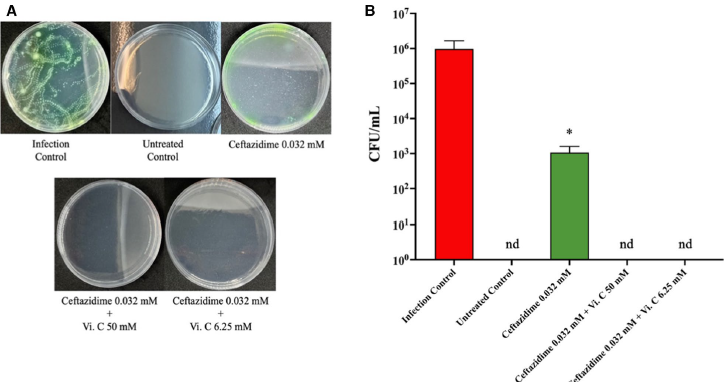
The researchers first asked a simple question: Could vitamin C help ceftazidime fight Pseudomonas aeruginosa more effectively? In the laboratory, the combination allowed ceftazidime to work at a lower concentration, with its minimum inhibitory concentration dropping from 12.5 to 6.25 µM. The researchers then tested the combination in infected fruit fly larvae. Interestingly, the treated larvae showed better survival than untreated infected larvae, suggesting that the combination could provide stronger protection against the infection.
The researchers also measured bacterial load in infected larvae. The combination of ceftazidime and vitamin C markedly suppressed detectable P. aeruginosa growth and increased the expression of fruit fly’s innate immune response. These findings suggest that vitamin C may enhance both the antibiotic’s effectiveness and the host’s defense.
Why Does This Finding Matter?
This study shows that improving antibiotic therapy may not always require developing new drugs, combining existing antibiotics with compounds like vitamin C could enhance their effectiveness. It also highlights the value of Drosophila melanogaster as a fast and efficient model for studying bacterial infections and screening potential antimicrobial treatments.
By exploring new strategies to combat antibiotic-resistant bacteria, this research supports SDG 3: Good Health and Well-Being. It demonstrates how innovative preclinical research can contribute to the global fight against antimicrobial resistance and the development of more effective future therapies.
Reference
DOI:
https://doi.org/10.1186/s43088-025-00647-5
Contact: Prof. Firzan Nainu
Email: firzannainu@unhas.ac.id
Mobile: +6282191310384