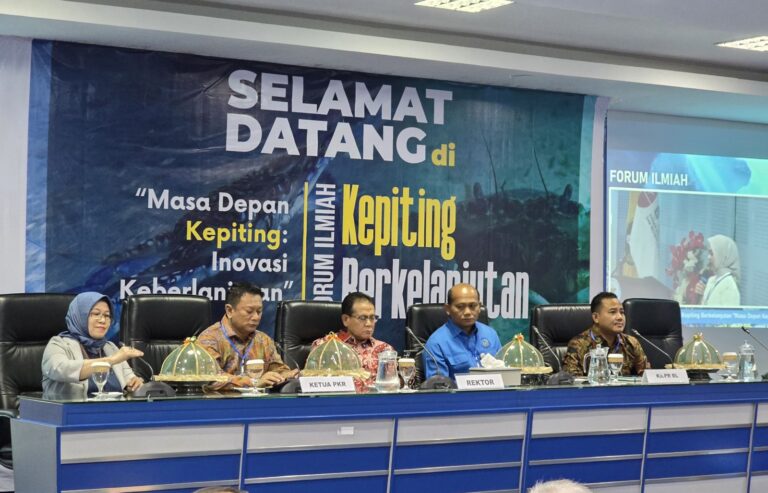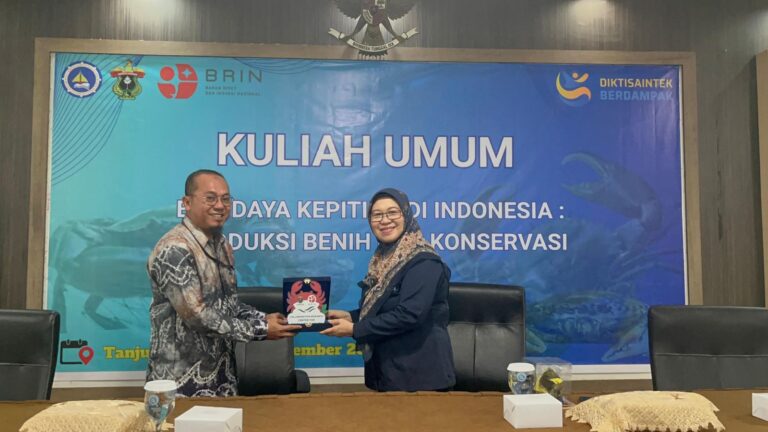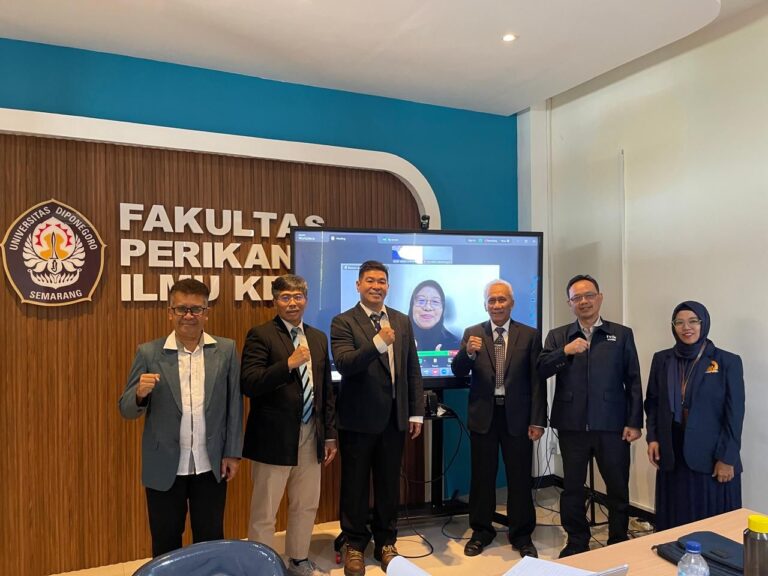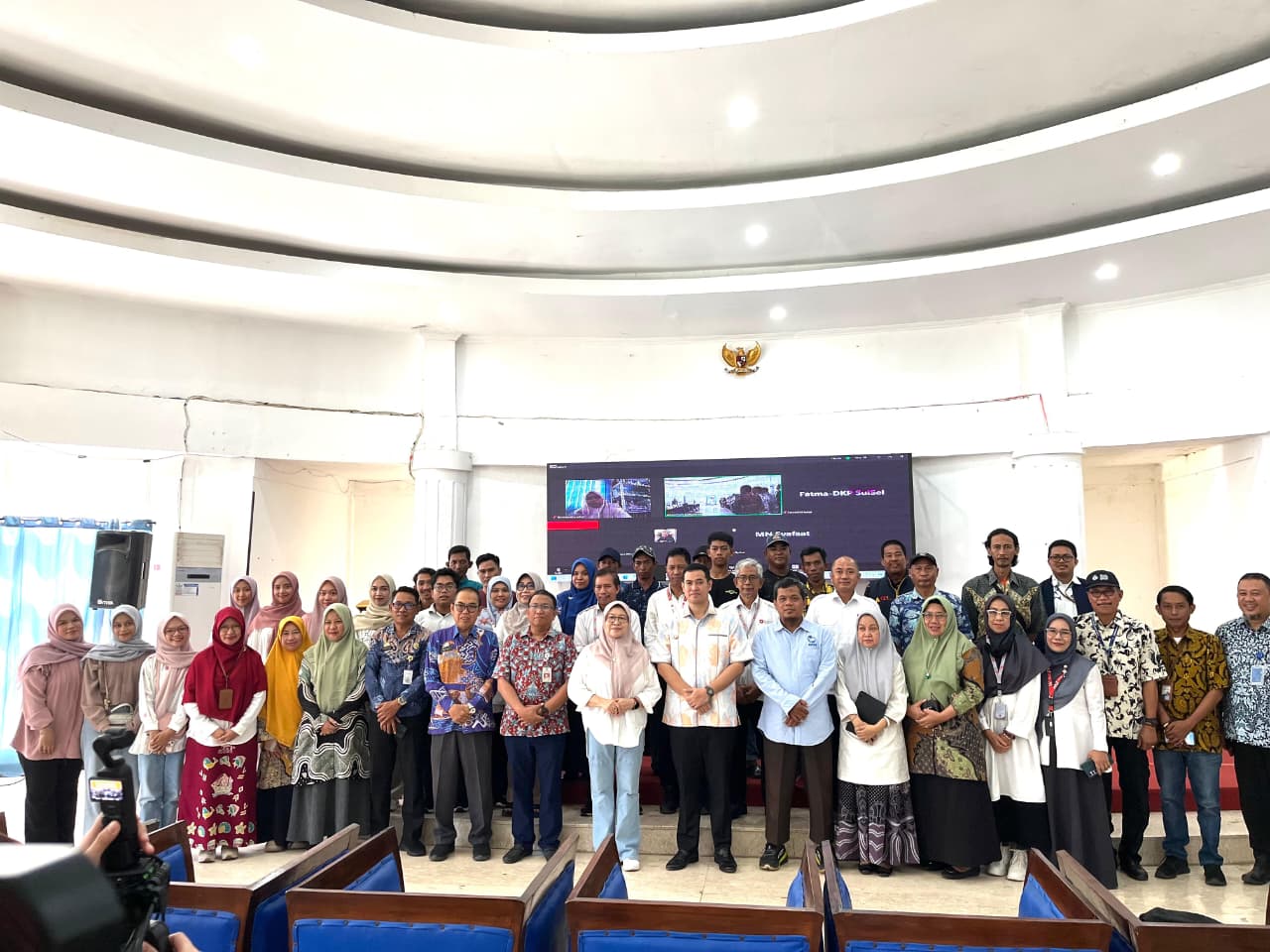

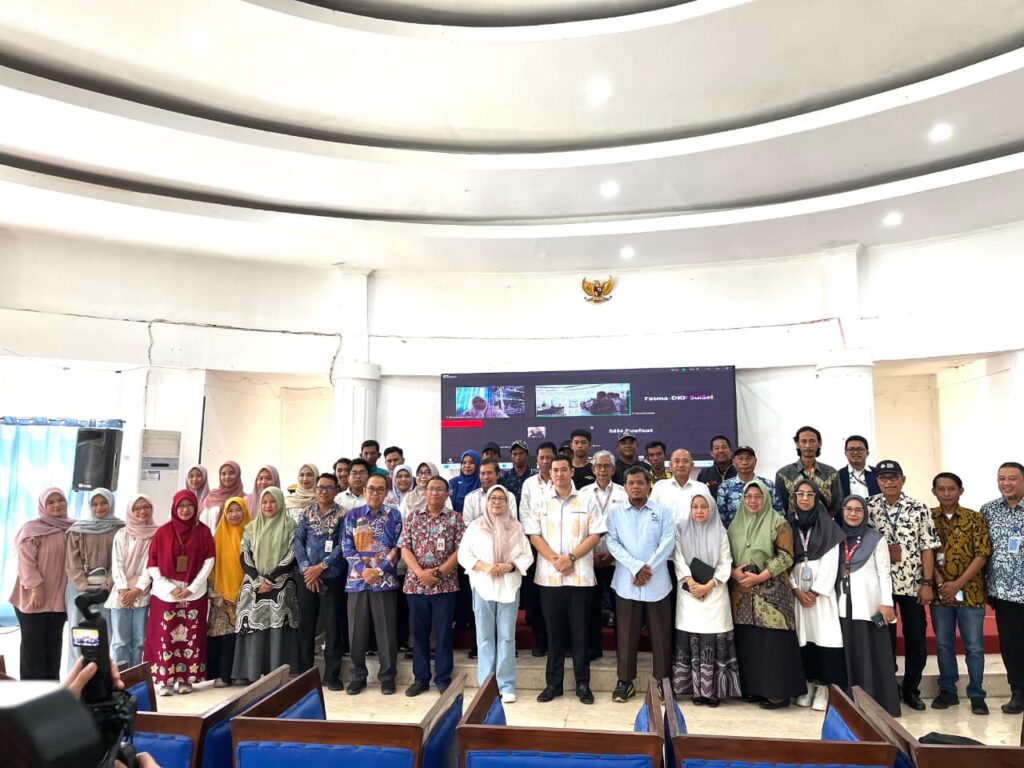
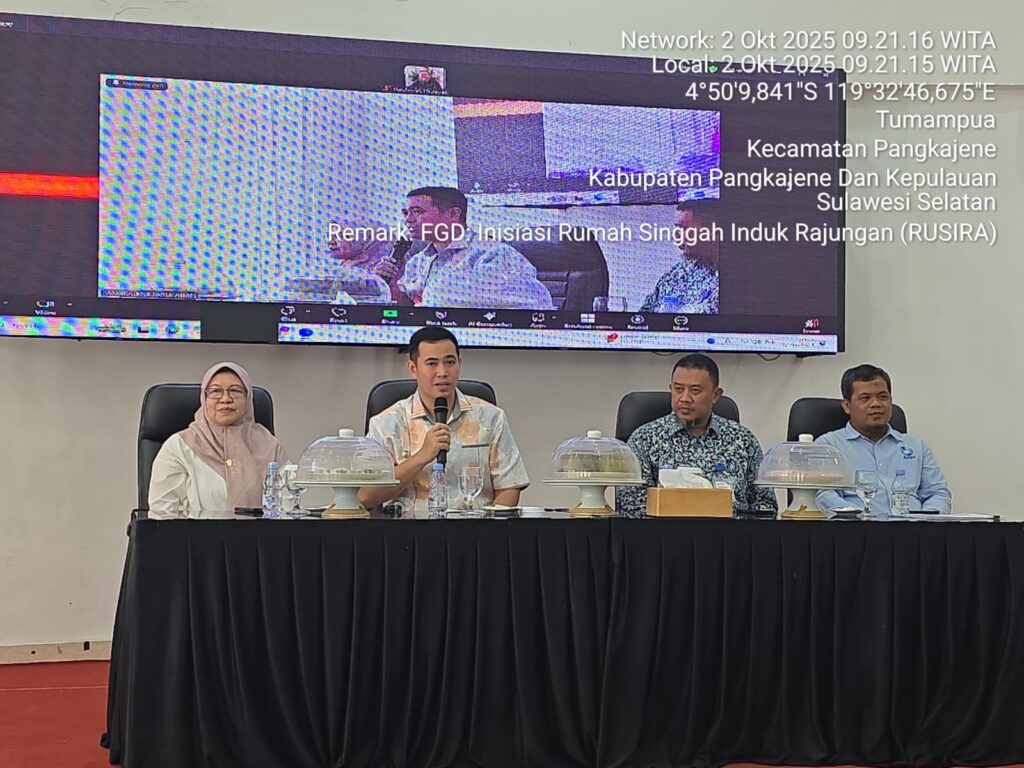
Pangkep, October 2, 2025 – Marking a groundbreaking step toward marine biodiversity protection and community-based fisheries management, a Focus Group Discussion (FGD) was successfully convened at the Pangkep Regent’s Official Residence in South Sulawesi Province. The strategic forum brought together approximately 50 participants, including academic researchers, regional government officials, marine policy experts, seafood industry representatives, and local fishing community leaders. Jointly initiated by the Center for Research Collaboration on Sustainable Crabs at Universitas Hasanuddin (Unhas) in partnership with the National Research and Innovation Agency (BRIN), the event served as a crucial platform for socialization and aligning multi-stakeholder perspectives regarding the vital importance of blue swimming crab conservation for ecological balance and regional economic sustainability.
During the comprehensive discussion, Pangkep Regency was officially designated as the pioneer national pilot project site for establishing the Berried Female Crab Shelter (Rumah Singgah Induk Rajungan – RUSIRA). Pangkep was selected due to its prominent position as one of South Sulawesi’s primary crab production hubs and the exemplary environmental consciousness demonstrated by local fishers, who routinely release egg-bearing female crabs back into the ocean. The Regent of Pangkep, Muhammad Yusran Lalogau, expressed full local government endorsement, emphasizing that conserving berried female crabs directly protects natural marine reproduction cycles while guaranteeing long-term fisher prosperity. Lead researcher Prof. Yushinta Fujaya explained that RUSIRA constitutes a core component of Unhas’s Crab Sanctuary initiative, built upon three integrated pillars: a temporary shelter for berried female crabs, a public fisher education hub, and a sustainable eco-tourism learning center.
This innovative conservation initiative explicitly aligns with and advances several Sustainable Development Goals (SDGs). By establishing an integrated collaborative framework connecting academic institutions, national research agencies, local government authorities, and coastal fishing communities, the project directly embodies SDG 17: Partnerships for the Goals, illustrating how multi-sectoral synergies accelerate sustainable coastal governance. Furthermore, by establishing a dedicated educational hub that delivers scientific literacy, environmental awareness, and marine stewardship training to local fishers, university students, and coastal residents, the initiative actively supports SDG 4: Quality Education, empowering local communities with actionable scientific knowledge.
The core focus on protecting berried female crabs, restoring natural reproduction cycles, and establishing sanctuary reserves directly advances SDG 14: Life Below Water, safeguarding wild crustacean populations, mitigating over-exploitation, and protecting delicate estuarine habitats. Ultimately, ensuring wild stock recovery and stabilizing national seafood supply chains directly addresses SDG 1: No Poverty. By protecting wild crab populations and cultivating sustainable eco-tourism revenue streams, RUSIRA safeguards coastal livelihoods, enhances household income stability, and secures long-term economic resilience for artisanal fishing families across Pangkep Regency. Through this milestone FGD, Pangkep sets an inspiring national benchmark for science-backed community conservation.