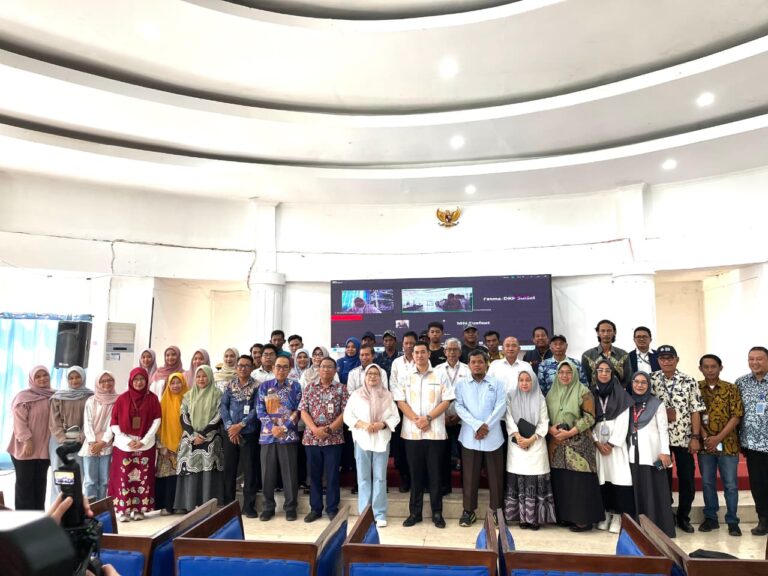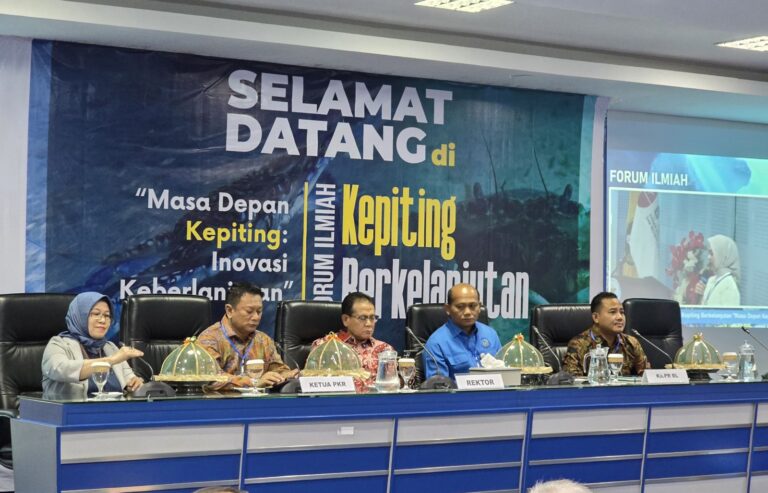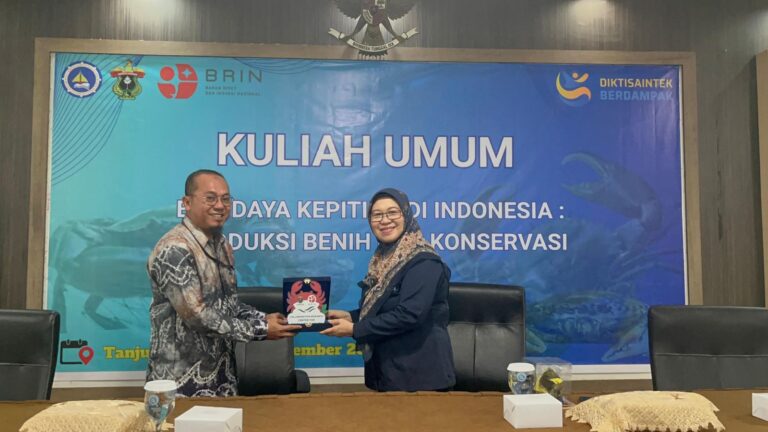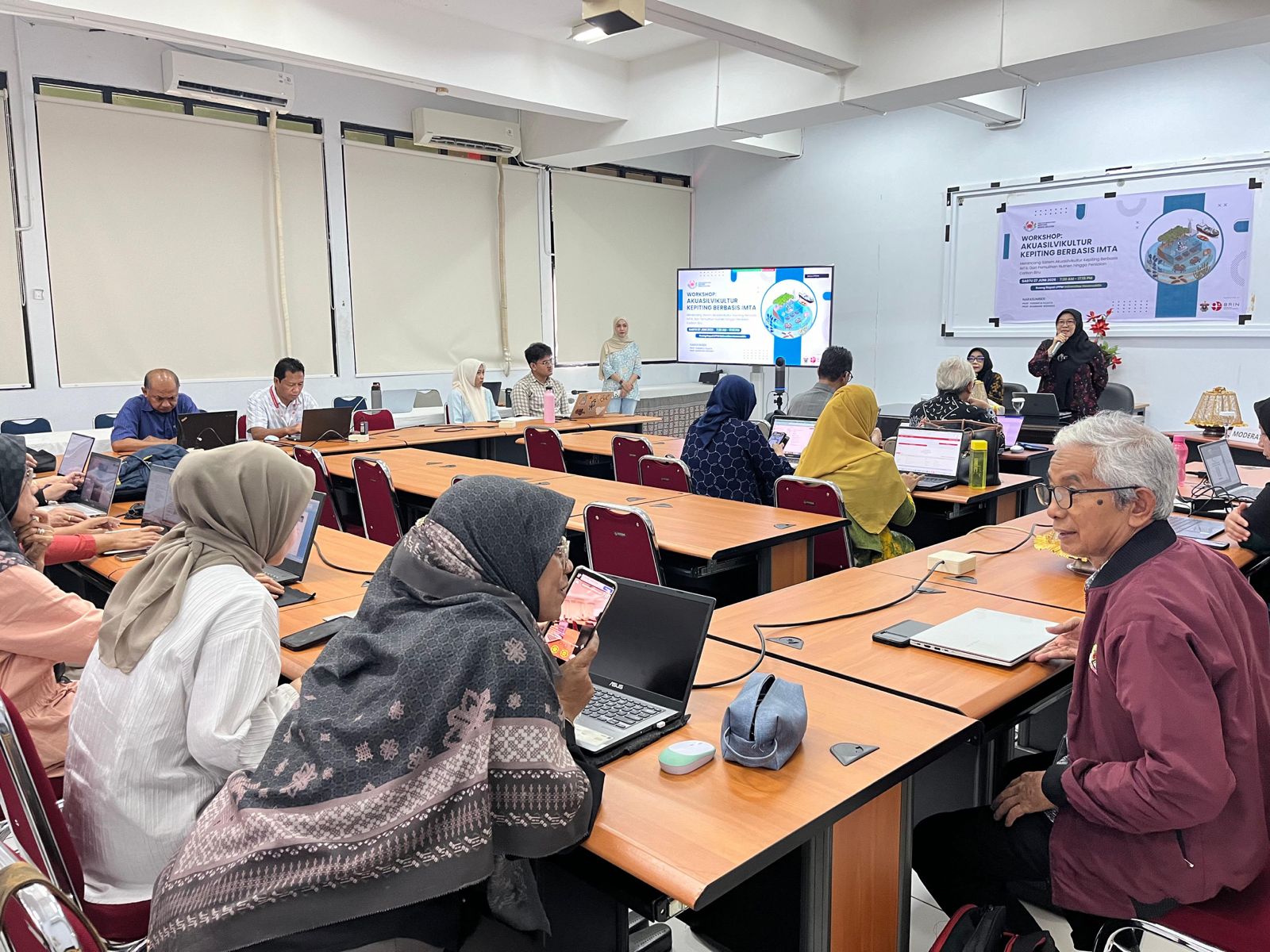

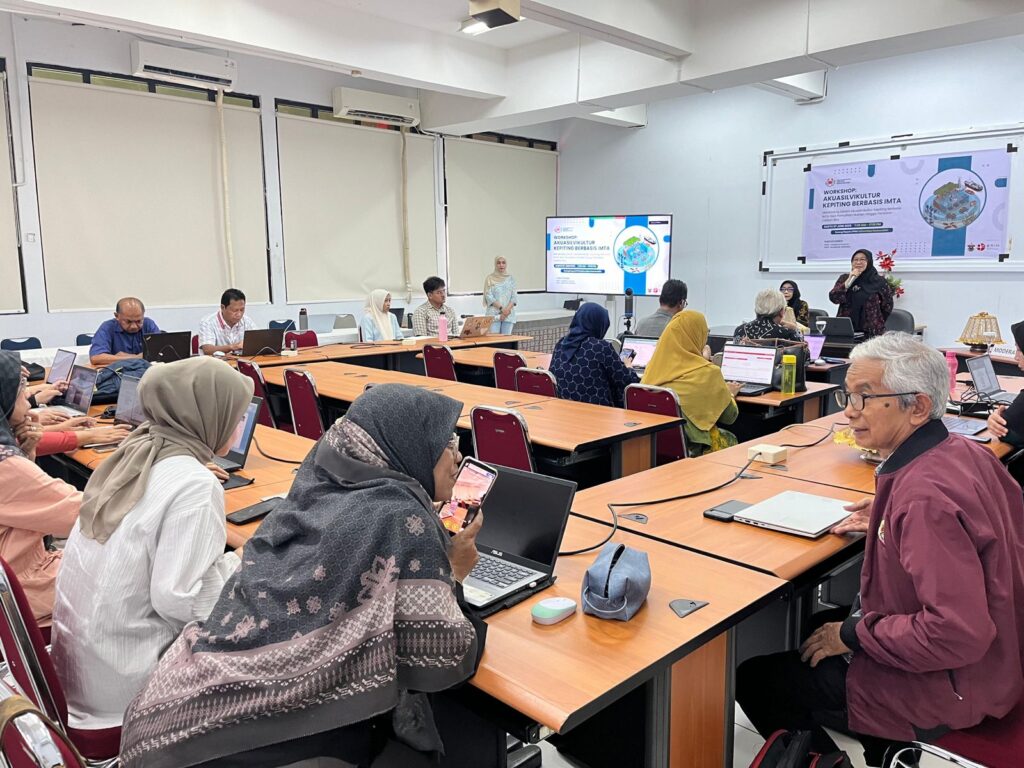
Makassar, June 27, 2026 – In an ambitious initiative to transform coastal aquaculture toward ecological sustainability, the Center for Sustainable Crab Research Collaboration (Pusat Kolaborasi Riset Kepiting Berkelanjutan – PKR Kepiting Berkelanjutan) successfully organized a national workshop. Held at the Institute for Research and Community Services (Lembaga Penelitian dan Pengabdian Masyarakat – LPPM) Universitas Hasanuddin, the workshop carried the theme “Designing IMTA-Based Crab Aquasilviculture Systems: From Nutrient Recovery to Blue Carbon Assessment.” The primary goal of this event was to significantly enhance the scientific competence and technical capabilities of the PKR Kepiting Berkelanjutan research team and its institutional partners in conducting cutting-edge research on sustainable aquaculture.
The hybrid event convened a vibrant community of 50 participants, including university researchers, faculty members, students, and local crab farmers from various institutions across Indonesia. This multi-stakeholder collaboration strongly exemplifies SDG 17: Partnerships for the Goals, illustrating how academic institutions, local practitioners, and research centers can synergize to accelerate innovation in sustainable coastal resource management. Furthermore, by delivering comprehensive academic training and hands-on scientific methodology, the event directly contributes to SDG 4: Quality Education, empowering scholars and practitioners with inclusive, high-caliber learning opportunities.
The workshop featured distinguished speakers who shared actionable insights on integrating aquaculture with ecological restoration. Prof. Dr. Yushinta Fujaya, Head of PKR Kepiting Berkelanjutan and Professor at the Faculty of Marine Science and Fisheries, Universitas Hasanuddin, emphasized that modern crab aquaculture must transcend traditional production targets. She highlighted that aquaculture should function as an integral component of coastal ecosystems, mitigating waste, restoring environmental quality, supporting mangrove conservation, and driving the blue economy. Complementing this perspective, Prof. Dr. Ir. Bambang Widigdo from IPB University underscored the necessity of quantitative scientific frameworks, guiding participants through environmental carrying capacity, nutrient balancing, mangrove-to-pond ratios, and blue carbon estimation.
During the practical sessions, participants actively calculated nutrient and carbon budgets while evaluating environmental carrying capacities for integrated multi-trophic aquaculture (IMTA) systems. Working in collaborative groups, attendees designed conceptual aquasilviculture models tailored to the distinct ecological characteristics of various Indonesian coastal regions. This focus on integrated mangrove-aquaculture systems directly advances SDG 14: Life Below Water and SDG 15: Life on Land, as IMTA practices protect marine ecosystems, minimize waste pollution, and preserve vital mangrove habitats that sequester blue carbon.
Ultimately, converting scientific research into resilient, eco-friendly aquaculture models brings tangible socioeconomic benefits to coastal populations. By enhancing crab yields while preserving mangrove ecosystems, this innovative approach directly addresses SDG 1: No Poverty by securing income stability, boosting local economic resilience, and ensuring long-term prosperity for coastal fishing communities. Through this landmark workshop, LPPM Universitas Hasanuddin and PKR Kepiting Berkelanjutan reaffirm their commitment to pioneering sustainable aquaculture, fostering regional partnerships, and leading green transformations across Indonesia’s coastal landscapes.