

Makassar, Indonesia, January, 31, 2026/SUSTRACCO/- Sustainability is no longer just a buzzword; it is a vital framework that guides how organizations, including universities, operate responsibly in society. This article highlights a pioneering approach to social sustainability governance at Universitas Muhammadiyah Makassar, Indonesia, where the integration of global sustainability standards with Islamic institutional values is creating a unique model of social responsibility.
The source of this insight is the article titled “Designing a Social Sustainability Governance Framework: Integrating Triple Bottom Line Principles and Islamic Institutional Values in an Indonesian University,“ published in the International Journal of Sustainable Development and Planning by the International Information and Engineering Technology Association on January 31, 2026. This study explores how the university embeds the social dimension of sustainability into its governance, guided by the triple bottom line (TBL) principles—economic, environmental, and social—and enriched by Islamic ethical values.
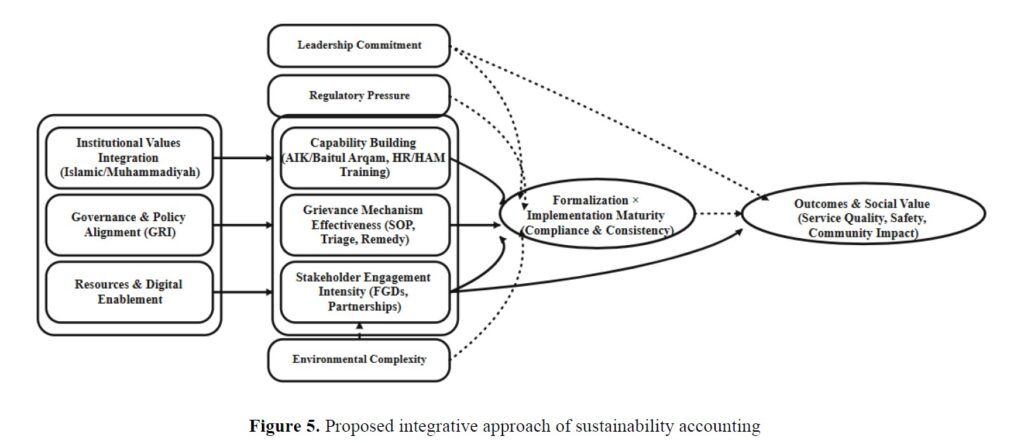
The university’s approach goes beyond traditional sustainability reporting. It operationalizes social sustainability by aligning with the Global Reporting Initiative (GRI) standards while deeply embedding Islamic principles such as justice, trustworthiness, and social responsibility. This fusion supports human resource management, community empowerment programs, and institutional accountability, reflecting a comprehensive commitment to social welfare.
One of the critical strengths of this model is its responsiveness to local culture and religion, which enhances the legitimacy and effectiveness of sustainability efforts. For example, the university implements fair labor practices, promotes community engagement, and ensures ethical governance—all informed by both international standards and Muhammadiyah fatwas. Training programs like Al-Islam and Muhammadiyah (AIK) and the Baitul Arqam program help instill these values among staff, fostering a culture of ethical professionalism.
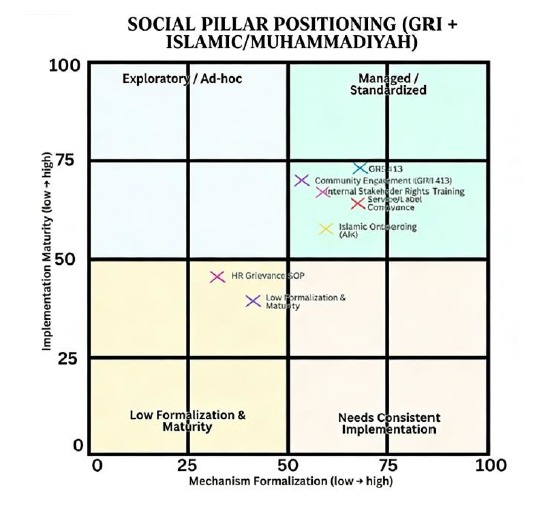
However, the study also identifies challenges such as the need for formalized grievance procedures, ongoing human rights training, and better integration of Islamic work culture for new employees. Addressing these gaps is crucial to transform social sustainability from a formal obligation into a genuine driver of organizational ethics and social justice.
This integrated governance framework directly supports several United Nations Sustainable Development Goals (SDGs), notably SDG 1 (No Poverty), SDG 3 (Good Health and Well-being), SDG 4 (Quality Education), SDG 14 (Life Below Water), SDG 15 (Life on Land), and SDG 17 (Partnerships for the Goals). By empowering local communities, promoting inclusive education, and fostering ethical institutional practices, the university contributes to these global goals in a culturally relevant way.
In conclusion, the innovative social sustainability governance framework at Universitas Muhammadiyah Makassar demonstrates how higher education institutions can lead by example. By integrating the triple bottom line with Islamic values, the university not only advances sustainability accounting but also nurtures social justice and community well-being. This model offers valuable lessons for faith-based and secular organizations alike, highlighting the power of combining global standards with local wisdom to achieve sustainable development.

Reference :
https://doi.org/10.18280/ijsdp.210114
Contact:
Prof. Syarifuddin, SE., M.Soc.,SC.,AK
081334348498
syarif1963@yahoo.com
syarifuddin@fe.unhas.ac.id


