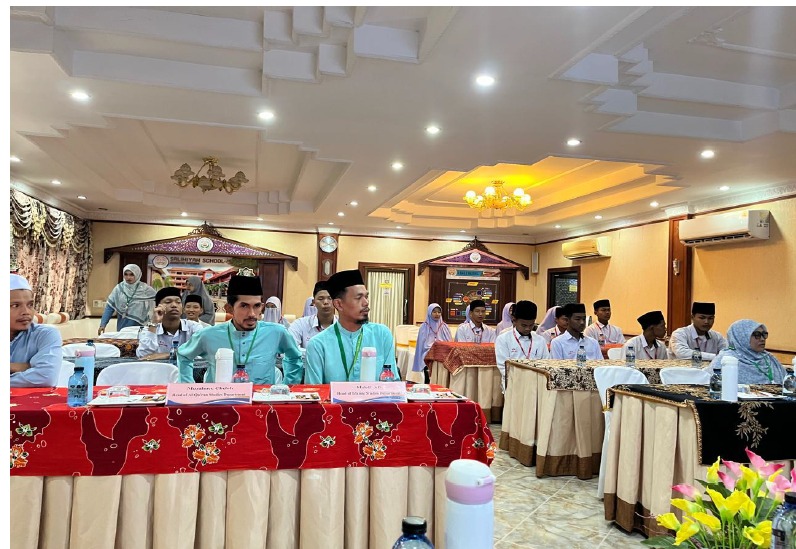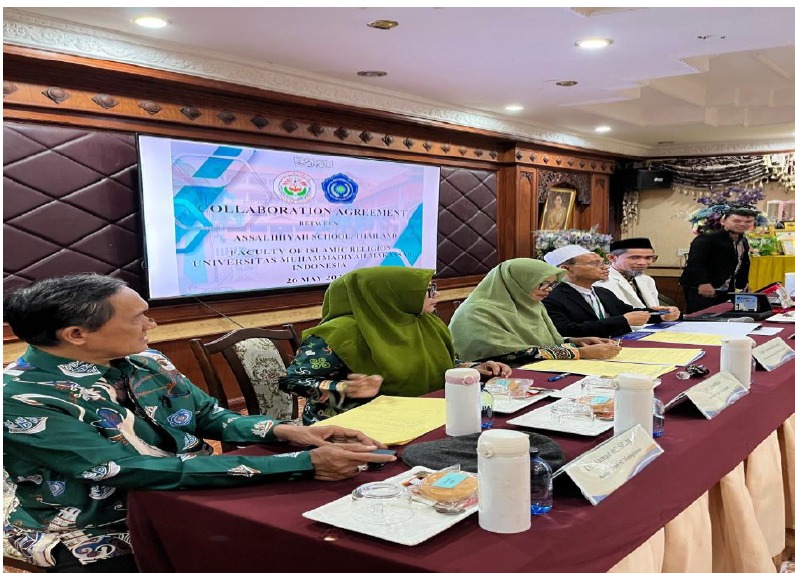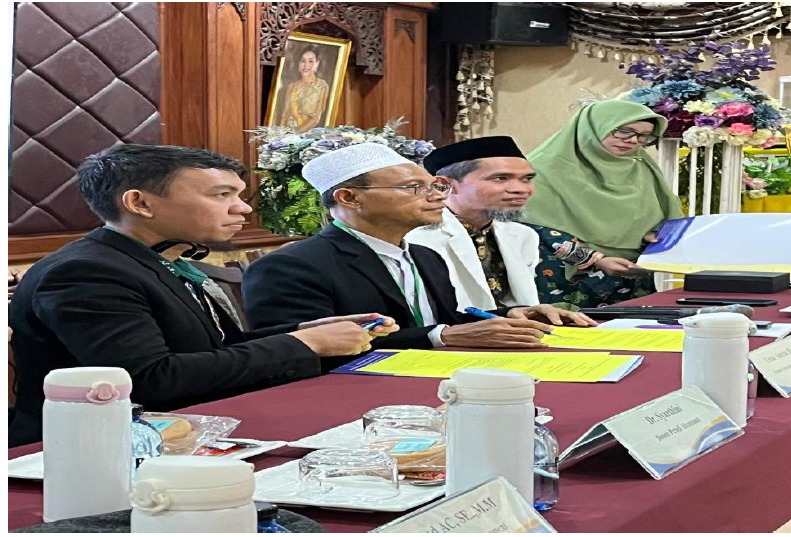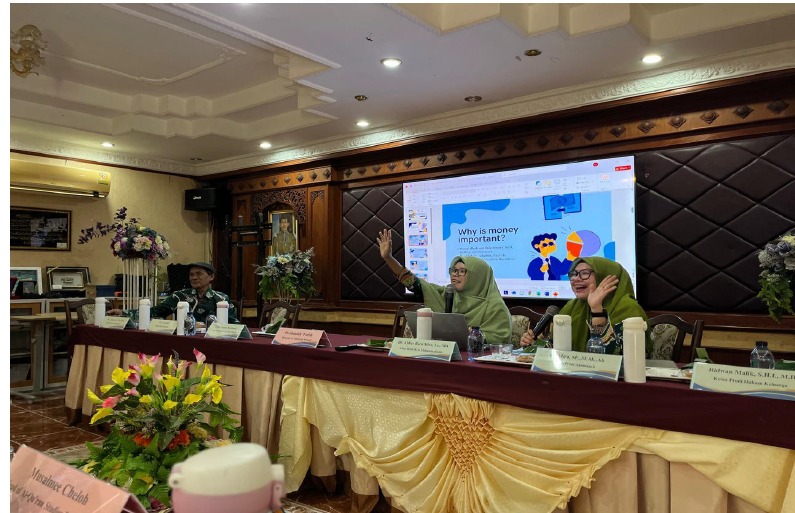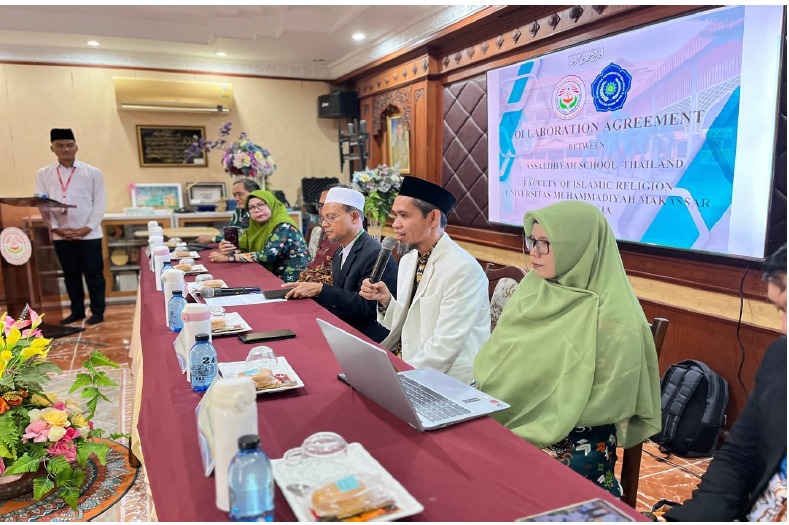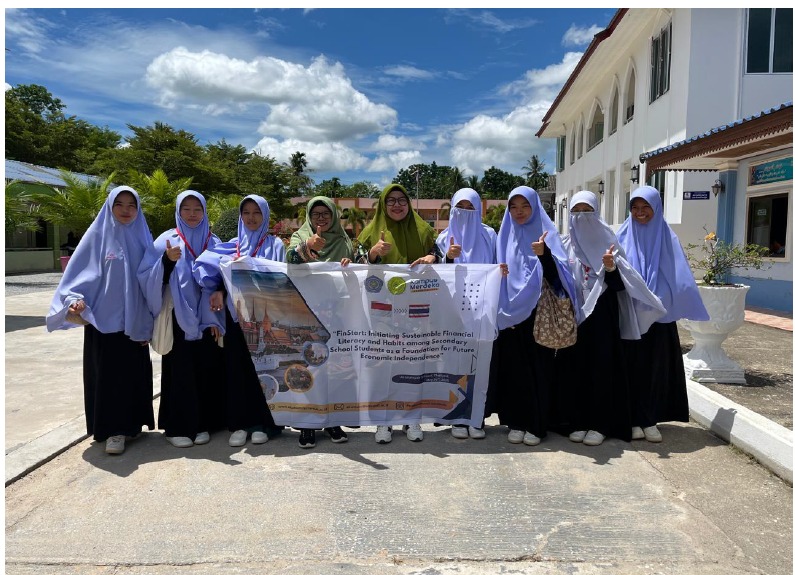

Thailand, On May 26, 2025, an impactful community service activity titled “FinStart: Initiating Sustainable Financial Literacy and Habits Among Secondary School Students as a Foundation for Future Economic Independence” was successfully conducted at AECI, Assalihiyah School, Thailand. International collaboration was a key feature of this event, with experts from Birmingham City University joining the program. The activity was led by Prof. Syarifuddin as Team Leader, with members Wahyuni, Afdal, Gaffur, and Mira. Implementation involved support from international partners at Birmingham City University—including Dr. Kashan Pirzada—as well as collaboration with AECI and the Assalihiyah School in Thailand. This collaboration played a crucial role in strengthening the international dimension of the community service initiative while facilitating the exchange of knowledge, experience, and best practices in financial literacy education. The distinguished team included Dr. Kashan Pirzada This program was designed to address the critical need for financial literacy among secondary school students, aiming to empower them with the knowledge and habits necessary for long-term economic independence. The initiative involved 23 participants and was supported by a dedicated team of students: Muhammad Fater Naraheng, Muhammad Affam Jehsae, Muhammad Saaudee Yusoh, Nurshatif Lamo, Furkon Tolu, Suhaidee Masae, Muhammad Fadil Deramae, Taufik Hajjilah, Farhan Mahmin, Sakirim Suleng, Maleekee Kuwanegber, Sulaiman Samae, Asree Baraheng, Subhi Isming, Muhammad Samaea, Nurdiyana Saro, Chehafsoh Mani, Alwanee Mahmingjalong, Arneesah Samae, Asmah Hama, Araf Yeelah, and Aranya Maengoh.
The primary objective of this activity was to create a positive long-term impact by enhancing economic independence at individual, family, and community levels. Recognizing the importance of sustainable development, the program explicitly aligned with the United Nations Sustainable Development Goals (SDGs), particularly SDG 1 (No Poverty), SDG 4 (Quality Education), and SDG 17 (Partnerships for the Goals). By improving financial literacy, the program contributes to poverty reduction (SDG 1) through empowering youth with essential economic skills. The educational approach ensures quality learning experiences (SDG 4), while the collaboration with international partners such as AECI and Assalihiyah School exemplifies effective partnerships (SDG 17).
The FinStart program was meticulously designed to address common challenges faced by students, including low understanding of financial management, inability to distinguish between needs and wants, lack of consistent saving habits, and limited knowledge of financial risks and simple investments. The program employed experiential and interactive learning methods such as simulations of pocket money management, educational games, joint savings projects, and introduction to basic investments. Additionally, students engaged in productive creative activities like mini entrepreneurship projects using recycled goods, providing practical experience in managing finances and generating income.
Teachers played a crucial role as facilitators, receiving special training to sustain the program’s impact beyond its initial implementation. Pre- and post-tests were conducted to evaluate knowledge gains, with the program aiming for at least a 30% improvement in financial literacy scores and the formation of saving habits in at least 70% of participants. Post-program monitoring over 13 months ensured that these positive behaviors were maintained, reinforcing the program’s sustainability.
This initiative not only equips students with theoretical knowledge but also fosters practical financial skills and habits, laying a solid foundation for future economic independence. The collaboration between University of Muhammadiyah Makassar and Assalihiyah School, Thailand, highlights the power of international partnerships in addressing global challenges through localized solutions.
In conclusion, FinStart represents a strategic investment in youth education and economic empowerment. By integrating financial literacy into secondary education and fostering sustainable habits, this program supports the achievement of SDGs 1, 4, and 17, contributing to a resilient, economically independent generation prepared to face future challenges.