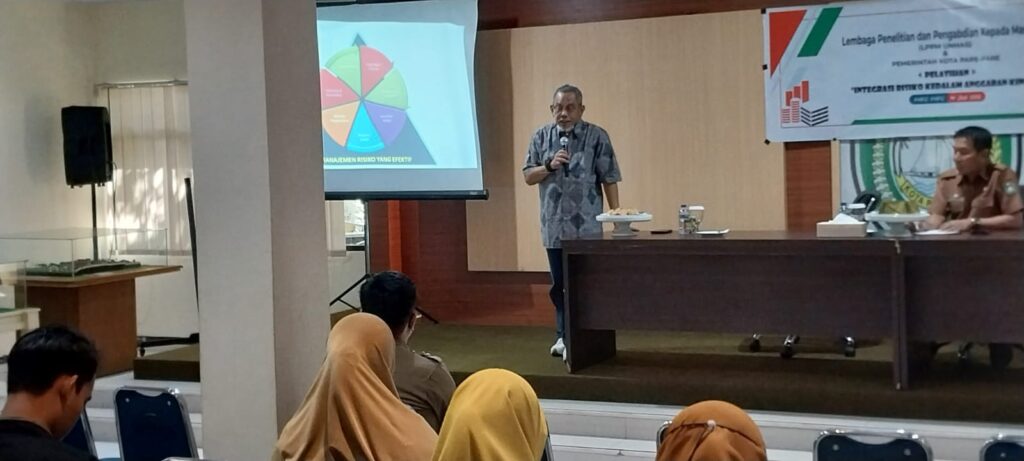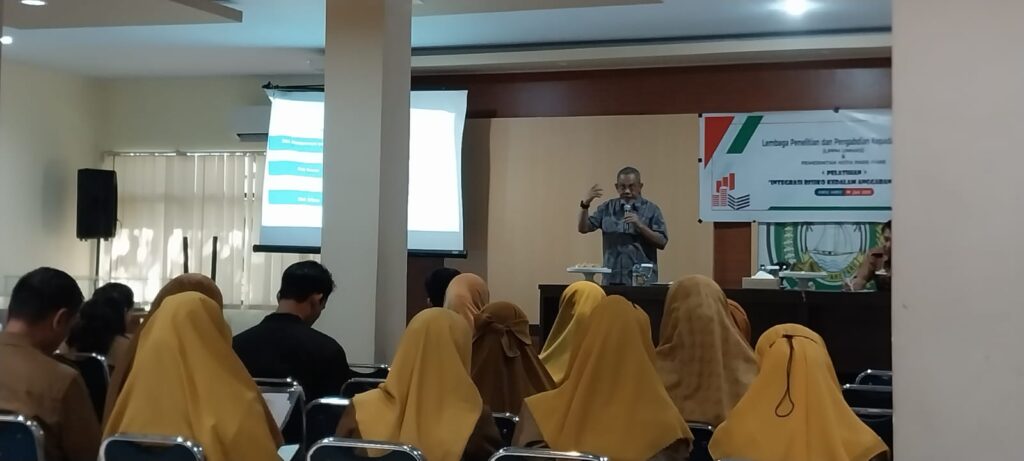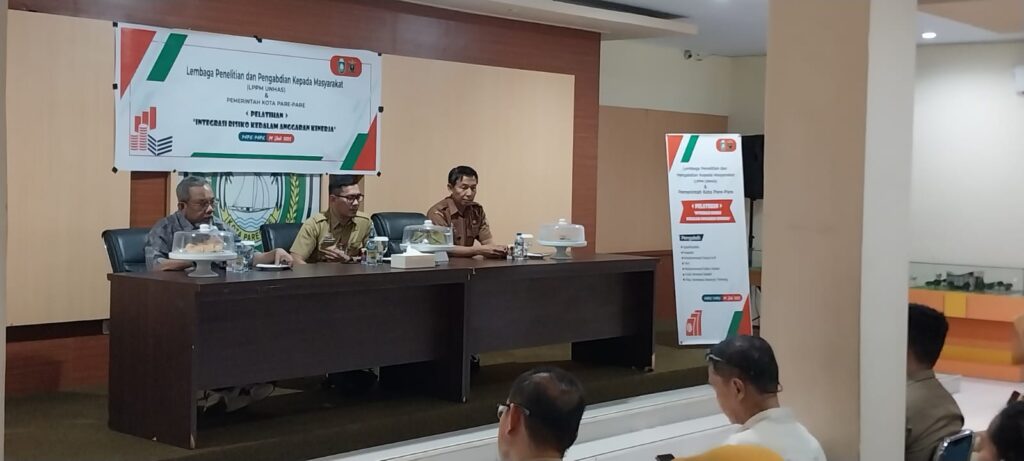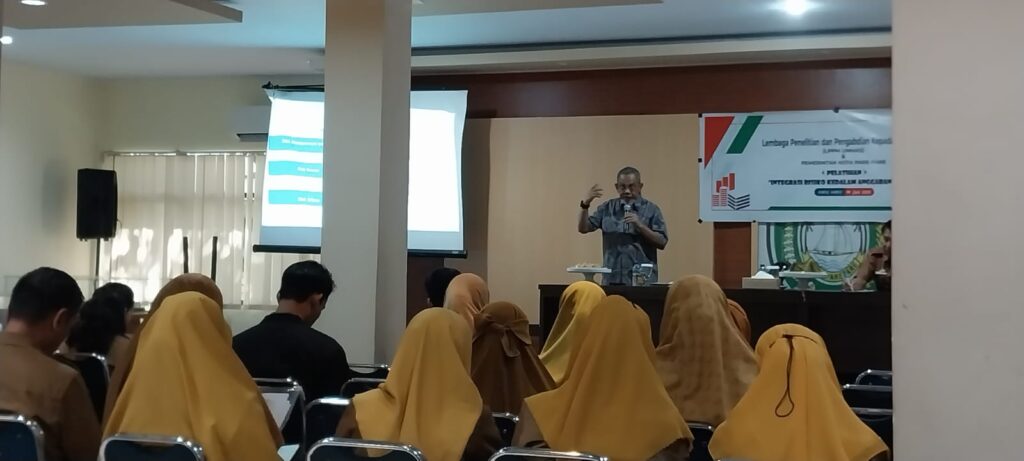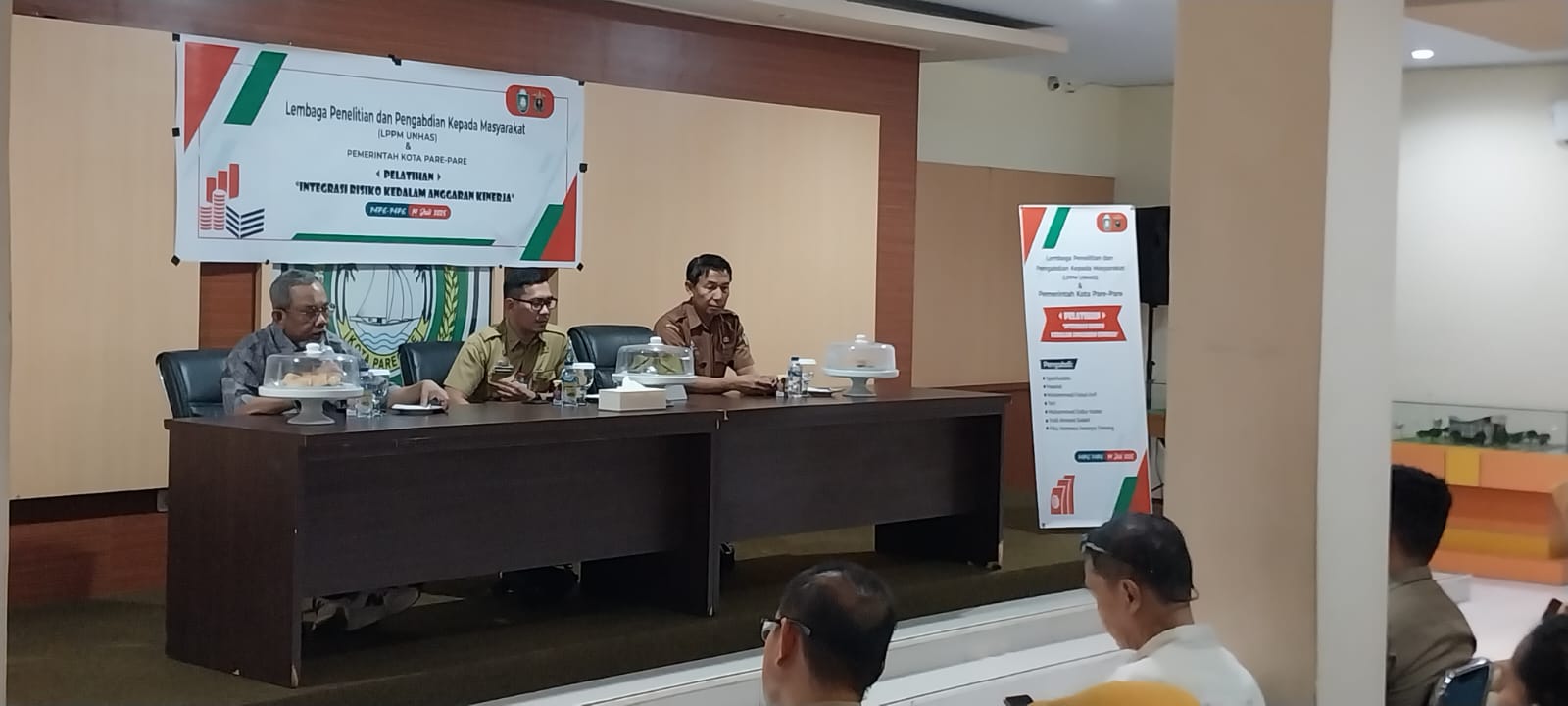

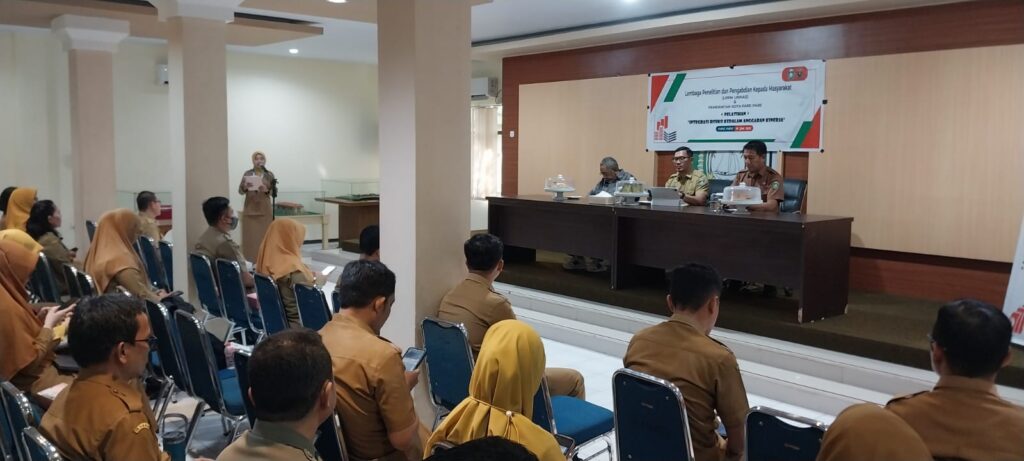
Pare Pare, On July 14, 2025, the Pare-Pare City Government hosted a pivotal training and workshop titled “Training on Integrating Risk Indicators into Performance Budgeting to Enhance the Effectiveness of Public Financial Management.” This initiative was designed to significantly improve the capacity of human resources within local government by equipping officials and staff with advanced knowledge and skills in performance-based budgeting and risk management. The event was attended by 50 participants, including 6 doctoral students in Accounting Science and 1 lecturer, reflecting a strong collaboration between academia and public administration.
The core objective of this training was to deepen the understanding of performance budgeting frameworks and demonstrate how risk indicators can be systematically integrated to optimize budget planning and execution. Participants engaged in scientific discussions and practical exercises focusing on risk identification, evaluation, and mitigation techniques aligned with international standards such as ISO 31000:2018. By fostering this expertise, the event aimed to strengthen the governance and accountability mechanisms essential for effective public financial management.
This activity directly supports the achievement of several United Nations Sustainable Development Goals (SDGs). Primarily, it advances SDG 1 (No Poverty) by promoting efficient allocation and management of public funds, which is crucial for poverty alleviation programs. It also contributes to SDG 4 (Quality Education) through capacity-building efforts that enhance the competencies of government officials and academic participants alike. Furthermore, the collaboration and knowledge exchange exemplify the spirit of SDG 17 (Partnerships for the Goals), emphasizing the importance of partnerships between government institutions and educational entities to achieve sustainable development outcomes.
The training addressed the challenges faced by local governments in managing financial risks and uncertainties that could impact the achievement of organizational objectives. By integrating risk management principles into budgeting processes, the government of Pare-Pare aims to ensure more resilient and adaptive public financial systems. This approach not only mitigates potential financial losses but also enhances service delivery and public trust.
In conclusion, this training represents a strategic investment in human capital and institutional capacity that aligns with global development priorities. The Pare-Pare City Government’s commitment to improving its public financial management through such innovative initiatives underscores its dedication to sustainable and inclusive development.