


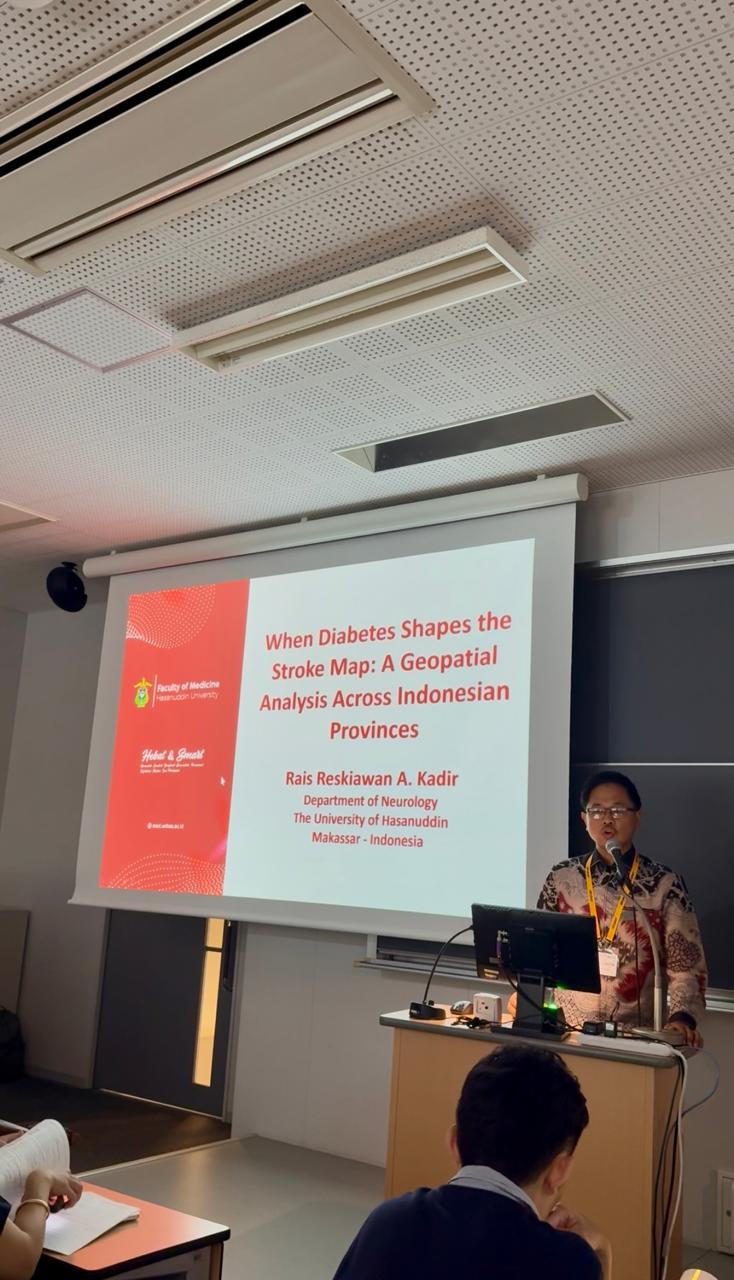

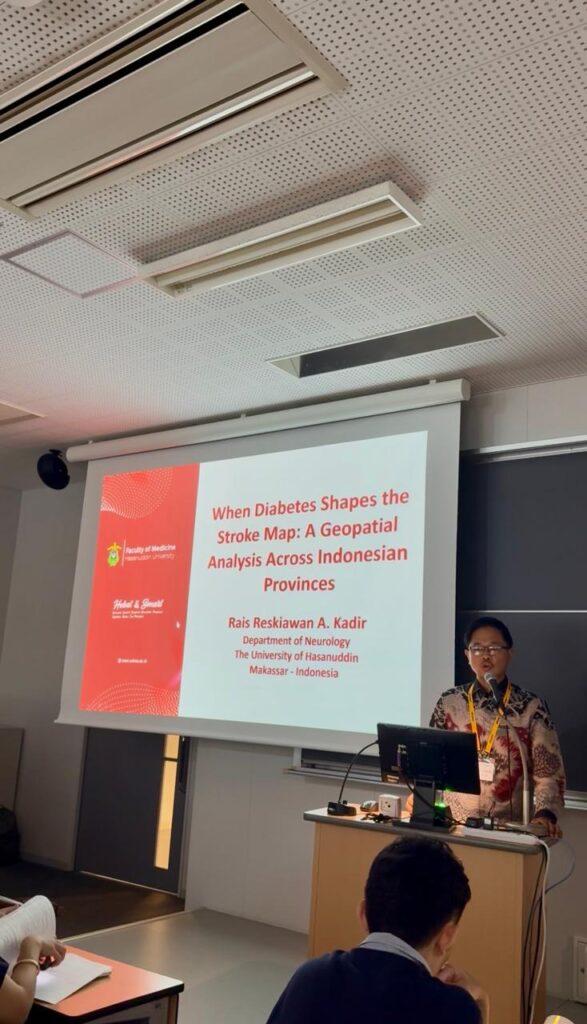
The participation in APSO 2025 marked an important academic and institutional milestone in advancing international collaboration, scientific exchange, and public health advocacy. Held in Japan on 14 September 2025, this international conference brought together approximately 500 participants from various countries, professional backgrounds, and research institutions. As a global forum dedicated to stroke care and related health challenges, APSO 2025 provided a strategic platform for sharing knowledge, presenting scientific evidence, and building partnerships to address one of the most pressing health burdens in the Asia-Pacific region.
As an international conference, APSO 2025 was designed not only to disseminate recent scientific findings, but also to encourage dialogue between researchers, clinicians, educators, and policymakers. Through keynote sessions, oral presentations, abstract discussions, and networking opportunities, the conference highlighted the importance of connecting local health realities with global scientific progress. This kind of forum is essential in today’s health landscape, where complex diseases such as stroke are influenced by multiple clinical, social, economic, and environmental factors.
From a broader development perspective, APSO 2025 strongly reflects the values of several Sustainable Development Goals. First, the conference directly aligns with SDG 3: Good Health and Well-Being, as its central focus is improving stroke prevention, treatment, rehabilitation, and long-term health outcomes. Stroke remains one of the leading causes of disability and mortality, and international scientific collaboration is vital for identifying effective interventions and strengthening healthcare systems. By encouraging evidence-based discussion and innovation, APSO 2025 contributes to the global effort to improve quality of life and reduce preventable health loss.
Second, the conference also supports SDG 4: Quality Education. Scientific meetings such as APSO 2025 function as important educational spaces where participants gain updated knowledge, exchange ideas, and develop new competencies. The transfer of knowledge that occurs in international forums enhances both professional development and institutional learning. Researchers and practitioners return to their respective institutions with broader perspectives, updated methods, and stronger motivation to improve teaching, research, and community service.
Third, APSO 2025 clearly embodies SDG 17: Partnerships for the Goals. The conference serves as a meeting point for international cooperation, where meaningful partnerships are formed across universities, hospitals, research centers, and professional organizations. These partnerships are essential for developing multicenter studies, expanding academic networks, and translating scientific knowledge into real-world impact. Global health challenges cannot be solved in isolation, and APSO 2025 demonstrates how collaboration remains at the heart of sustainable progress.
In addition, the conference can also be linked to SDG 1: No Poverty, since improving stroke care and prevention helps reduce the long-term economic burden experienced by individuals, families, and communities. Health shocks often deepen social and economic vulnerability, and better health systems can play a significant role in protecting livelihoods.
Overall, APSO 2025 in Japan was more than a scientific gathering. It was a meaningful international engagement that reinforced the role of academic participation in promoting health, education, and global partnership. Through this conference, participants contributed not only to scientific advancement, but also to the broader agenda of sustainable development.


