
This study aims to analyze the influence of Organizational Culture, Organizational Commitment, and Job Satisfaction on the performance of public high school teachers in South Sulawesi, with Organizational Citizenship Behavior (OCB) as an intervening variable. This research employs quantitative analysis using SEM PLS 3.0 with SPSS version 22. The research subjects are teachers in public schools located in South Sulawesi. Data collection is conducted through the distribution of questionnaires.
This study examines the impact of structural transformation on economic growth in industrial regions of Indonesia and explores the moderating role of dynamic capabilities, particularly through human capital quality and technological innovation. Structural transformation, characterized by a shift from traditional sectors such as agriculture to more productive sectors like manufacturing and services, is crucial for long-term economic development. However, Indonesia faces challenges such as premature deindustrialization, where the contribution of the industrial sector to GDP declines before reaching advanced economic maturity.
Using a fixed effects panel data model, this research assesses the relationship between structural transformation and economic growth, including interactions to test whether dynamic capabilities can enhance this relationship. The findings reveal that while structural transformation alone does not significantly drive economic growth, dynamic capabilities such as human capital quality and innovation capacity play an important role in maximizing its benefits. However, the expected positive moderating effects of dynamic capabilities are not fully realized, indicating that policies targeting workforce skills, technological innovation, and infrastructure improvement are still needed.
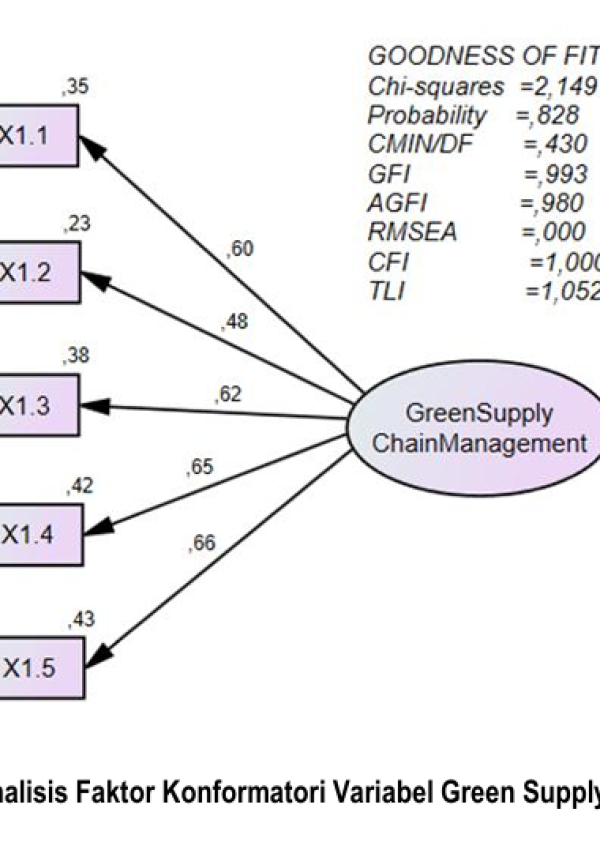
This research investigates the impact of Green Supply Chain Management (GSCM) on competitive advantage, environmental performance, and the performance of Small and Medium Enterprises (SMEs). The findings indicate that GSCM has a significant positive effect on competitive advantage, which in turn significantly enhances both environmental performance and SME performance. However, the direct effects of GSCM on environmental performance and SME performance are not significant. Competitive advantage is found to be a full mediator in the relationship between GSCM and SME performance, while environmental performance does not mediate this relationship. These findings underscore the importance of competitive advantage as a key factor in driving SME performance through the implementation of GSCM.
The objective of this study is to determine the most important brand attributes of Bank Sulselbar for its customers. The research confirms previous findings that attributes such as financial advice, assistance, innovation, problem-solving, and friendly staff contribute significantly to reliability, customer service, quality, brand experience, and preference. Additionally, convenience and social responsibility are highlighted, supported by descriptive analysis. However, the findings do not support the theory that banks need to change community lives to remain relevant, suggesting that the survey instrument may not have accurately measured this theory, indicating a need for future research to provide further insights.
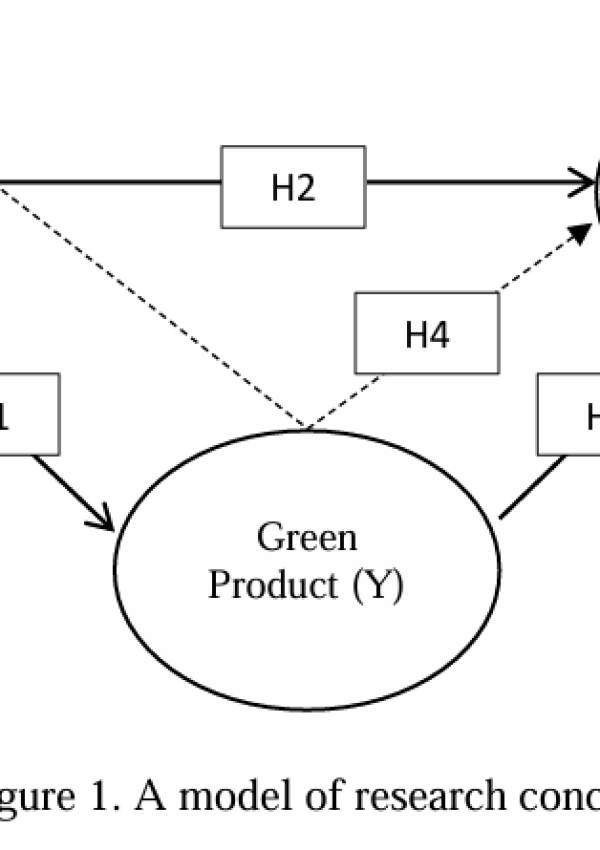
Strategy of green marketing and green product has an important role in improving the marketing performance of SMEs. The specific objectives of the study are (1) to analyze the effect of green marketing on green product of SMEs in South Sulawesi, (2) to analyze the effect of green marketing on marketing performance of SMEs in South Sulawesi, (3) to analyze the effect of green products on marketing performance of SMEs in South Sulawesi, and (4) design of marketing performance development model through green marketing and green product of SMEs in South Sulawesi. The population was all SMEs registered at the Department of Cooperatives and SMEs in Makassar and Pare-Pare. The sample is SME entrepreneurs who are selected according to the research objectives and meet certain criteria (Purposive Sampling). The respondents were micro and small business actors/entrepreneurs who were selected to represent their businesses with a total of 100 people. Descriptive analysis and Structural Equation modeling (SEM) with SmartPLS tools were used to solve research problems. The results show that the implementation of green marketing and green products on marketing performance of SMEs in South Sulawesi has a positive and significant effect. This research shows that green product is most important variable in supporting marketing performance. Thus, green product as an intervening variable is very effective in improving the marketing performance of SMEs in South Sulawesi