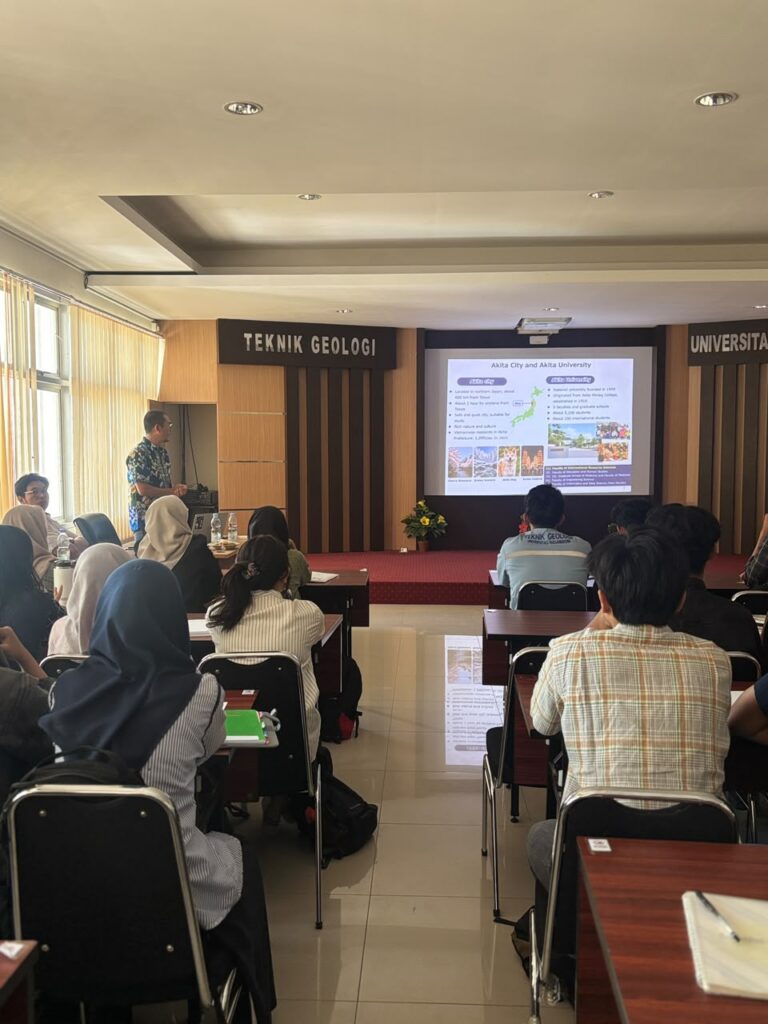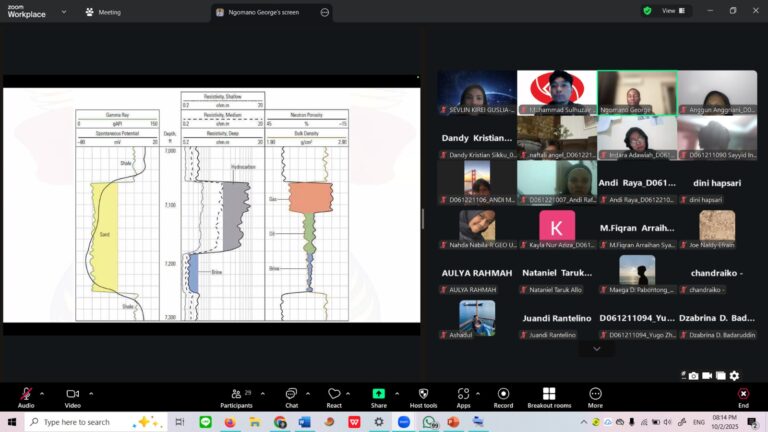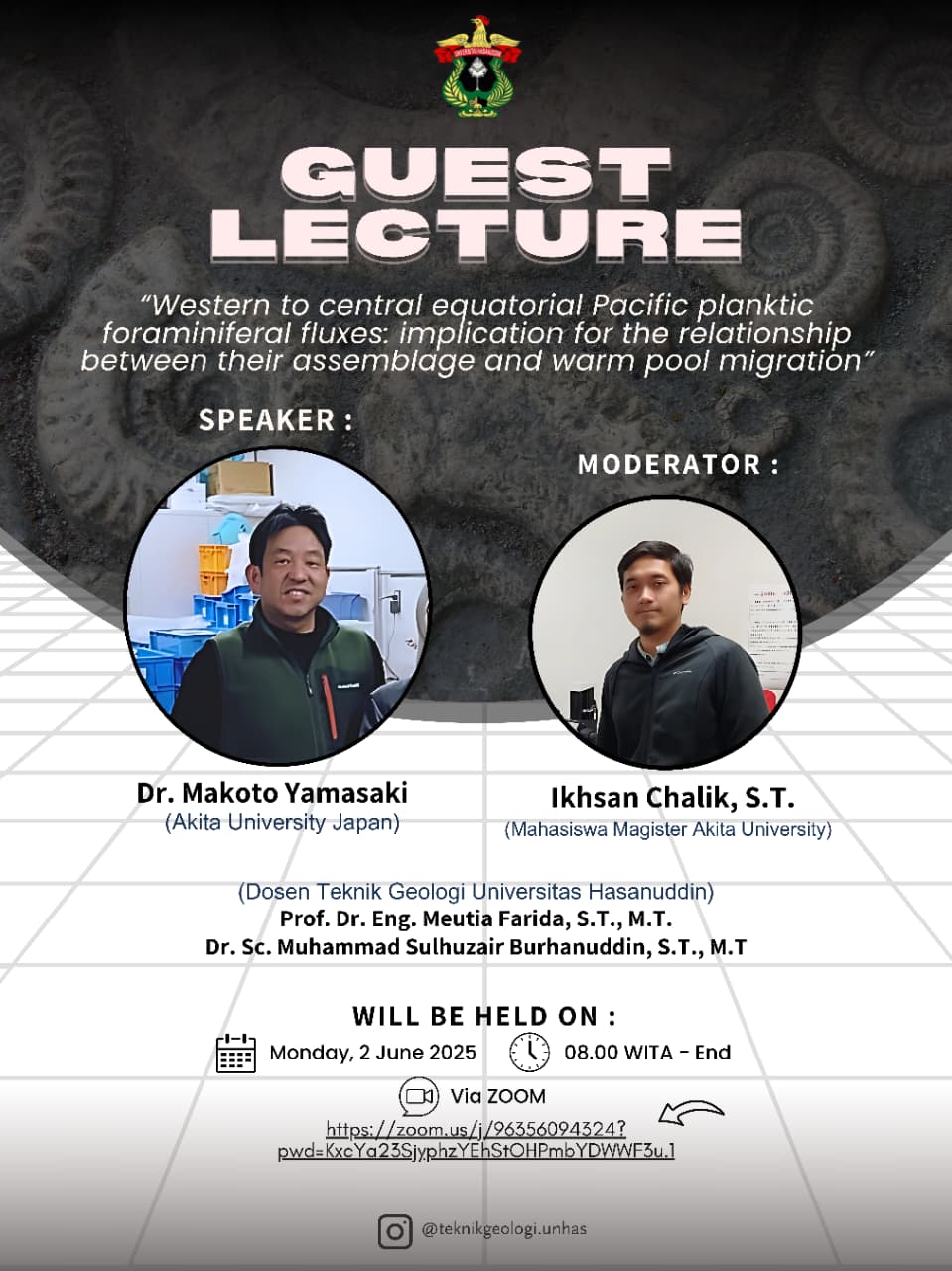

Gowa – Understanding Earth’s climatic future often begins by looking deep into its oceanic past. On June 2, 2025, an enlightening international academic gathering brought together 104 participants in a virtual setting via Zoom, featuring enthusiastic students such as Aulia, Musyafirah, Daffa, and Gratia. Titled “Guest Lecture: Western to Central Equatorial Pacific Planktonic Foraminiferal Fluxes, Implications for the Relationship Between Their Assemblage and Warm Pool Migration,” this specialized online event provided a fascinating window into micropaleontology, paleoceanography, and global climate dynamics.
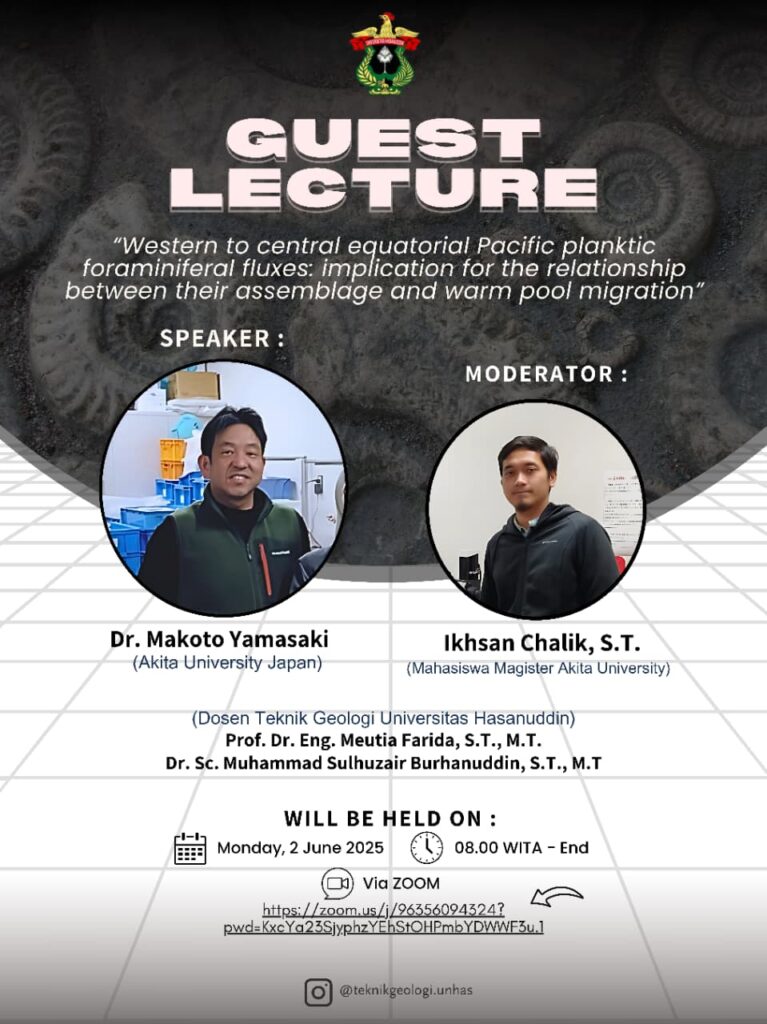
Conducted seamlessly via Zoom, the program transcended geographical boundaries by welcoming an international perspective through collaboration with esteemed international partner Dr. Makoto Yamasaki. The primary learning objectives of the session were carefully curated to elevate the academic profile of the participants. The lecture aimed to:
- Introducing students to planktonic foraminifera and uncovering their critical implications in oceanographic research.
- Building a comprehensive understanding of ancient oceanographic dynamics.
- Expanding global academic horizons through expert-led international discourse.
- Exploring the intricate relationship between foraminiferal assemblages and the historical migration phenomena of warm water masses within the equatorial region.
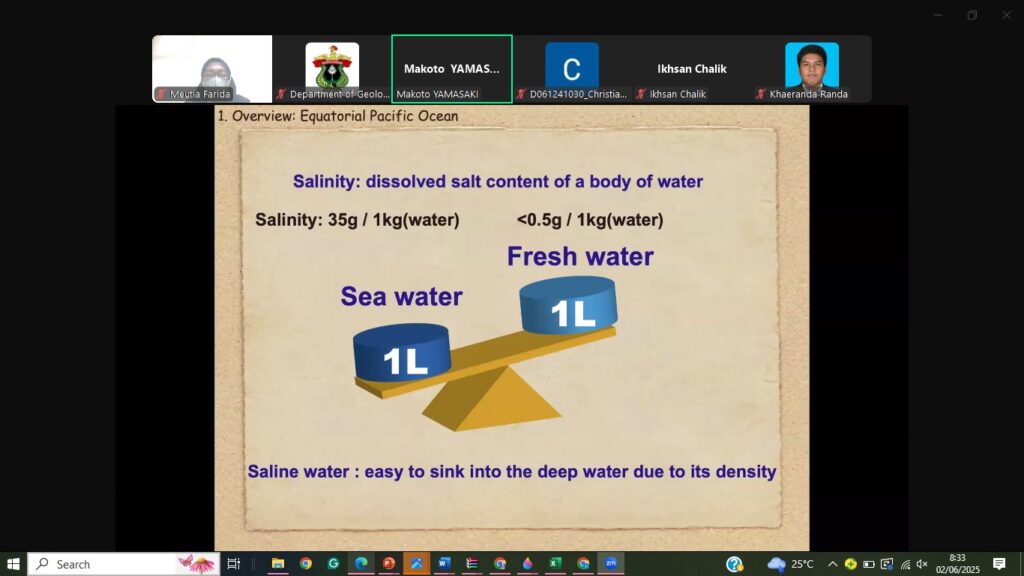
During the session, Dr. Yamasaki detailed how microscopic shell-bearing protozoa serve as sensitive biological indicators of past marine environments. By tracking the shifting abundance and distribution of these microfossils, researchers can reconstruct how the Western Pacific Warm Pool—a massive expanse of warm surface water—has shifted over geological timescales. Because this warm pool heavily influences global weather patterns, monsoon cycles, and regional sea levels, understanding its past behavior provides invaluable insights for predicting future climate trajectories. For the attending students, bridging microscopic fossil assemblages with macro-level planetary phenomena transformed abstract textbook theories into tangible scientific applications.
Furthermore, this academic initiative was purposefully aligned with international sustainability commitments, expressly incorporating SDGs 1, 4, 14, and 17.
- SDG 4 (Quality Education): Organizing specialized global guest lectures guarantees inclusive, equitable, and high-quality tertiary education. It bridges geographical barriers through digital platforms, exposing students to cutting-edge marine science and expert mentorship.
- SDG 14 (Life Below Water): By studying marine microfossils and ancient ocean dynamics, participants gain a deeper appreciation for marine ecosystems and ocean health, fostering a commitment to preserving aquatic environments.
- SDG 1 (No Poverty) & SDG 17 (Partnerships for the Goals): Advancing oceanographic literacy and climate awareness requires robust cross-institutional partnerships. Fostering collaborative knowledge-sharing between international researchers, academic departments, and student bodies supports long-term educational empowerment and global scientific resilience.
Ultimately, this guest lecture successfully transcended virtual boundaries. By linking micropaleontology with Earth history, the participants—guided by leading experts and supported by their peers—gained a comprehensive perspective on how ancient oceans dictate modern environmental realities. The event empowered a new generation of academically curious minds equipped with the analytical tools necessary to address future ecological challenges.