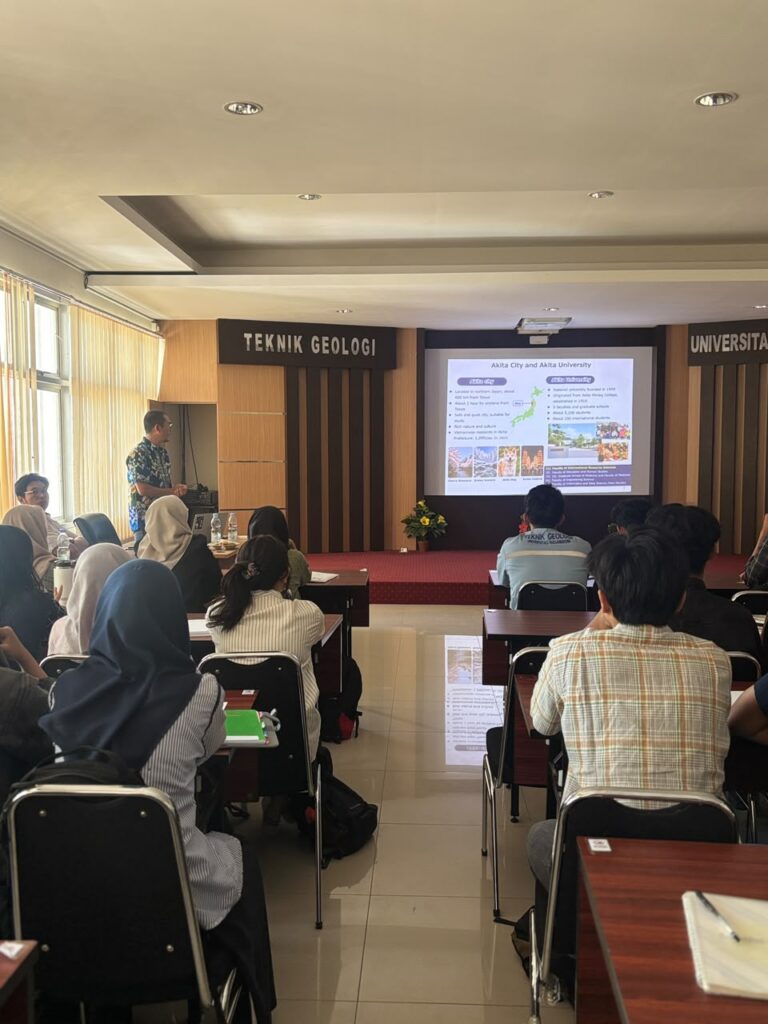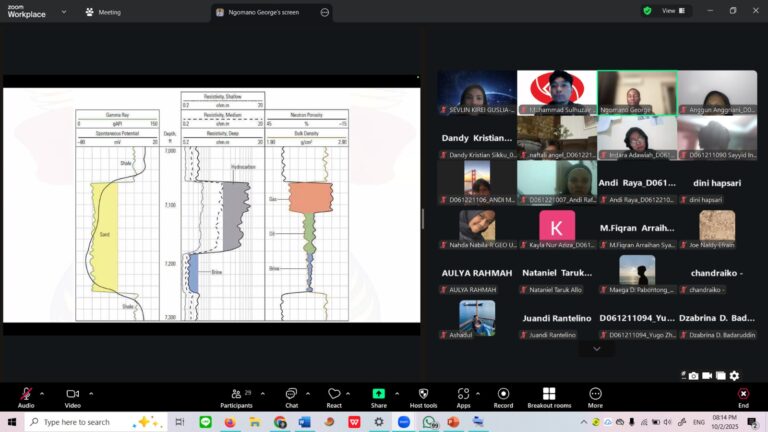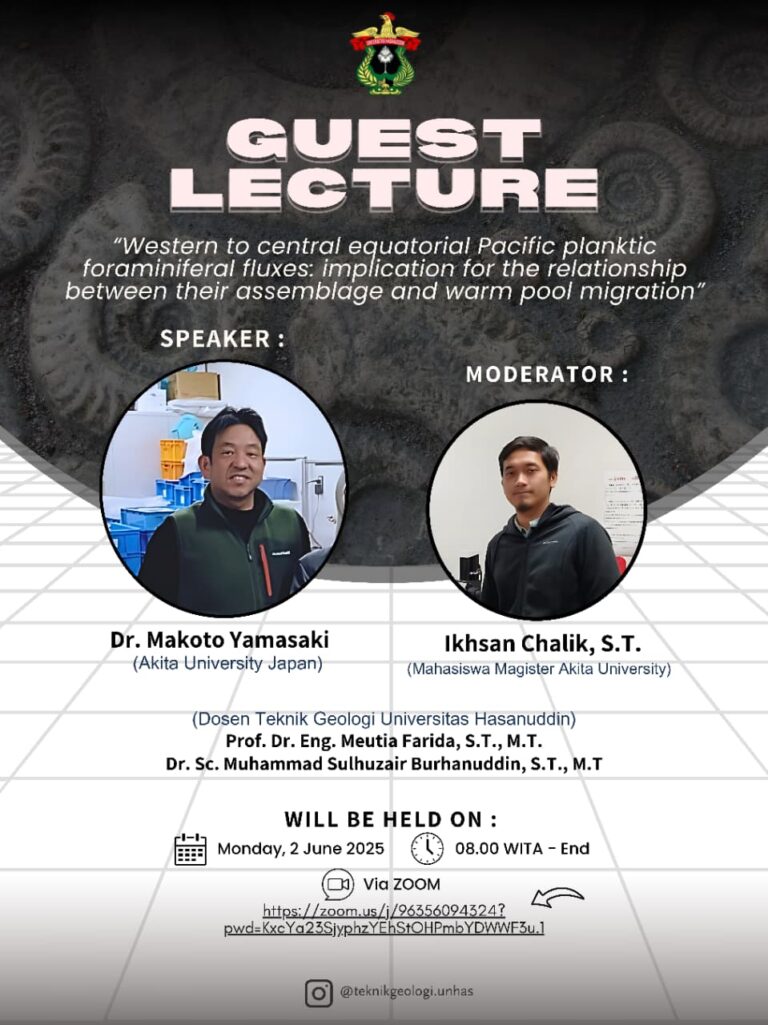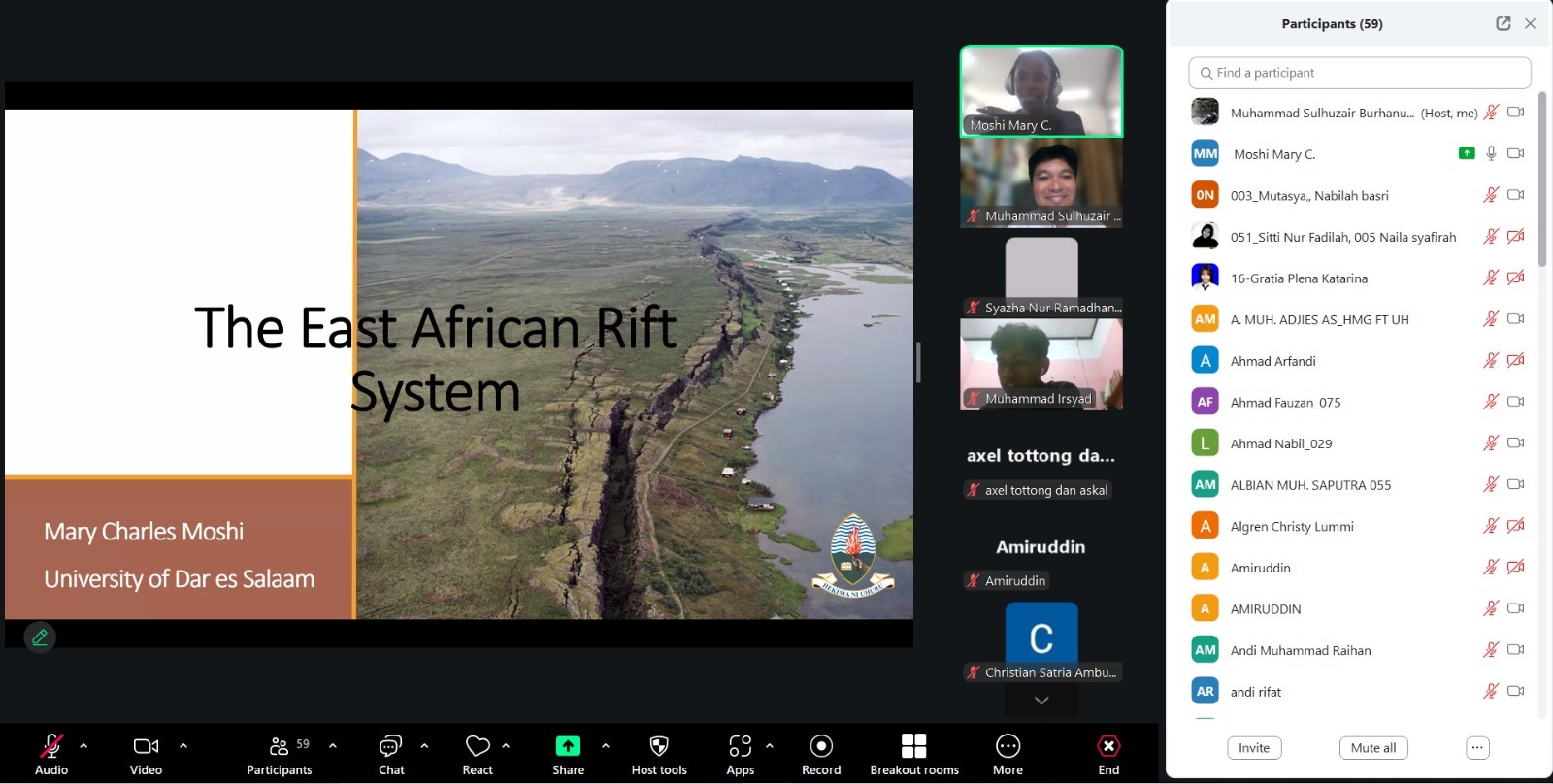

Gowa – In February 2026, an engaging academic session was successfully conducted through a virtual platform (Zoom), bringing together 45 participants consisting of students and academic enthusiasts in the field of geoscience. This guest lecture, titled “The East African Rift System: Overview of How Continents Break Apart,” aimed to introduce participants to the fundamental processes of continental rifting, with a specific focus on the geological evolution of East Africa.
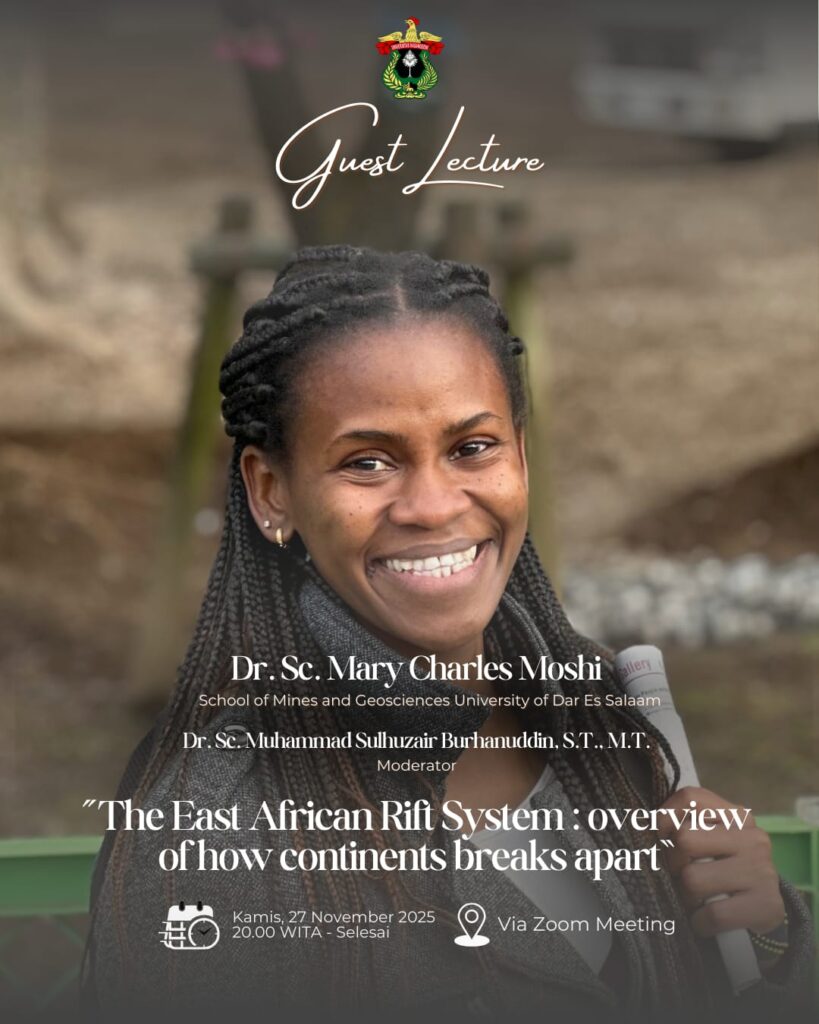
The session featured an esteemed international expert, Dr. Sc. Mary Charles Moshi, who delivered an insightful and comprehensive presentation on the mechanisms driving lithospheric extension and the eventual fragmentation of continental masses. Through a structured narrative, the speaker explained how the East African Rift System represents one of the most active continental rift zones on Earth, providing a natural laboratory for understanding tectonic processes. Complex geological concepts such as mantle upwelling, fault development, and crustal thinning were conveyed in a manner accessible to a broad audience, bridging the gap between advanced scientific knowledge and student-level comprehension.
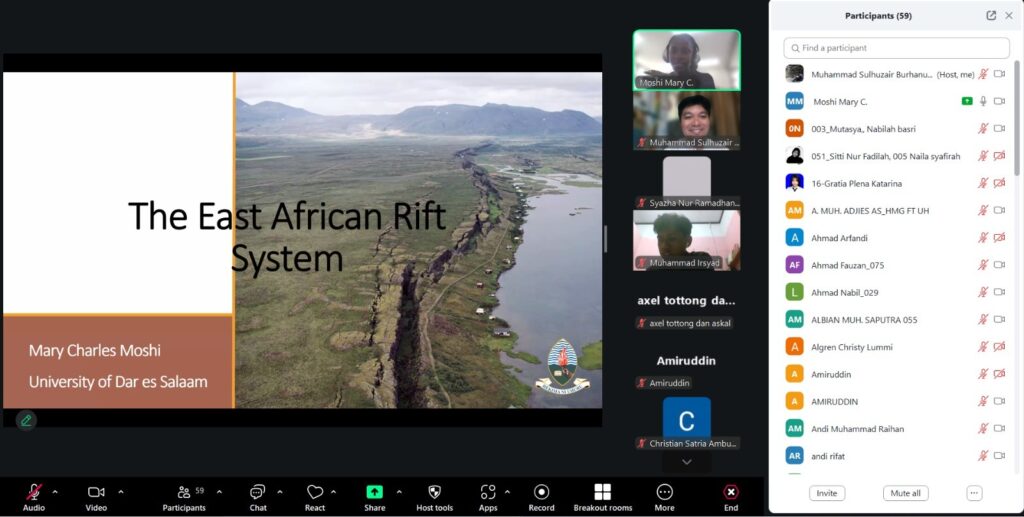
The activity successfully fostered an interactive learning environment, where participants—including students such as Muh. Irsyad, Amiruddin, and Gratia Plena—actively engaged in discussions and question-and-answer sessions. This interaction not only enhanced their understanding of rifting processes but also encouraged critical thinking regarding Earth system dynamics and their broader implications.
From a global development perspective, this activity aligns closely with several Sustainable Development Goals (SDGs). Primarily, it supports SDG 4: Quality Education by providing inclusive and equitable access to high-quality scientific knowledge through an international academic collaboration. The online format ensured accessibility regardless of geographical constraints, reinforcing the importance of digital learning in modern education.
Additionally, the program contributes to SDG 17: Partnerships for the Goals, as it exemplifies effective collaboration between local academic communities and international experts. The involvement of Dr. Sc. Mary Charles Moshi as a guest lecturer highlights the importance of cross-border knowledge exchange in advancing scientific literacy and research capacity.
Furthermore, the activity indirectly supports SDG 1: No Poverty by empowering students with knowledge and skills that are essential for academic and professional advancement. By strengthening scientific understanding and critical thinking abilities, such educational initiatives can enhance future career opportunities and contribute to long-term socioeconomic development.
Overall, this guest lecture not only enriched participants’ understanding of the East African Rift System but also demonstrated the vital role of international academic engagement in promoting education, collaboration, and sustainable development. The success of this activity underscores the importance of continued efforts to integrate global perspectives into local learning environments, ultimately fostering a more informed and capable generation of geoscientists.