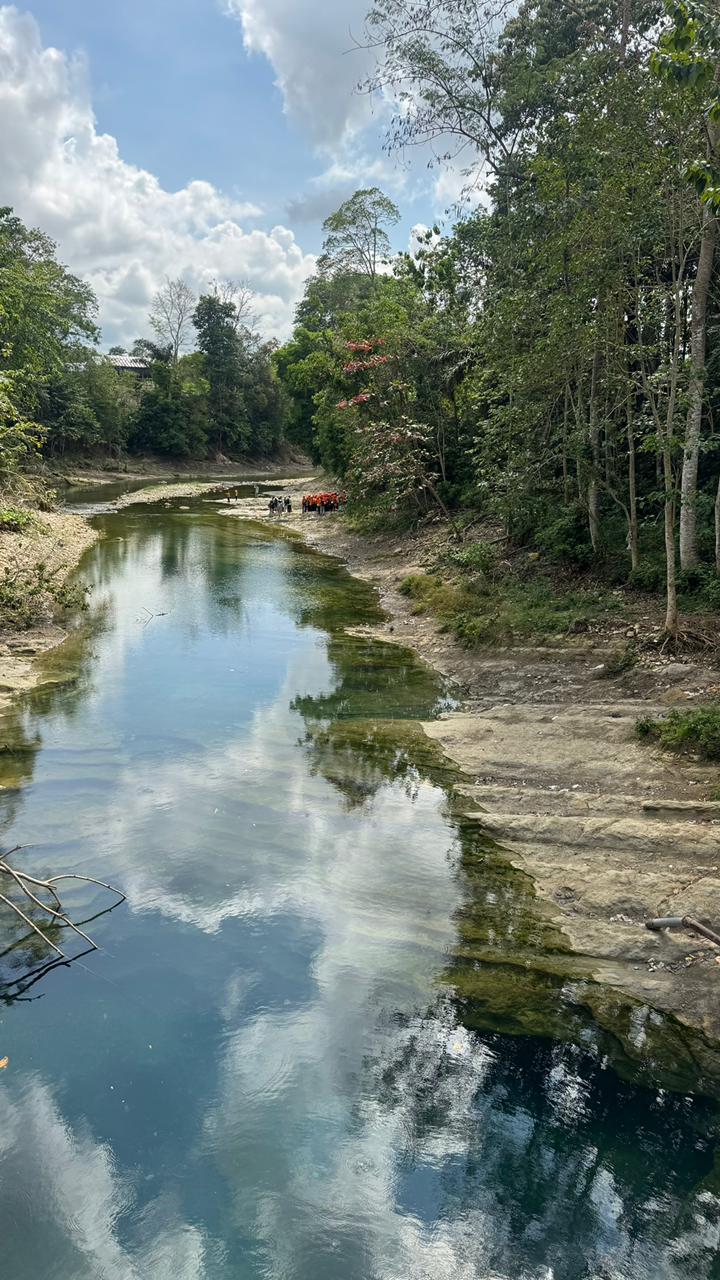

Tacipi – On October 11, 2025, an academic fieldtrip entitled “Micropaleontology Fieldtrip: Lithological Data Collection of the Tacipi Formation to Support Biostratigraphic Analysis and Depositional Environment Reconstruction” was successfully conducted at the Tacipi River area, South Sulawesi, and continued at the Paleontology Laboratory of Hasanuddin University. The activity involved 98 participants and became an important scientific and educational program designed to strengthen practical geological understanding through direct field observation and laboratory-based analysis.
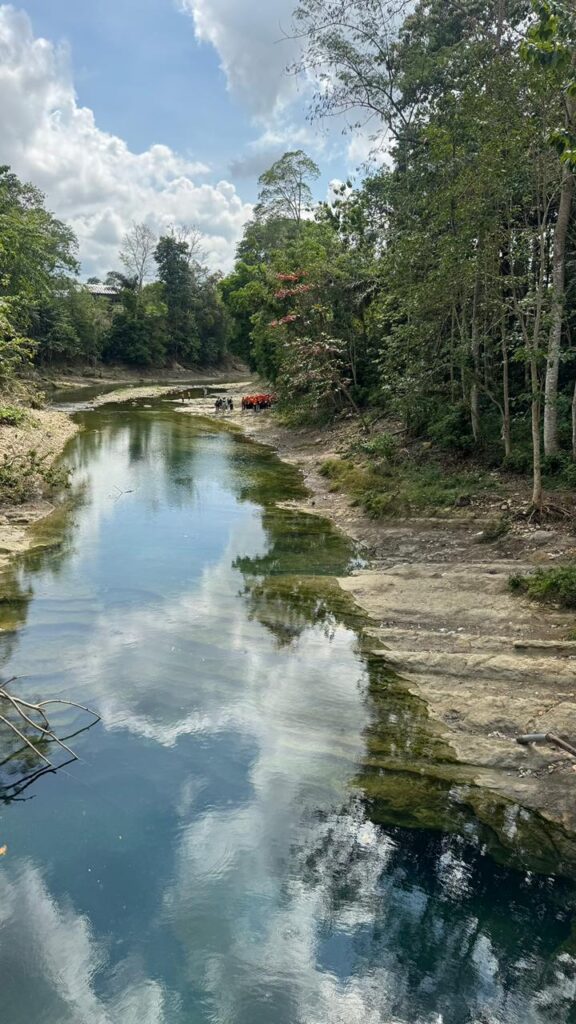
The fieldtrip focused on collecting lithological data from the Tacipi Formation using the measuring section method. Participants conducted systematic observations along exposed rock outcrops to document variations in lithology, sedimentary structures, rock textures, fossil occurrences, and stratigraphic relationships. Through this approach, the participants were able to produce measured stratigraphic columns that represent the vertical succession of rock layers within the Tacipi Formation.
During the field investigation, representative rock samples were collected from several lithological units for further micropaleontological and sedimentological analyses in the laboratory. These samples will support future biostratigraphic interpretation, particularly through the identification of microfossil assemblages that can provide information regarding the relative age of rock units and the depositional history of the study area. The integration of lithological and paleontological data is essential in reconstructing ancient depositional environments and understanding the geological evolution of South Sulawesi.
In addition to scientific data collection, the activity provided participants with valuable practical experience in geological field methods. Students and participants learned how to perform measuring section techniques, identify lithofacies associations, describe sedimentary characteristics, and interpret depositional environments based on field evidence. Such direct field experience is highly important in geoscience education because it connects theoretical classroom knowledge with real geological conditions encountered in nature.
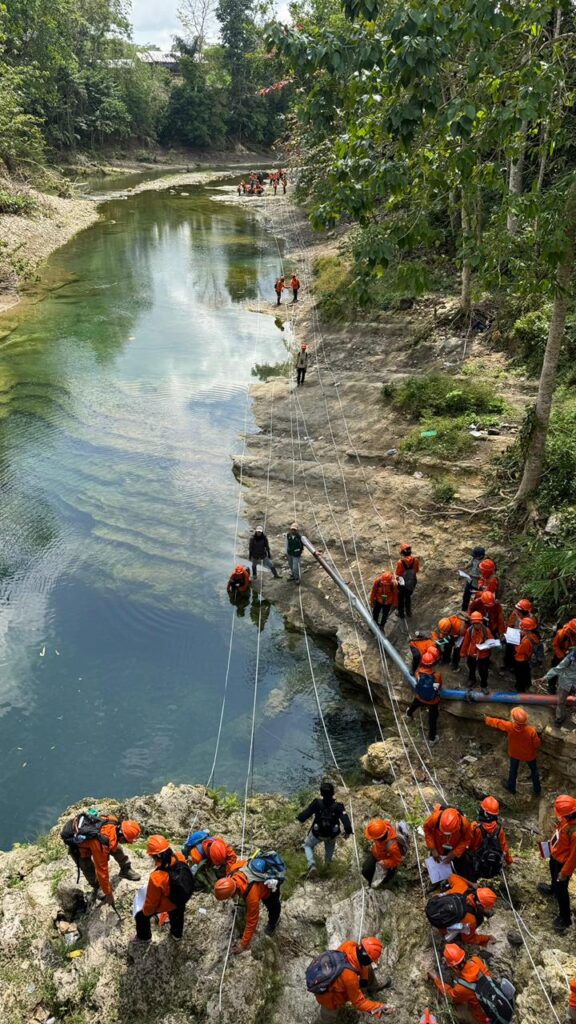
The fieldtrip also emphasized the importance of maintaining accurate and measurable geological databases. Reliable field data are fundamental for regional geological studies, environmental assessments, and future scientific research. By documenting lithological characteristics systematically, the activity contributed to the development of high-quality geological information that may support broader studies related to sedimentology, stratigraphy, paleontology, and basin evolution.
This activity aligns strongly with several United Nations Sustainable Development Goals (SDGs). First, it supports SDG 4: Quality Education by providing experiential learning opportunities that improve scientific literacy, technical skills, and research competence among participants. Through hands-on field and laboratory activities, participants gained deeper insight into geological investigation methods and scientific interpretation.
Second, the fieldtrip reflects SDG 17: Partnerships for the Goals through collaboration among students, academic staff, and laboratory facilities in carrying out integrated field and laboratory investigations. Scientific collaboration and shared learning experiences are essential for strengthening research capacity and advancing Earth science education.
The activity also indirectly contributes to SDG 1: No Poverty by supporting the long-term development of geological knowledge that can contribute to sustainable natural resource management, environmental planning, and geotourism potential in South Sulawesi. Furthermore, the reconstruction of ancient marine environments is closely related to SDG 14: Life Below Water, as studies of past marine ecosystems provide valuable insights into environmental changes and marine biodiversity throughout geological history.
Overall, the Micropaleontology Fieldtrip at the Tacipi River successfully combined education, scientific research, and collaborative learning while promoting sustainable development values through geological field investigation and paleoenvironmental studies.