Makassar, Indonesia/May 21, 2026/PRG/Imagine trying to understand what lies thousands of meters beneath the Earth’s surface without directly seeing it. For decades, geologists and petroleum engineers have relied on expensive technologies to identify underground rock layers that may contain oil and gas. However, recent research from Indonesia demonstrates that gases released during drilling activities can provide important clues about the quality of underground reservoirs in a faster and more cost-efficient way.
A scientific study entitled “Characterization Geochemical Gas While Drilling Impacted Determination Porosity-Applied in Deltaic Sedimentation Multilayer Hydrocarbon” explored how gas geochemistry data collected during drilling operations can help determine rock porosity in hydrocarbon reservoirs. Porosity is one of the most important properties in petroleum geology because it measures how much empty space exists inside rocks. These spaces can store oil, gas, or water beneath the surface.
The research was conducted in the Semberah Field, located within the Mahakam Delta Basin, Indonesia, an area known for its long history of oil and gas production since the 1970s. Traditionally, porosity is calculated using wireline logging tools, which are highly effective but expensive and sometimes difficult to operate under challenging drilling conditions. The researchers proposed an alternative approach by using Gas While Drilling (GWD) data, where gases released from crushed rocks during drilling are analyzed using gas chromatography techniques.
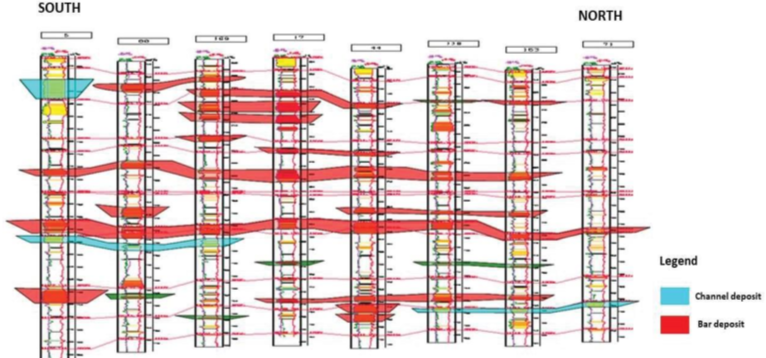
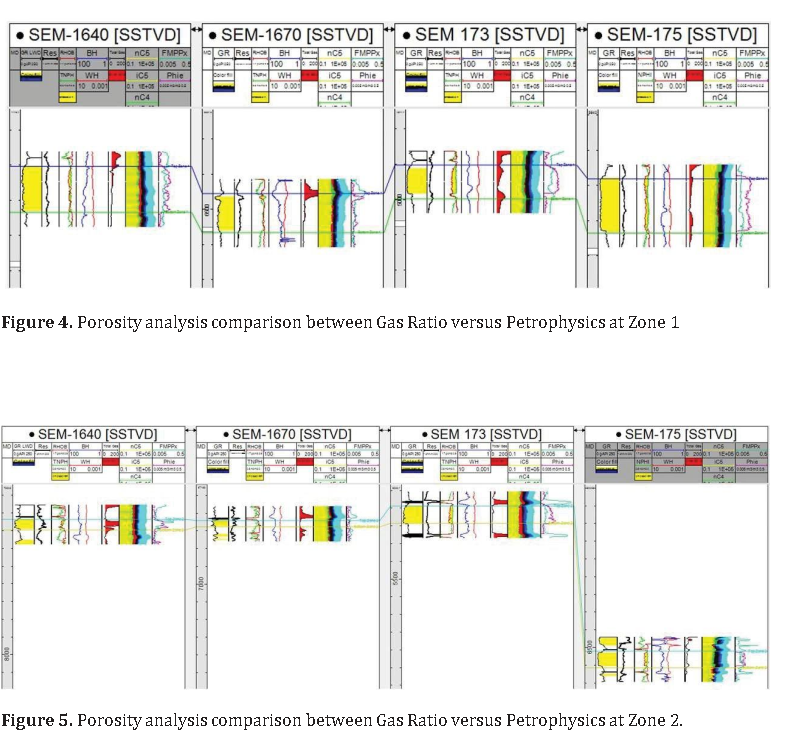
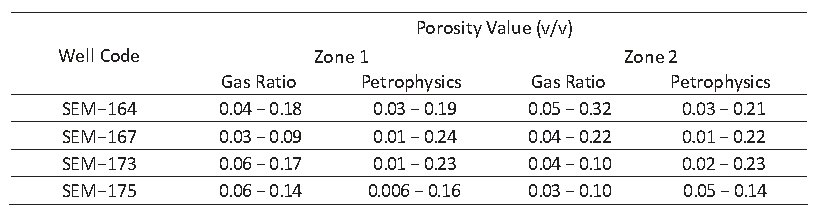
The study examined gas components such as methane, ethane, propane, butane, and pentane from ten drilling wells. Using several gas ratio calculations, including Wetness, Balance, and Fluid Mobility or Estimated Potential Porosity (FMPP), the researchers compared the results with conventional petrophysical porosity calculations. Surprisingly, the gas ratio method showed an average compatibility level of approximately 70.25% with traditional porosity measurements.
This finding is important because it demonstrates that gas ratio analysis can become a practical supporting tool for reservoir characterization, especially in situations where conventional logging data are unavailable or limited. In simpler terms, scientists may now estimate the quality of underground hydrocarbon reservoirs more efficiently while reducing operational costs and uncertainty during drilling.
Beyond the petroleum industry, this research also highlights the importance of innovation in Earth science and technological development. The ability to optimize geological data can improve energy exploration efficiency while minimizing unnecessary drilling operations. More accurate reservoir characterization also contributes to safer and more sustainable resource management practices.
This scientific work is closely related to SDG 4: Quality Education, because it promotes research-based learning and technological innovation in geoscience. The study also supports SDG 17: Partnerships for the Goals through collaboration between academic researchers and the energy industry in developing applied geological solutions. Furthermore, the research indirectly contributes to SDG 1: No Poverty by supporting efficient energy resource management that can strengthen economic development and industrial sustainability.
The study reminds us that even invisible gases released during drilling can tell valuable stories about the Earth beneath our feet. Through science and innovation, researchers continue to develop smarter ways to understand natural resources while balancing economic needs and sustainable development.
Source publication:
Title: Characterization Geochemical Gas While Drilling Impacted Determination Porosity-Applied in Deltaic Sedimentation Multilayer Hydrocarbon
Authors: Desianto Payung Battu, Adi Tonggiroh, Meutia Farida
Journal: IOP Conference Series: Earth and Environmental Science
Publisher: IOP Publishing
Volume/Issue: 1525, 012023
Publication date: 28 July 2025
DOI: 10.1088/1755-1315/1525/1/012023
Contact Person:
Meutia Farida | +62 812 8828 0303 | meutia.farida@unhas.ac.id