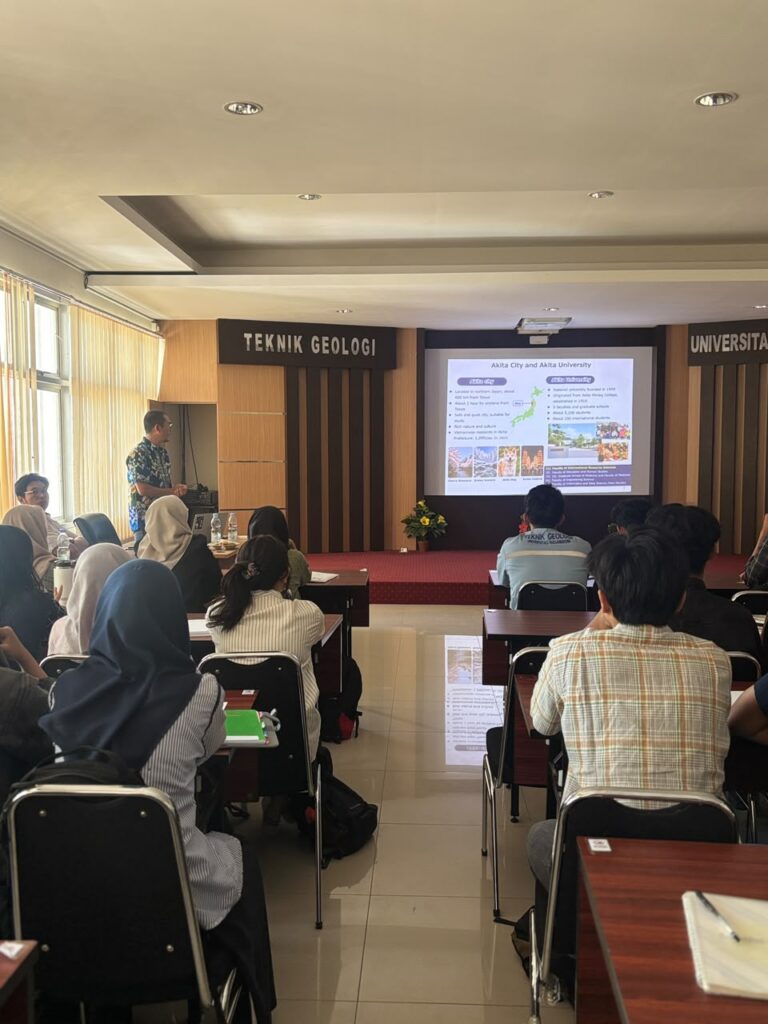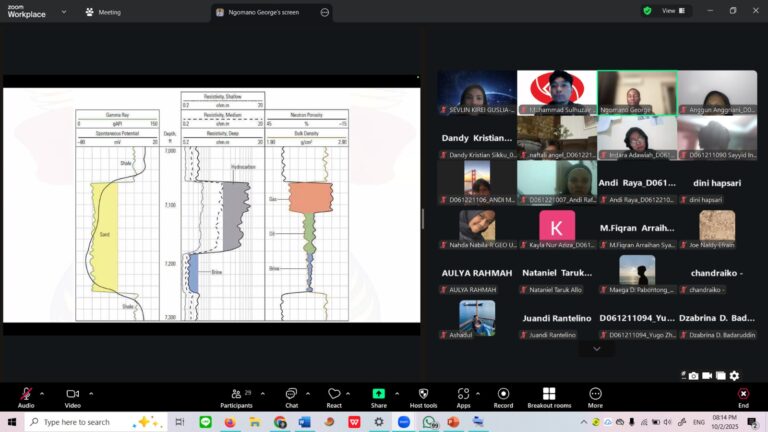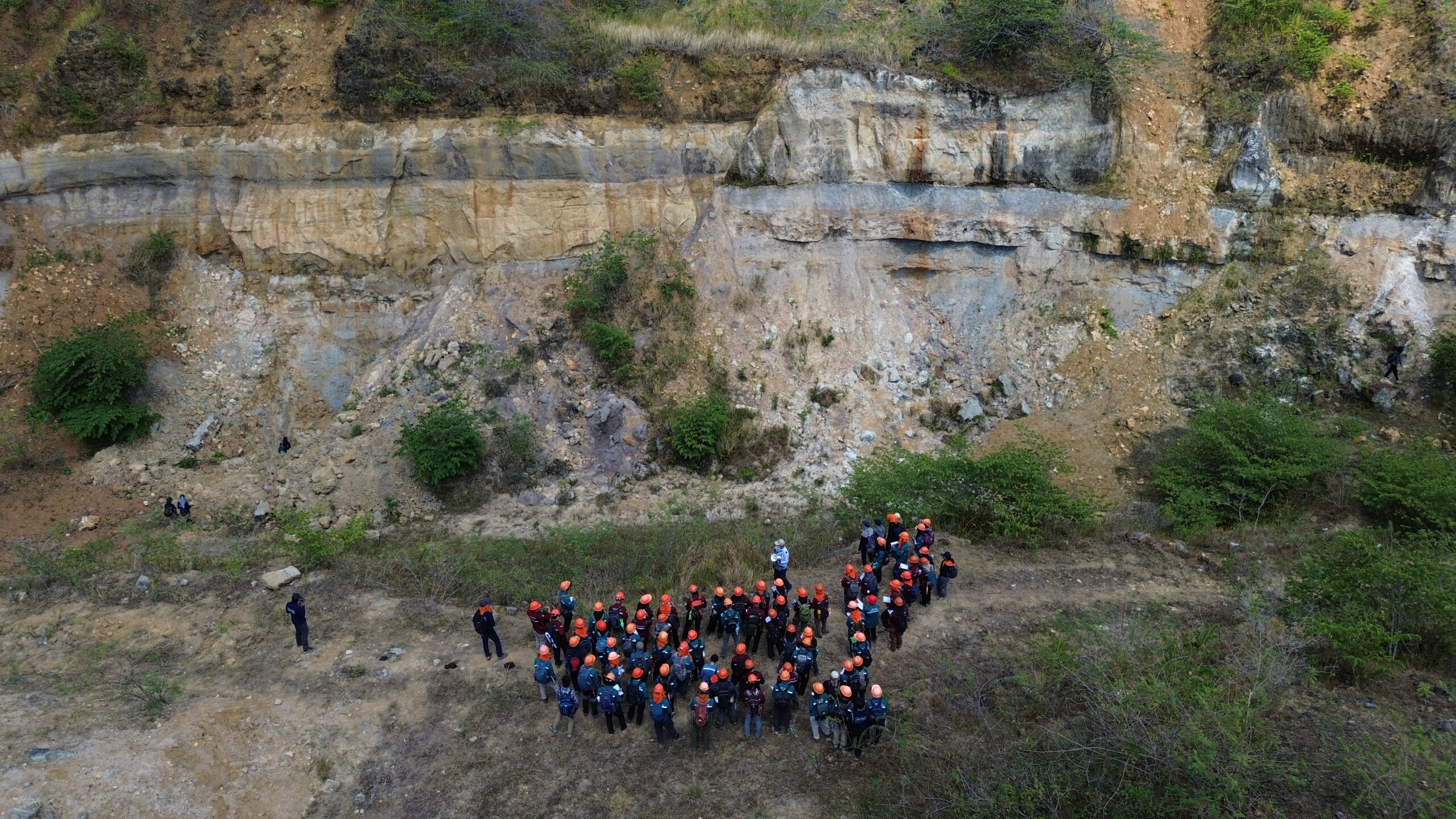

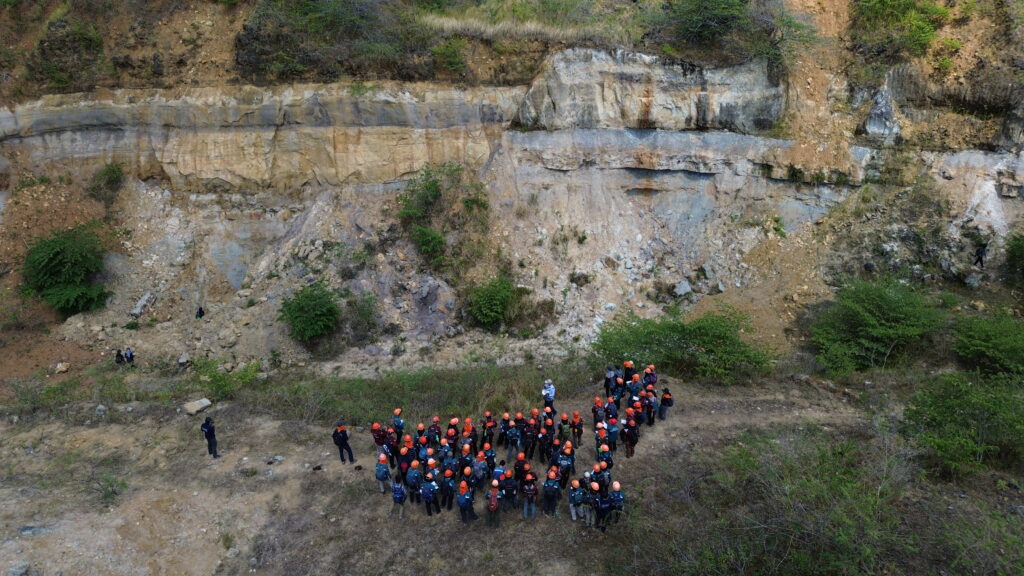
The Fieldtrip of Sedimentology of the Balangbaru Formation, conducted on September 15, 2024, in Mallawa Regency, Maros, South Sulawesi, represents a structured academic initiative aimed at strengthening students’ understanding of sedimentological principles through direct field engagement. This activity involved 95 participants, primarily undergraduate geology students, who undertook systematic field observations to bridge theoretical learning with real-world geological conditions.
The primary objective of this fieldtrip was to implement classroom-based sedimentology concepts through direct data acquisition in the field. Participants were introduced to various field techniques, including lithological identification, sedimentary structure analysis, stratigraphic logging, and interpretation of depositional environments. The Balangbaru Formation, known for its well-preserved sedimentary sequences, provided an ideal natural setting for observing facies variations and reconstructing paleoenvironmental conditions. Through these activities, students developed a more comprehensive understanding of sediment transport, deposition processes, and basin evolution.
Mallawa Regency in Maros was selected due to its geological significance, particularly the exposure of the Balangbaru Formation, which records important sedimentary processes associated with ancient depositional systems. The outcrops in this area display diverse sedimentary features such as cross-bedding, graded bedding, and fossil content, enabling participants to interpret environmental settings ranging from fluvial to shallow marine systems. This hands-on experience allowed students to critically evaluate geological data and improve their scientific reasoning skills.
In addition to its academic value, this fieldtrip contributes to several Sustainable Development Goals (SDGs). First, it supports SDG 4: Quality Education, by enhancing the quality of higher education through experiential learning methods. Students were not only passive recipients of knowledge but active investigators, engaging directly with geological phenomena.
Second, the activity aligns with SDG 1: No Poverty, as it equips participants with practical skills and competencies that increase their future employability in the geoscience and natural resource sectors. By fostering technical expertise and field-based experience, the program contributes to long-term human resource development.
Furthermore, the fieldtrip embodies SDG 17: Partnerships for the Goals, through collaboration between academic institutions, field supervisors, and local communities. The successful implementation of this activity required coordination, knowledge exchange, and logistical support from multiple stakeholders, highlighting the importance of partnerships in achieving educational and scientific outcomes.
Beyond technical learning, participants were also encouraged to adopt environmentally responsible practices during field activities. Emphasis was placed on preserving natural outcrops, minimizing environmental impact, and understanding the role of geology in sustainable resource management.
In conclusion, the Fieldtrip of Sedimentology of the Balangbaru Formation serves as an essential platform for integrating theoretical knowledge with practical application. By engaging students in direct field investigations, this activity not only enhances academic competence but also contributes to broader societal goals through its alignment with SDG 1, SDG 4, and SDG 17.