
MAKASSAR, Indonesia Apr 24 2026 /PharmaEpid RG/– When you visit a pharmacy, you might expect more than just receiving medicine—you expect guidance, reassurance, and clear information about how to use it safely. Community pharmacists play a vital role in providing this information, helping patients understand their medications and avoid harmful mistakes. However, a recent study reveals a surprising reality: many pharmacists in Indonesia are not financially rewarded for providing this essential service.
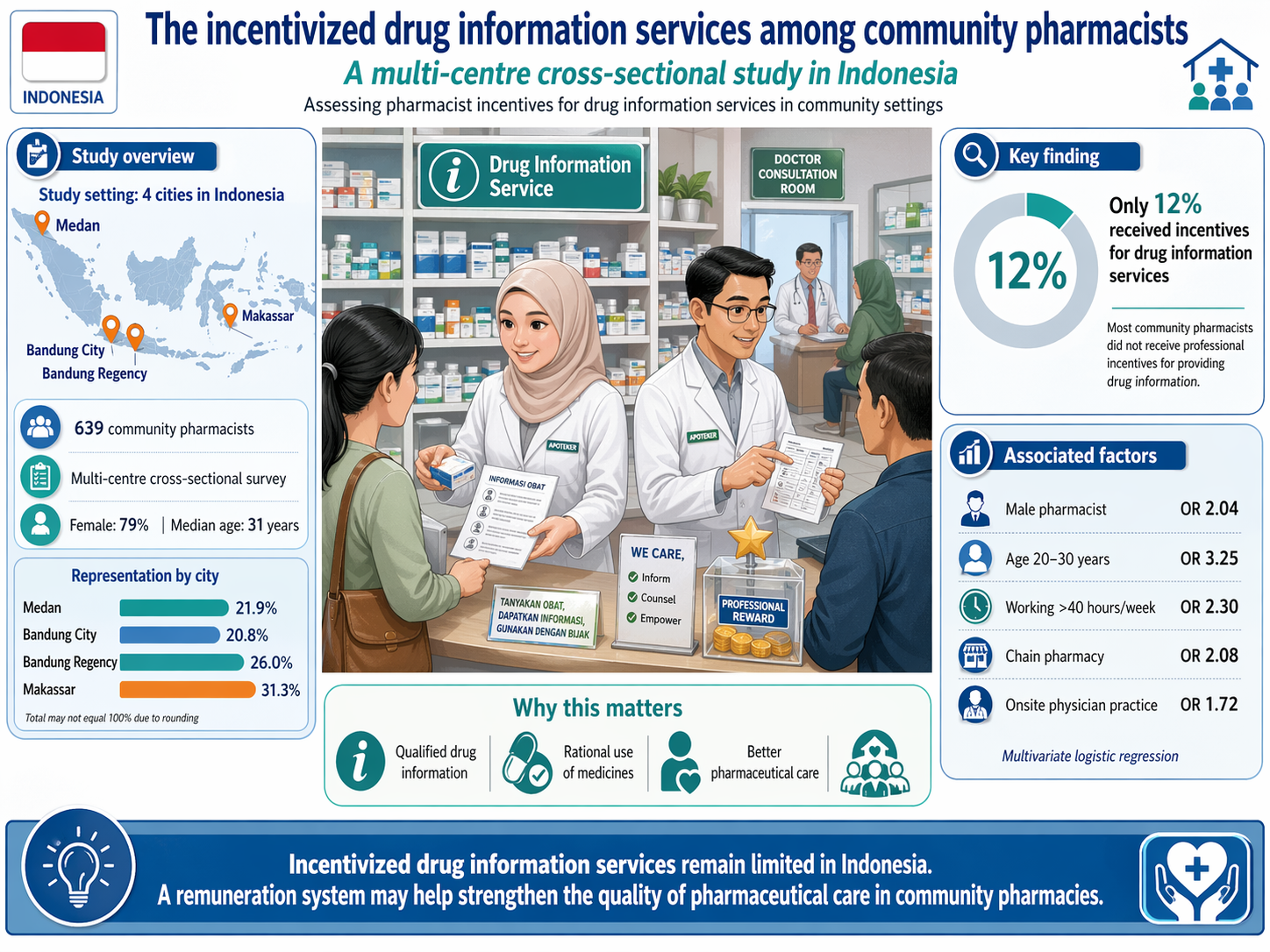
The study titled “The incentivized drug information services among community pharmacists: a multi-centre cross-sectional study in Indonesia”, published in Primary Health Care Research & Development (Volume 26, Page e7) by Cambridge University Press on January 2025, investigates how often pharmacists receive incentives for delivering drug information services . Conducted by Muh. Akbar Bahar and colleagues, the study involved 639 community pharmacists across major Indonesian cities, including Medan, Bandung, and Makassar.
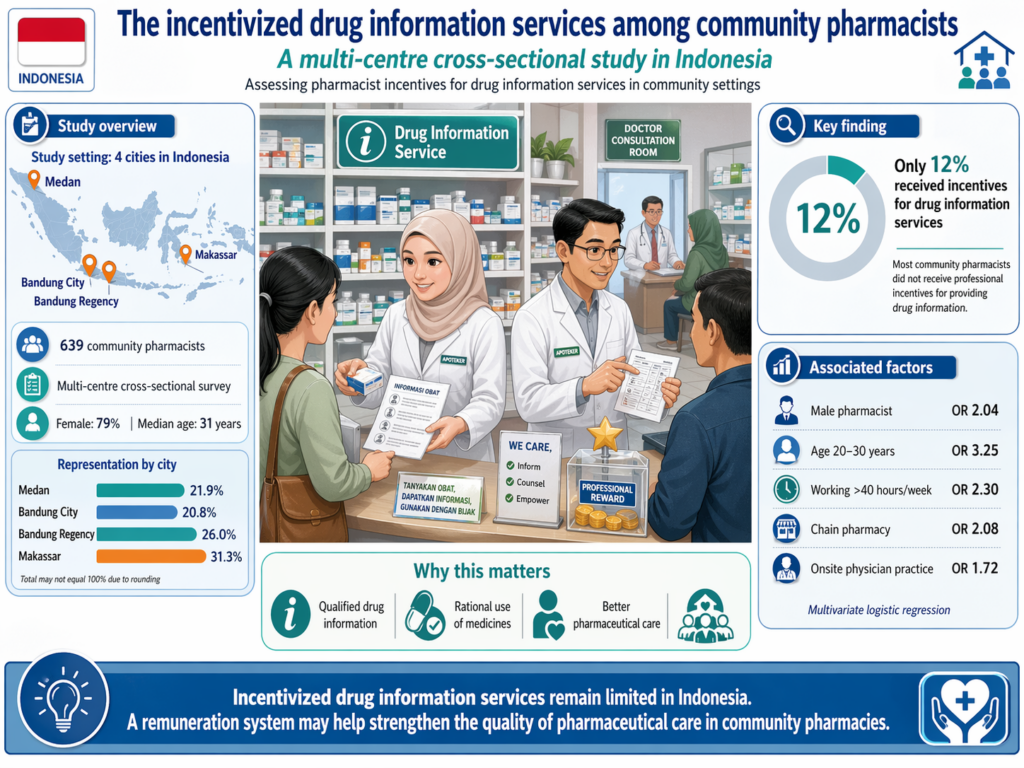
The findings highlight a critical gap in the healthcare system. Despite the importance of drug information services, only 12% of pharmacists reported receiving incentives for providing this service . This means that the majority of pharmacists deliver patient counseling and medication guidance without any additional compensation.
This situation is particularly concerning because drug information services are essential for safe and effective medication use. As explained in the study’s introduction, pharmacists are expected to play a central role in patient-centered care, helping patients make informed decisions about their treatment. Without proper incentives, however, these cognitive services may not be prioritized, potentially affecting the quality of care.
The study also identified several factors linked to receiving incentives. Younger pharmacists, those working longer hours, those employed in chain pharmacies, and those working alongside physicians were more likely to be compensated. This suggests that structured systems and collaborative environments may encourage better recognition of pharmacists’ contributions.
The importance of this research goes beyond pharmacy practice. It highlights a broader issue in healthcare systems: the need to recognize and reward knowledge-based services, not just physical products. When pharmacists are supported and incentivized, they are more likely to provide high-quality counseling, which can improve patient outcomes, reduce medication errors, and enhance overall healthcare efficiency.
This study strongly aligns with global development priorities. It contributes to SDG 3 (Good Health and Well-being) by promoting safer medication use and improving patient care. It supports SDG 4 (Quality Education) by emphasizing the need for continuous professional development and knowledge-based services. The findings also reflect SDG 17 (Partnerships for the Goals), highlighting the importance of collaboration between healthcare providers.
In conclusion, this study sends a clear message: pharmacists are more than medicine dispensers—they are essential healthcare providers. Recognizing and incentivizing their role in delivering drug information is not just fair—it is necessary for building a safer, more effective, and sustainable healthcare system.
Reference:
DOI: https://doi.org/10.1017/S1463423624000537
Contact:
Muh. Akbar Bahar, Ph.D
+62 819-4422-8642
akbarbahar@unhas.ac.id