
MAKASSAR, Indonesia Apr 24 2026 /PharmaEpid RG/– Millions of people living with diabetes rely on metformin as their first-line treatment to control blood sugar. At the same time, many of these patients also take medications known as proton pump inhibitors (PPIs) to manage stomach problems such as acid reflux. But what happens when these two commonly used drugs are taken together? Is there a hidden risk, or are they safe to combine?
A recent study titled “The impact of drug-drug interactions between proton pump inhibitors and metformin: A systematic review of clinical evidence”, published in Pharmacia (Volume 72, Pages 1–10) by the Bulgarian Pharmaceutical Scientific Society on March 13, 2025, provides important answers. Conducted by Ria Andani Antong and colleagues, the study systematically analyzed clinical evidence to understand whether combining these drugs leads to harmful interactions.
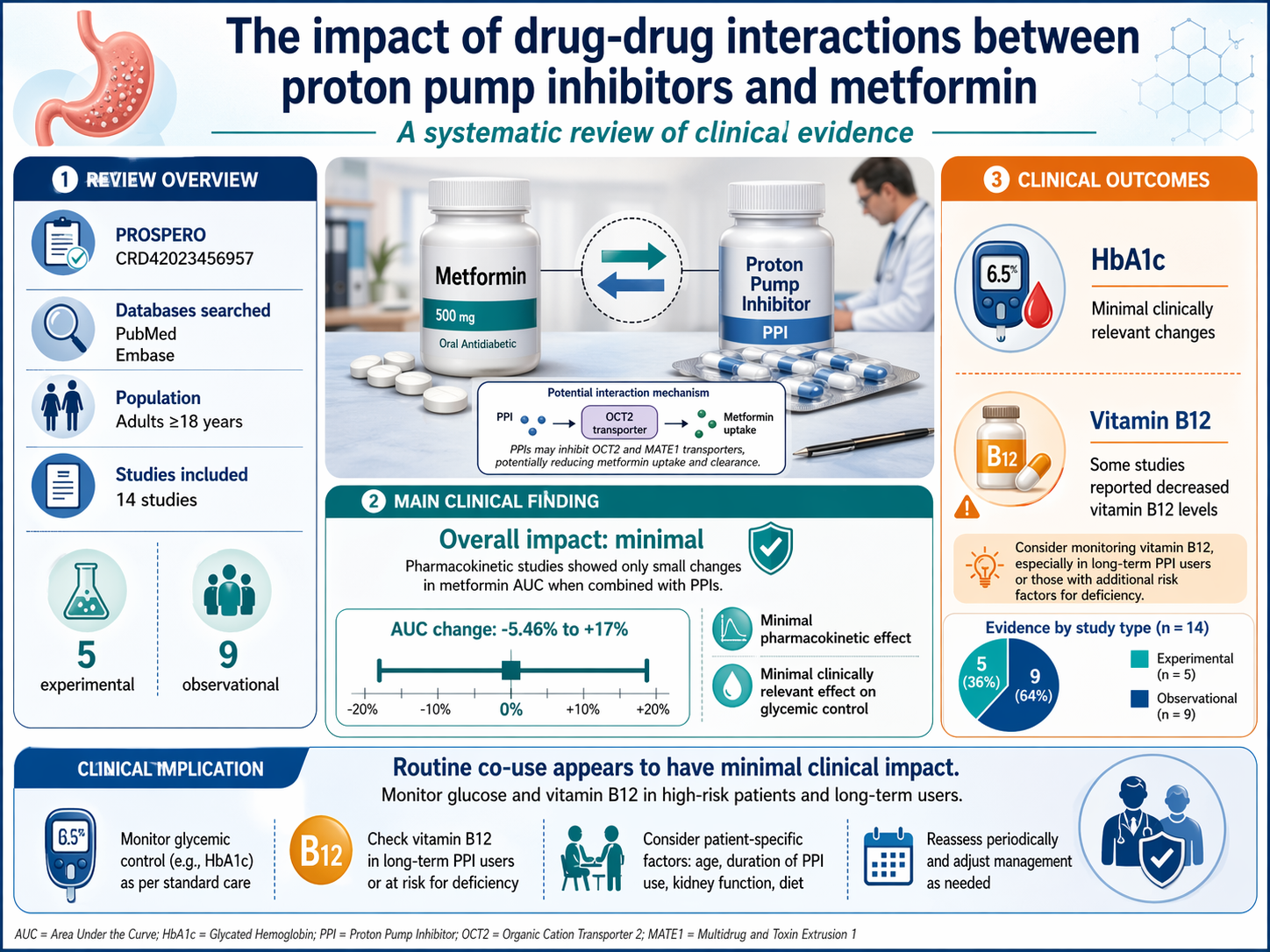
The researchers reviewed 14 clinical studies, including both experimental and real-world observational research. Their findings are reassuring: the interaction between PPIs and metformin appears to have minimal clinical impact. As shown in the pharmacokinetic data (page 5), changes in metformin levels in the body ranged only from a slight decrease of about -5% to a moderate increase of around +17%, which are considered clinically insignificant .
Similarly, the pharmacodynamic outcomes—such as blood glucose levels and HbA1c—remained largely unchanged. In other words, taking PPIs alongside metformin does not significantly affect blood sugar control for most patients. This is a crucial finding, given how frequently these drugs are prescribed together in everyday clinical practice.
However, the study also highlights an important caveat. Long-term use of both medications may increase the risk of vitamin B12 deficiency, as shown in several observational studies (page 6) . Vitamin B12 is essential for nerve function and red blood cell production, and its deficiency can lead to fatigue, anemia, and even neurological complications. Therefore, regular monitoring is recommended, especially for older adults and those on long-term therapy.
The importance of this research extends beyond clinical pharmacology. It provides evidence-based reassurance for patients and healthcare providers, while also emphasizing the need for careful monitoring and personalized care. Understanding drug interactions is a cornerstone of safe medication use, particularly in chronic diseases like diabetes where multiple drugs are often prescribed simultaneously.
This study contributes directly to global health priorities. It supports SDG 3 (Good Health and Well-being) by promoting safe and effective medication use. It aligns with SDG 4 (Quality Education) by advancing knowledge among healthcare professionals and patients. It also reflects SDG 17 (Partnerships for the Goals) through international research collaboration.
In conclusion, while the combination of PPIs and metformin is generally safe, this research reminds us that “safe” does not mean “risk-free.” With proper monitoring and awareness, patients can continue to benefit from these medications without compromising their long-term health.
Reference:
DOI: https://doi.org/10.3897/pharmacia.72.e142999
Contact:
Muh. Akbar Bahar, Ph.D
+62 819-4422-8642
akbarbahar@unhas.ac.id