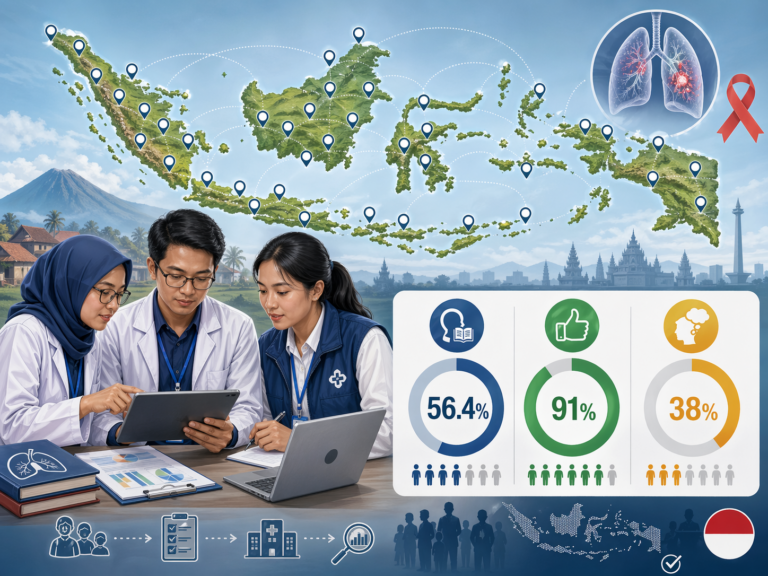
MAKASSAR, Indonesia Apr 24 2026 /PharmaEpid RG/– Pregnancy is a special period when women become more careful about their health, food, and medicines. In Indonesia, many pregnant women also use complementary and alternative medicine (CAM), including herbal products and traditional remedies. These practices are often seen as natural, familiar, and culturally acceptable. However, “natural” does not always mean completely safe, especially when used together with prescribed medicines.
A recent study titled “Exploring the use of complementary and alternative medicine during pregnancy: A cross-sectional study from Indonesia”, published by Urban & Fischer in the European Journal of Integrative Medicine (Volume 78, Page 102507) on September 1, 2025, by Mukhlis Rauf, Yulia Yusrini Djabir, Abdul Rahim, Barbara Tóth, and Muh. Akbar Bahar, examined CAM use among pregnant women in Makassar, Indonesia.
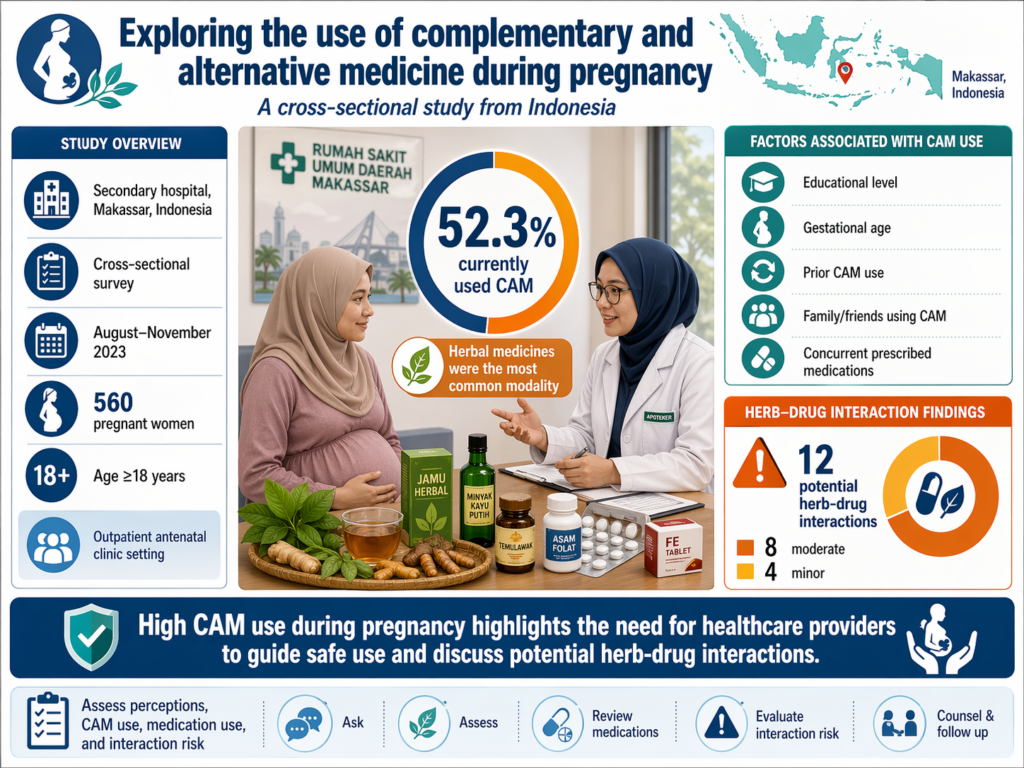
The study was conducted from August to November 2023 at a secondary hospital in Makassar. A total of 560 pregnant women aged 18 years and above participated in the survey. The researchers used a validated questionnaire to explore women’s demographic characteristics, CAM use, prescribed medication use, and perceptions of CAM. They also assessed possible herb-drug interactions using the Indonesian Traditional Medicine Formulary and the Natural Medicines Comprehensive Database.
The findings showed that CAM use during pregnancy was common. More than half of the respondents, 52.3%, reported currently using CAM, with herbal medicines being the most frequently used modality. Several factors were significantly associated with CAM use, including educational level, gestational age, previous CAM use, CAM use among family or friends, and concurrent use of prescribed medicines.
Importantly, the study identified 12 potential herb-drug interactions, consisting of eight moderate and four minor interactions. This finding is highly relevant because pregnant women may use herbal products while also taking prescribed medicines such as vitamins, supplements, or pregnancy-related treatments. Without proper guidance, this combination may increase safety concerns for both the mother and the developing baby.
The importance of this research lies in its practical message: healthcare providers should actively ask pregnant women about CAM use and provide clear, respectful, evidence-based guidance. Rather than dismissing traditional practices, doctors, pharmacists, and midwives need to help women understand which products may be safe, which should be avoided, and when professional advice is needed.
This study directly supports SDG 3 (Good Health and Well-being) by promoting safer maternal healthcare and reducing preventable risks during pregnancy. It also contributes to SDG 4 (Quality Education) by improving health literacy among pregnant women and healthcare providers. In addition, collaboration between researchers, hospitals, pharmacists, and policymakers reflects SDG 17 (Partnerships for the Goals).
In conclusion, CAM remains an important part of health behavior during pregnancy in Indonesia. However, safe use requires better communication, stronger education, and careful monitoring of potential herb-drug interactions.
Reference:
DOI: https://doi.org/10.1016/j.eujim.2025.102507
Contact:
Muh. Akbar Bahar, Ph.D
+62 819-4422-8642
akbarbahar@unhas.ac.id