
MAKASSAR, Indonesia Apr 24 2026 /PharmaEpid RG/– Gout is a painful chronic condition that affects millions of people worldwide, including a growing number in Indonesia. While modern medicine offers effective treatments, many patients also turn to complementary and alternative medicine (CAM)—especially herbal remedies—believing they are safer, cheaper, and more accessible. But does combining these approaches always lead to better outcomes?
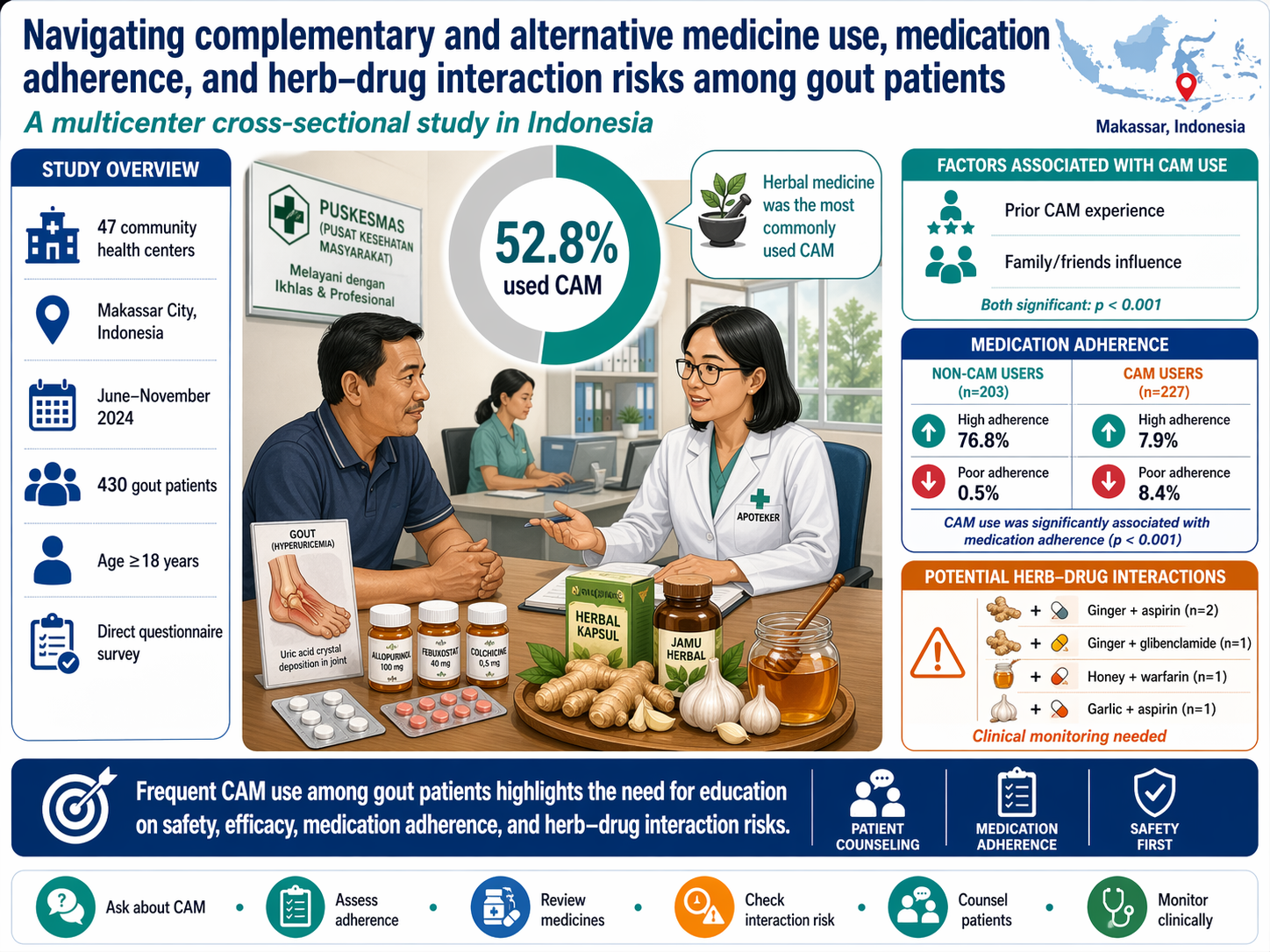
A recent study titled “Navigating complementary and alternative medicine use, medication adherence, and herb–drug interaction risks among gout patients: a multicenter cross-sectional study in Indonesia”, published by De Gruyter in the Journal of Complementary and Integrative Medicine (Volume 22, Issue 4, Pages 725–736) on December 8, 2025, provides important insights into this issue. Conducted by Dzulfiana Ashan and colleagues, the study involved 430 gout patients across 47 community health centers in Makassar, Indonesia.
The findings show that CAM use is highly common among gout patients. More than half of respondents—52.8%—reported using CAM, with herbal medicine being the most popular option. Many patients were influenced by previous personal experiences and recommendations from family or friends, highlighting the strong role of social and cultural factors in treatment decisions.
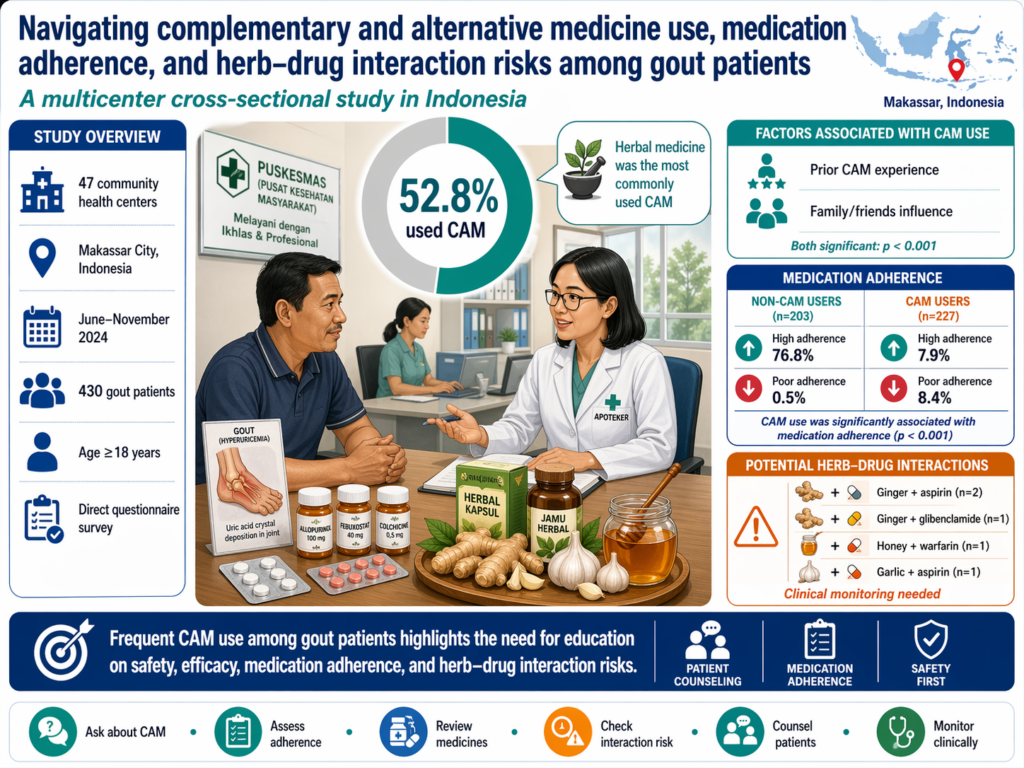
However, the study also reveals a critical concern: CAM use was strongly associated with lower medication adherence. Patients who did not use CAM were far more likely to follow their prescribed treatments correctly, while those who used CAM were more likely to have poor adherence. This is important because consistent medication use is essential for controlling gout symptoms and preventing complications.
Another key finding involves safety. Researchers identified several potential herb–drug interactions, including combinations such as ginger with aspirin, garlic with aspirin, honey with warfarin, and ginger with glibenclamide. While these interactions were relatively few, they highlight an important risk—especially for patients who combine herbal remedies with conventional medications without consulting healthcare professionals.
The importance of this research lies in its real-world implications. It shows that while CAM can be part of patients’ health choices, it may also unintentionally interfere with treatment effectiveness. Healthcare providers need to actively engage with patients, ask about herbal use, and provide clear, evidence-based advice. Rather than discouraging traditional practices, the goal is to ensure safe and informed use.
This study directly supports SDG 3 (Good Health and Well-being) by promoting safer and more effective management of chronic diseases like gout. It also contributes to SDG 4 (Quality Education) by highlighting the importance of patient education and health literacy. Furthermore, collaboration between researchers, healthcare providers, and communities reflects SDG 17 (Partnerships for the Goals).
Improving adherence and preventing complications can reduce healthcare costs, supporting SDG 1 (No Poverty). At the same time, responsible use of herbal products contributes to environmental sustainability under SDG 14 (Life Below Water) and SDG 15 (Life on Land).
In conclusion, this study reminds us that managing gout is not just about choosing between modern medicine and traditional remedies—it is about finding a safe balance. With better communication and education, patients can benefit from both approaches without compromising their health.
Reference:
DOI: https://doi.org/10.1515/jcim-2025-0211
Contact:
Muh. Akbar Bahar, Ph.D
+62 819-4422-8642
akbarbahar@unhas.ac.id