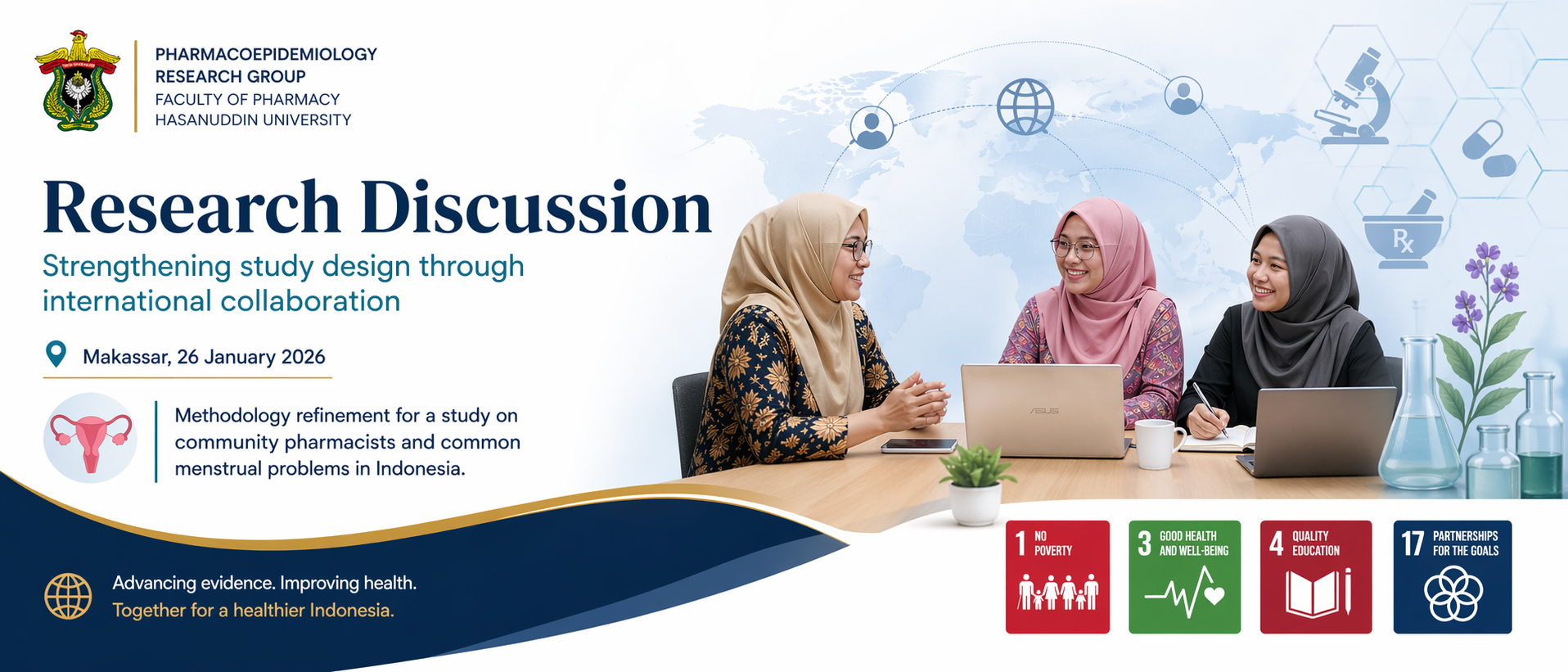

Makassar — On 26 January 2026, the Pharmacoepidemiology Research Group, Faculty of Pharmacy, Hasanuddin University, held a focused research discussion with Dr. Nur Aizati Athirah Binti Daud from the School of Pharmaceutical Sciences, Universiti Sains Malaysia. Dr. Nur Aizati is a registered pharmacist and senior lecturer in the Discipline of Clinical Pharmacy whose research interests include women’s health, sexual and reproductive health, pharmacoepidemiology, and medication use during pregnancy.
The discussion was conducted to refine the methodology of a planned study titled “Evaluation of the Knowledge, Attitudes, Perceptions, and Practices of Community Pharmacists in the Management of Common Menstrual Problems in Indonesia.” Also participating in the discussion was apt. Destia Risnovianti, S.Si, a master’s student whose final thesis is based on this research project. Her involvement reflected the important role of postgraduate students in developing research that is academically rigorous and socially relevant.

This activity was more than a routine academic meeting. It served as a strategic step to strengthen the scientific design of the study before moving further into implementation. Based on the current draft, the study addresses an important yet often overlooked issue in women’s health. Menstrual problems can affect not only physical comfort, but also emotional well-being, daily productivity, and overall quality of life. In Indonesia, such problems are common, yet many women still rely on self-medication, herbal products, or informal advice without direct consultation with healthcare professionals. The draft also emphasizes that community pharmacists are in a strategic position to provide counselling, recommend rational treatment, and identify situations that require referral to other health professionals.
In line with the STROBE approach for observational studies, the discussion focused on several essential methodological aspects. These included clarifying the study objectives, defining the target population, improving the alignment between research questions and variables, and ensuring that the methods for measuring knowledge, attitudes, perceptions, and practices are presented clearly and systematically. The team also discussed how the study should describe the setting, participant characteristics, data collection process, and analysis plan in a way that is transparent and scientifically sound. These points are important to ensure that the study produces findings that are credible, useful, and relevant for pharmacy practice in Indonesia.
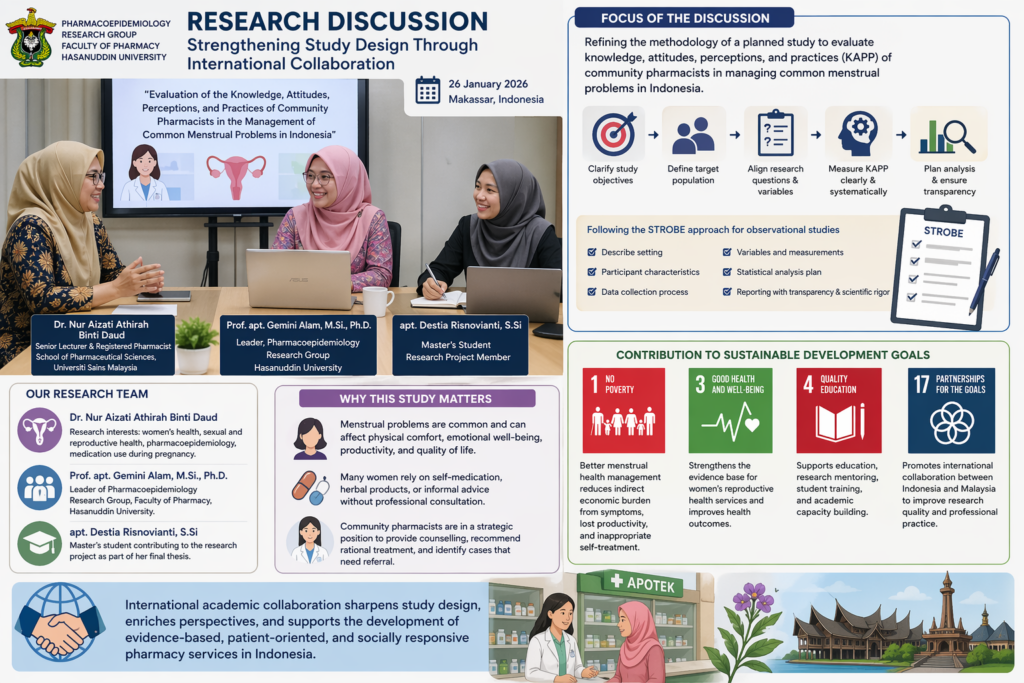
The activity is closely connected to several Sustainable Development Goals. It contributes to SDG 1 No Poverty because better management of menstrual health can help reduce the indirect economic burden caused by untreated symptoms, reduced productivity, and inappropriate self treatment. It supports SDG 3 Good Health and Well Being by strengthening the evidence base for women’s reproductive health services. It advances SDG 4 Quality Education through research mentoring, student training, and academic capacity building. It also reflects SDG 17 Partnerships for the Goals, as the discussion brought together researchers from Indonesia and Malaysia in a shared effort to improve research quality and professional practice.
Overall, this research discussion demonstrated how international academic collaboration can sharpen study design, enrich perspective, and support the development of more evidence based, patient oriented, and socially responsive pharmacy services in Indonesia.