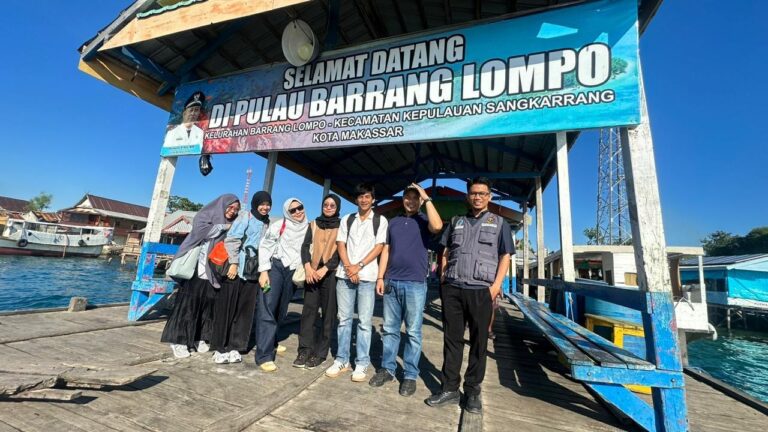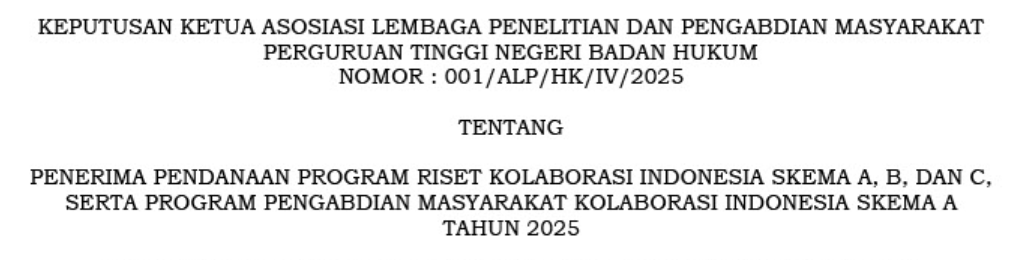

The Pharmacoepidemiology Research Group (PharmaEpid-RG) at Hasanuddin University has secured a prestigious research grant under the Indonesia Collaborative Research (Riset Kolaborasi Indonesia, RKI) Scheme A 2025, as outlined in the official decree of the Association of Research and Community Service Institutions of State Universities with Legal Entity (ALP PTN-BH), Decision No. 001/ALP/HK/IV/2025.
The funded project is titled:
“Pharmacoeconomic Analysis of the Impact of Antiretroviral Regimen Switching on the Quality of Life of HIV Patients Using Dolutegravir.”
This collaborative study is led by apt. Najmiatul Fitria, M.Farm., Ph.D (Universitas Andalas) as Principal Investigator, with co-investigators apt. Neily Zakiyah, M.Sc., Ph.D. (Universitas Padjadjaran) and apt. Muh. Akbar Bahar, Ph.D. (Universitas Hasanuddin), who also serves as the Head of PharmaEpid-RG.
About the Research
HIV/AIDS continues to pose a serious public health burden in Indonesia, with an estimated 540,000 people living with HIV (PLHIV) and 26,000 deaths reported annually (2021). While Dolutegravir (DTG) has been recommended by the World Health Organization as the first-line therapy, pharmacoeconomic data in Indonesia remain scarce.
This study will compare the quality of life and cost burden of patients receiving Dolutegravir versus Efavirenz (EFV) using EQ-5D-5L and EQ-VAS instruments. Cost-effectiveness and cost-utility analyses will be applied to generate evidence for more effective, patient-centered HIV treatment policies.
Advancing Evidence into Impact
The success in securing this grant demonstrates PharmaEpid-RG’s strong commitment to its tagline, “Evidence into Impact,” by ensuring that research findings contribute to evidence-based health policies and improved outcomes for patients.