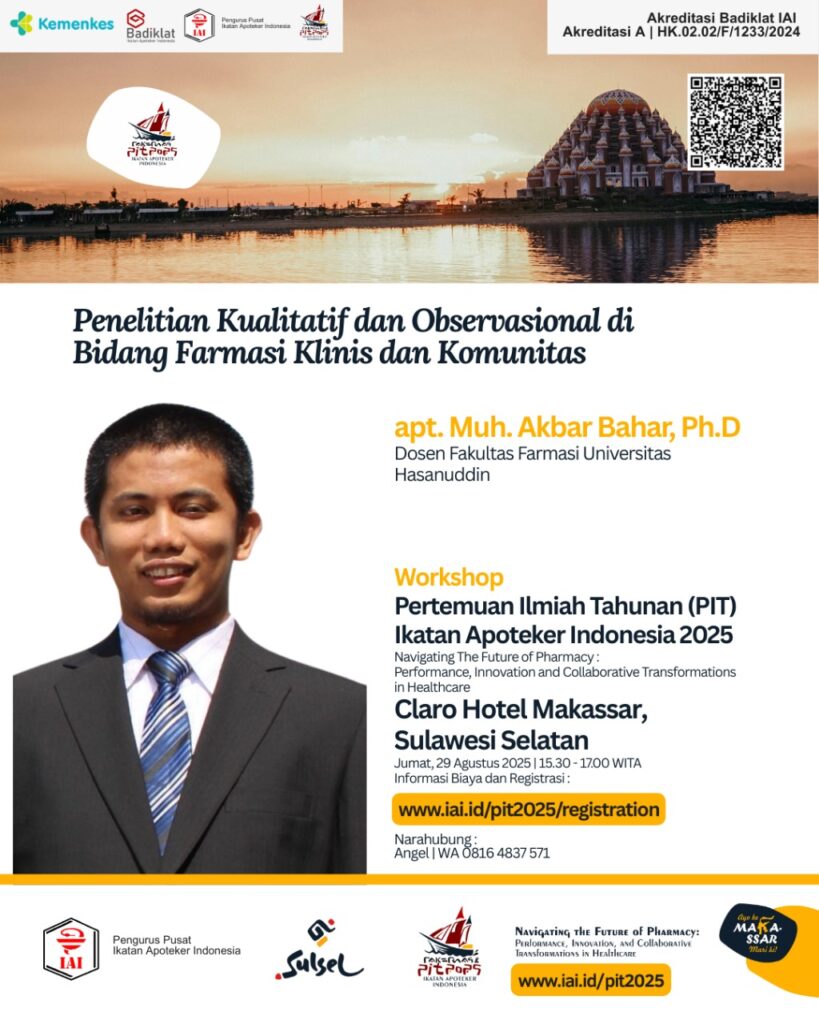

The Pharmacoepidemiology Research Group, Faculty of Pharmacy, Hasanuddin University took part in an important scientific forum during the Annual Scientific Meeting and National Working Meeting of the Indonesian Pharmacists Association, PIT IAI 2025, which was held in Makassar from 28 to 30 August 2025 under the theme “Navigating the Future of Pharmacy: Performance, Innovation, and Collaborative Transformations in Healthcare.” The event was hosted at the Claro Hotel Makassar.
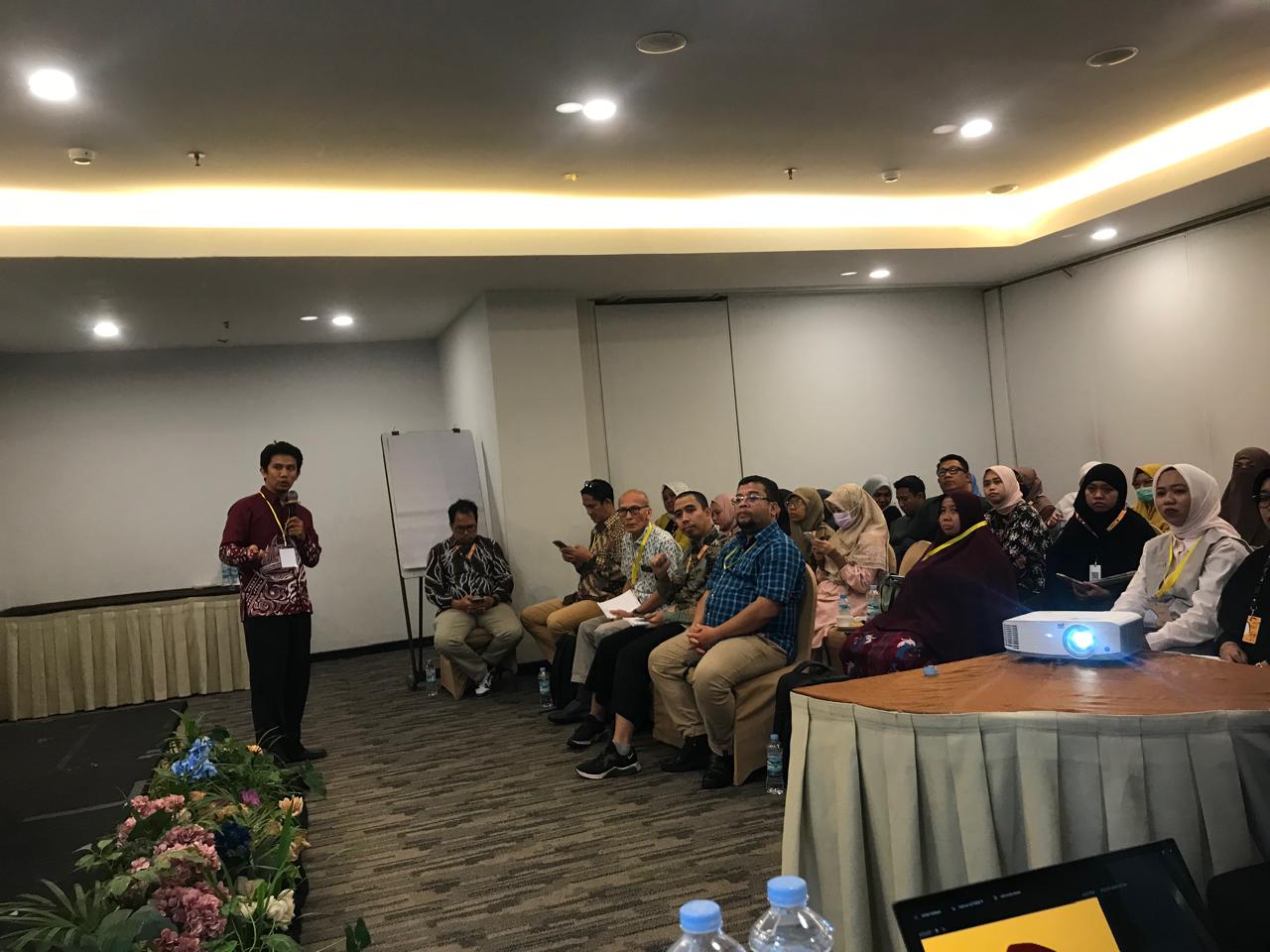
As part of this national meeting, Muh. Akbar Bahar, Ph.D., Chair of PharmaEpid RG, served as a speaker at the Workshop on Observational Research in Clinical and Community Pharmacy on 29 August 2025. The workshop was attended by around 50 participants, consisting of pharmacists from academia, hospitals, community pharmacies, and community health centers.
In his session, Dr. Bahar highlighted the growing importance of evidence based practice in pharmacy. He explained that observational research plays a key role in understanding how medicines are used in real life settings, how patients respond to treatment, and how pharmacists can contribute more effectively to patient care and public health. By using research that reflects real world practice, pharmacists can make better decisions, improve service quality, and help address healthcare challenges more accurately.
The workshop was not only a scientific discussion, but also a space for professional learning and collaboration. It showed how research can move beyond academic publication and become a practical tool for solving everyday problems in clinical and community pharmacy. This is especially relevant in Indonesia, where pharmacists are increasingly expected to take part in patient centered care, rational medicine use, and health service improvement.
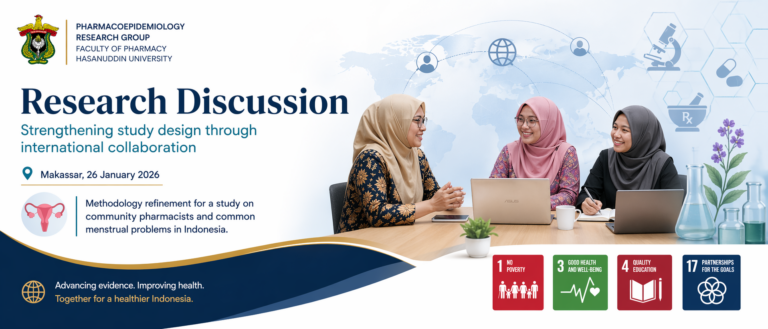
This activity also reflects several Sustainable Development Goals. It supports SDG 1 No Poverty because better and more efficient pharmacy services can help reduce the financial burden of illness on patients and families. It contributes to SDG 3 Good Health and Well Being by promoting stronger evidence for better healthcare decisions and improved patient outcomes. It aligns with SDG 4 Quality Education through professional learning, scientific exchange, and capacity building for pharmacists. It also strengthens SDG 17 Partnerships for the Goals, as the workshop brought together professionals from different sectors to share knowledge and build collaboration.
Through this contribution, PharmaEpid RG reaffirmed its commitment to strengthening research culture, supporting evidence based pharmacy practice, and advancing the role of pharmacists in improving health outcomes in Indonesia.