
MAKASSAR, Indonesia, April 28, 2026/PEDNRG/– Breast cancer is not only a physical illness but also an emotional journey that deeply affects a patient’s quality of life. What makes this study interesting is its focus on a simple yet powerful method—guided imagery—that helps patients cope beyond medical treatment. This research highlights how imagination and mental relaxation can become meaningful tools in improving well-being.
A study titled “Guided Imagery Intervention Improves the Quality of Life in Breast Cancer Patients: A Literature Review”, published in Gaceta Medica de Caracas on September 14, 2025, explores how guided imagery can support breast cancer patients during treatment. This article review analyzed ten selected studies from multiple international databases to evaluate the effectiveness of this intervention in improving patients’ quality of life.
Breast cancer remains one of the most common cancers affecting women worldwide. Beyond the disease itself, treatments such as chemotherapy, radiation, and surgery often bring significant side effects, including pain, fatigue, anxiety, and sleep disturbances. These challenges can reduce not only physical health but also emotional and social well-being.

Guided imagery offers a different approach. It is a non-pharmacological intervention that uses mental visualization to create calming and positive experiences. Patients are guided to imagine peaceful scenes, such as nature or pleasant memories, which help relax the body and mind. According to the discussion section on article, this technique works by stimulating the brain to release endorphins—natural chemicals that reduce pain and create feelings of comfort and happiness.
The study found that guided imagery can significantly reduce pain, anxiety, and depression, while also improving sleep quality and emotional stability. In some cases, even short sessions of 10–30 minutes per day were enough to produce noticeable benefits. This makes guided imagery a practical, low-cost, and accessible intervention for many patients.
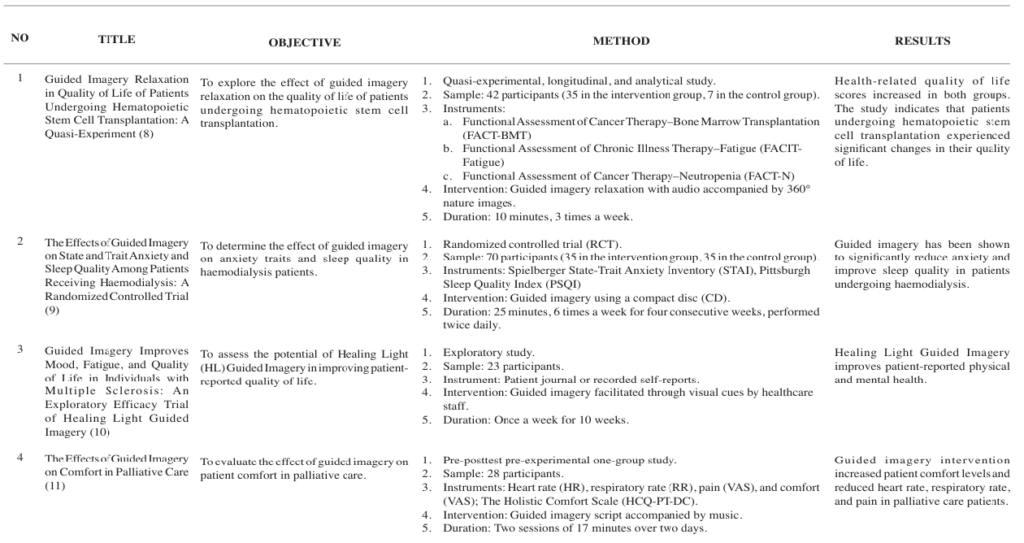
This research strongly aligns with SDGs 3: Good Health and Well-being, as it promotes innovative and holistic approaches to improving patient care. By integrating mental and emotional support into treatment, healthcare providers can enhance overall patient outcomes. SDGs 4: Quality Education, guided imagery requires proper education and training for both patients and healthcare workers. When patients understand how to use this technique effectively, they can actively participate in their own healing process. Education empowers patients to take control of their health beyond clinical settings. Interestingly, as shown in the table on article various studies included in the review demonstrate consistent positive outcomes across different patient groups and settings.
In conclusion, guided imagery is more than just a relaxation technique—it is a bridge between mind and body. By combining medical treatment with psychological support, patients can experience better quality of life during a difficult journey. This study reminds us that healing is not only about medicine, but also about the power of the human mind.
Reference:
DOI: https://doi.org/10.47307/GMC.2025.133.3.25
Contact:
Prof. Kadek Ayu Erika
+62 813-4212-9855
kadek20_uh@yahoo.com
kadekayu@unhas.ac.id