MAKASSAR, Indonesia, April 28, 2026/PEDNRG/– Why would a simple mobile phone matter for a mother’s decision to breastfeed? In many rural areas, distance, limited healthcare access, and cultural barriers make breastfeeding support hard to reach. This study stands out because it explores how digital health tools—already in people’s hands—can transform maternal care, offering practical, real-time support where traditional services often fall short.
Breastfeeding is widely recognized as one of the most effective ways to ensure infant survival and health. Yet, for many women living in rural areas, access to timely support is limited. A recent study “Evaluation of digital health technology acceptance for breastfeeding support among perinatal women in rural areas: A scoping review,” published in Nursing Practice Today on Winter 2026 (February 01, 2026), sheds light on how digital innovation is changing this reality. This study analyzed 22 global studies to understand how digital tools are accepted and used by mothers during pregnancy and postpartum.

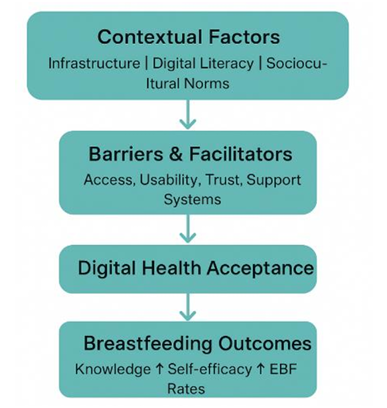
The findings are both promising and complex. Digital health technologies—such as mobile apps, SMS messaging, and social media platforms—have been shown to significantly improve breastfeeding outcomes. Mothers using these tools reported higher knowledge, stronger confidence, and increased rates of exclusive breastfeeding. However, the success of these technologies depends not only on their availability but also on their acceptance. The study highlights that user acceptance is shaped by factors like ease of use, perceived usefulness, and social influence. In rural settings, barriers such as poor internet connectivity, low digital literacy, and cultural resistance can limit the impact of even the most advanced technologies.
Interestingly, the research emphasizes that combining digital tools with human support—such as healthcare workers or peer groups—creates the most effective outcomes. This “hybrid approach” ensures that technology does not replace care, but enhances it.
This study strongly connects with SDGs 3 (Good Health and Well-being), which aims to reduce maternal and infant mortality and improve access to healthcare services. By making breastfeeding support more accessible and scalable, digital health technologies contribute directly to achieving this global goal. Improved breastfeeding practices can reduce healthcare costs, support child development, and strengthen communities. Yet, the study also warns of a growing “digital divide.” Without equitable access to technology, rural populations risk being left behind in this digital transformation. SDGs 4 (Quality Education) by promoting inclusive and equitable access to health education for women in underserved areas. Through digital platforms, essential knowledge about breastfeeding becomes more reachable, helping to improve health literacy and empower mothers in their caregiving roles.
In conclusion, digital health technologies offer a powerful opportunity to bridge gaps in maternal care—especially in underserved rural areas. But technology alone is not enough. Success lies in designing solutions that are accessible, culturally relevant, and supported by human connection. When done right, a simple mobile phone can become a lifeline for mothers—and a healthier start for the next generation.
Reference:
DOI: https://npt.tums.ac.ir/index.php/npt/article/view/4355
Contact:
Prof. Kadek Ayu Erika
+62 813-4212-9855
kadek20_uh@yahoo.com
kadekayu@unhas.ac.id