
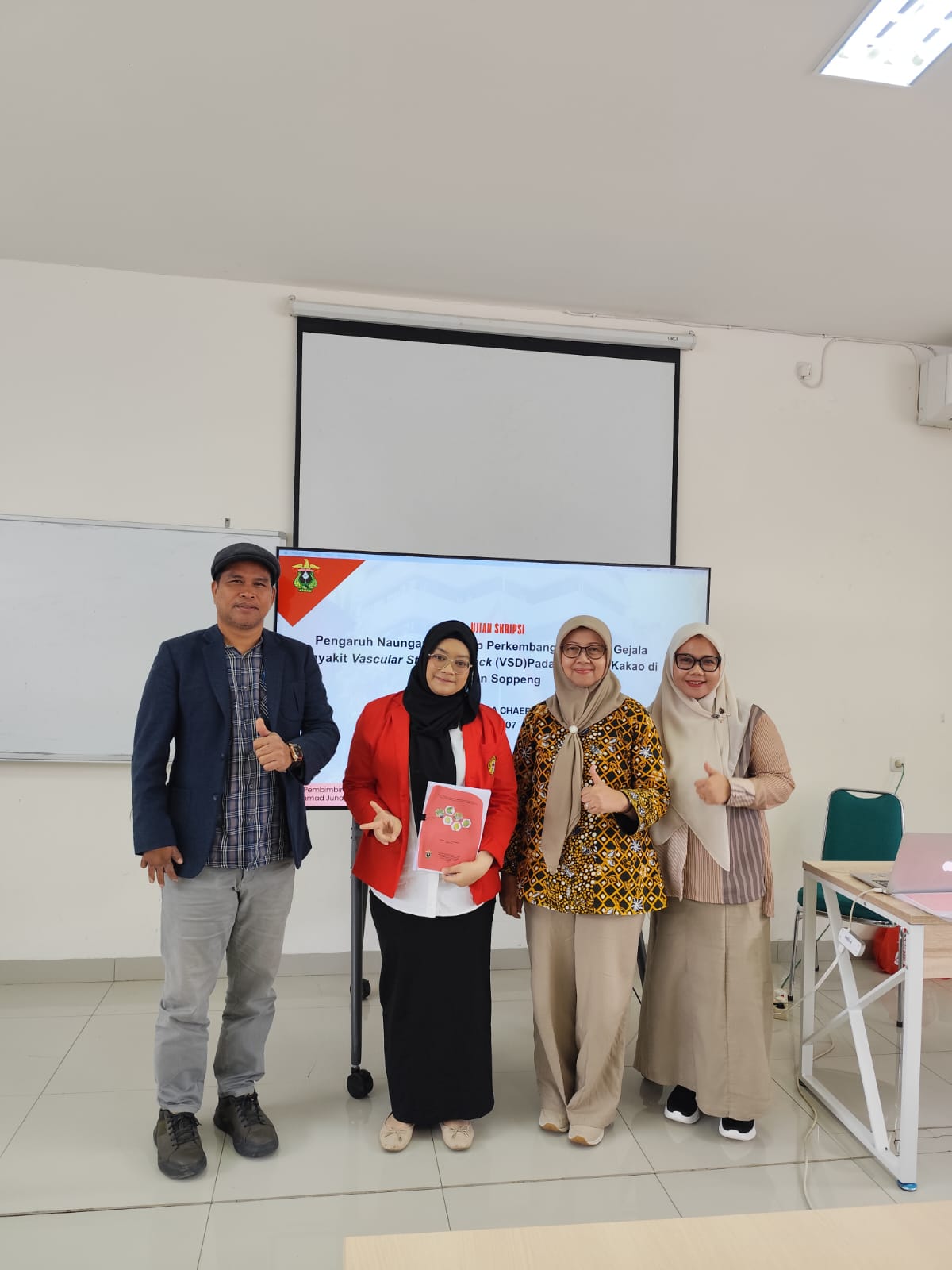

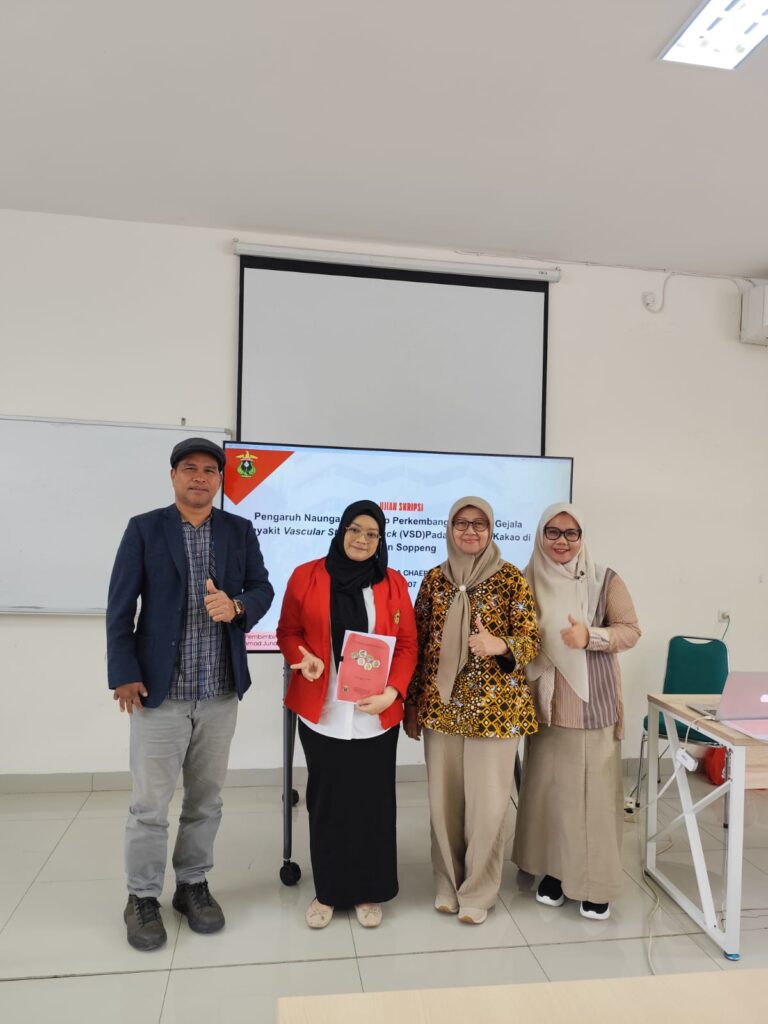
The Department of Plant Pests and Diseases, Hasanuddin University, conducted a focused research activity examining the role of shade intensity in influencing the development of Vascular Streak Dieback (VSD) symptoms in cocoa (Theobroma cacao L.). Held at the Department of Plant Pests and Diseases, Hasanuddin University, this study reflects ongoing efforts to identify sustainable and environmentally sound approaches to managing one of the most significant diseases affecting cocoa production in tropical regions.
The activity took place on 16 January 2026 and involved 4 participants, consisting of researchers and academic contributors working collaboratively within a small, intensive research setting. This limited number of participants allowed for a highly focused investigation, enabling detailed observation, data collection, and analytical discussion on the relationship between microclimate conditions and disease expression.
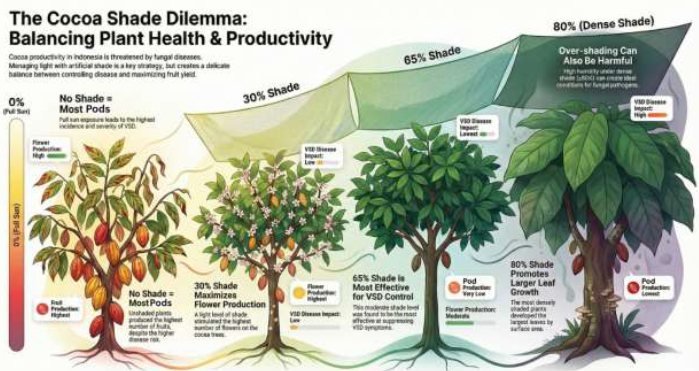
The research is predicated on the limitations of conventional chemical control methods, which often present environmental risks and inconsistent effectiveness in managing VSD. In response, this study explores microclimate modulation through artificial shading as a sustainable disease management strategy. By manipulating shade intensity, the research aims to better understand how environmental factors such as light exposure, humidity, and temperature influence the progression and severity of VSD symptoms.
Initial observations indicate that shading plays a crucial role in altering the microclimate surrounding cocoa plants, which in turn affects pathogen development and host response. Lower light intensity and moderated temperature conditions under shaded environments may contribute to reduced disease severity, although further analysis is required to establish optimal shading levels. This approach offers a promising alternative to chemical-based control, emphasizing ecological balance and long-term sustainability.
The findings from this activity are expected to contribute to improved disease management practices that are both effective and environmentally responsible. By integrating microclimate-based strategies into cocoa cultivation systems, farmers may be able to reduce dependency on chemical inputs while maintaining crop health and productivity. This is particularly relevant in regions where cocoa farming is a primary source of livelihood and where sustainable agricultural practices are increasingly needed.
This research aligns closely with several Sustainable Development Goals (SDGs). It supports SDG 1: No Poverty by addressing crop losses caused by VSD, thereby helping to protect the income and livelihoods of cocoa farmers. By improving disease management strategies, the research contributes to more stable and resilient agricultural production systems.
Additionally, the activity advances SDG 4: Quality Education through the application of scientific research and the development of practical knowledge in plant pathology and sustainable agriculture. The research process itself serves as a learning platform for participants, enhancing their technical skills and analytical capabilities.
Furthermore, this study contributes to SDG 17: Partnerships for the Goals, as it reflects collaborative efforts among researchers and academic institutions to address shared agricultural challenges. Such cooperation is essential for generating impactful research outcomes and promoting the adoption of sustainable practices.
Overall, this activity demonstrates a meaningful step toward environmentally sustainable cocoa disease management. By focusing on microclimate manipulation through shading, the research offers innovative insights that can support the development of resilient agricultural systems in tropical regions.


