
Treatments
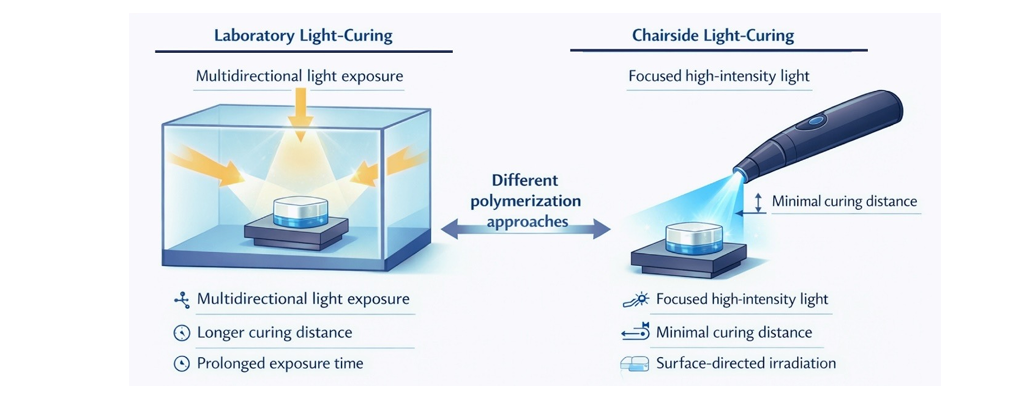
Makassar, Aprul 24/oral microbiome/-In the world of orthodontics and restorative dentistry, time and cost are often critical factors that can impact both the clinician and patient. Traditionally, indirect composite resins used in dental treatments require laboratory light-curing devices for optimal polymerization, a process that increases treatment time and cost. However, a new approach in dental technology is turning heads—chairside light-curing. This technique is gaining attention as a practical alternative that could transform dental procedures, especially in settings where laboratory equipment is not available.
A study titled “Chairside Light-Curing as a Feasible Alternative to Laboratory Polymerization for Indirect Composite Resins: A Performance-Based In Vitro Study” published in the Odovtos-International Journal of Dental Sciences (Universidad de Costa Rica, April 2026), explores whether chairside light-curing can achieve mechanical properties comparable to those obtained with laboratory-based polymerization. The research found that chairside light-curing not only achieved mechanical performance similar to traditional laboratory curing but also resulted in higher surface microhardness, indicating improved surface durability.
The study’s findings have significant implications for SDG 3: Good Health and Well-Being, which aims to ensure access to quality healthcare. By reducing the need for specialized laboratory equipment, chairside light-curing makes dental care more accessible, particularly in resource-limited settings. This method could be a game-changer, especially in clinics where the high cost of laboratory equipment can limit treatment options. Patients can benefit from faster procedures, ultimately leading to improved treatment outcomes and increased satisfaction.
Moreover, chairside light-curing supports SDG 12: Responsible Consumption and Production, by promoting a more sustainable approach to dental treatment. Traditional laboratory curing devices often require energy-intensive processes, but chairside light-curing units are more efficient and portable, reducing the overall environmental impact of dental practices. With a growing emphasis on sustainability, this technology aligns well with the need for more eco-friendly healthcare solutions.
The study also emphasizes SDG 4: Quality Education, as the development and application of chairside light-curing can revolutionize dental education. This technology can be incorporated into dental schools’ curricula, ensuring that future generations of dentists are equipped with the skills to perform high-quality, efficient treatments in various clinical environments.
In conclusion, the adoption of chairside light-curing systems in orthodontics and restorative dentistry holds the potential to improve both patient care and environmental sustainability. This technology provides a clinically viable, cost-effective, and accessible alternative to traditional polymerization methods, contributing to more efficient dental treatments and supporting several global goals for better health, sustainability, and education.
References :
DOI: 10.15517/9pwfnk63
Maria Tanumihardja
mariatanumihardja@unhas.ac.id
+62 8124212957