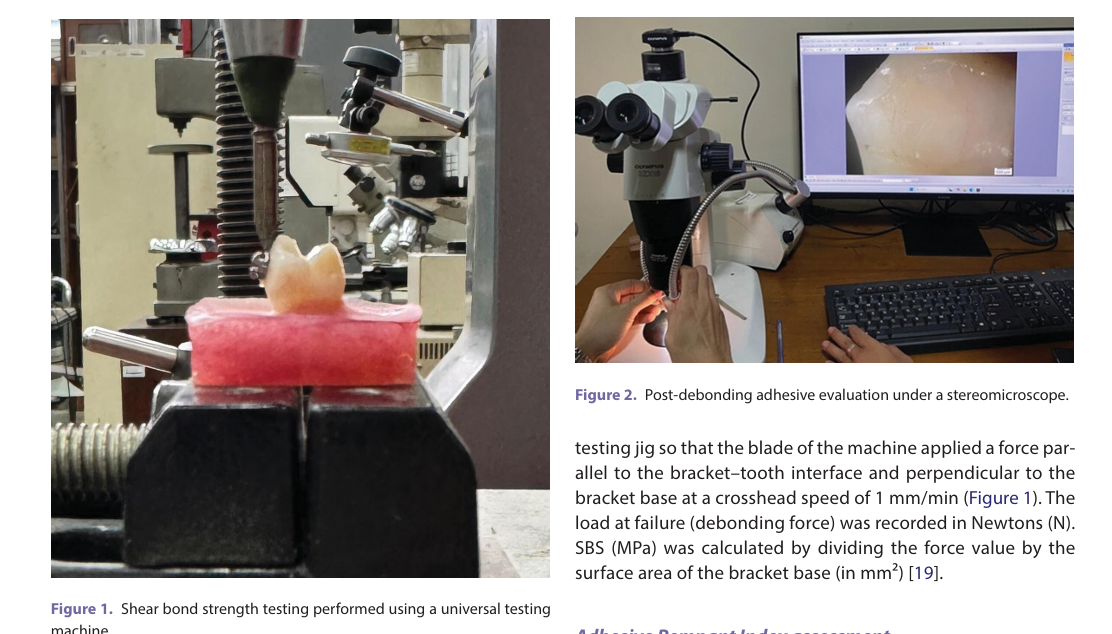

Makassar, April 24 2026/ Oral microbiome/-Orthodontic treatments are a crucial aspect of dental care, particularly for patients with misaligned teeth. However, one of the common complications in orthodontics is bracket detachment, which can extend treatment duration and cause discomfort. A breakthrough in addressing this issue lies in the incorporation of nano-hydroxyapatite (n-HAp) derived from the shells of Asian moon scallops (Amusium pleuronectes) into orthodontic adhesives. This study, published in Biomater Investig Dent (National Library of Medicine, December 17, 2025), explores how this innovative approach improves the shear bond strength (SBS) of orthodontic adhesives, thus reducing the chances of bracket detachment.
The research showed that incorporating 2 wt% n-HAp into orthodontic adhesives significantly increased the SBS compared to traditional adhesives, which is essential for ensuring the durability and effectiveness of orthodontic treatments. The enhanced adhesive strength was achieved without altering the adhesive’s handling characteristics. This study not only provides a technical solution for orthodontic care but also aligns with global initiatives such as the United Nations Sustainable Development Goals (SDGs), particularly SDG 12: Responsible Consumption and Production, SDG 14: Life Below Water, and SDG 15: Life on Land.
By using n-HAp derived from the shells of Asian moon scallops, a marine byproduct that is typically discarded as waste, this research offers an innovative and sustainable alternative to conventional orthodontic adhesives. The use of marine biowaste as a raw material reduces environmental pollution and supports circular economy principles, as the shells are converted into a valuable resource rather than contributing to waste. This process aligns with SDG 12, which emphasizes the importance of sustainable production and consumption.
Furthermore, the incorporation of n-HAp into dental adhesives supports the biocompatibility and biological integration of the material, which is crucial for patient safety and comfort during orthodontic treatments. The study also highlights the potential of n-HAp to remineralize and strengthen enamel, which is beneficial for maintaining oral health and preventing damage during treatment. This aspect ties into SDG 3, ensuring good health and well-being, as the use of bioactive materials in dental care can contribute to better long-term oral health outcomes.
The use of marine biowaste, specifically from Asian moon scallops, not only provides a sustainable alternative to synthetic materials but also promotes environmental conservation. The shells, which are abundant in Southeast Asia, are often discarded, contributing to environmental pollution. By recycling these shells into a valuable resource for dental adhesives, this study supports SDG 14 (Life Below Water), which advocates for the sustainable use of marine resources. Moreover, this innovative approach also aligns with SDG 15 (Life on Land), encouraging the responsible use of land-based resources to protect ecosystems.
This research paves the way for further exploration of sustainable materials in dental applications. The findings suggest that n-HAp is a promising filler that enhances the mechanical properties of orthodontic adhesives without compromising safety or performance. The potential for using marine biowaste in other biomedical and industrial applications could lead to more eco-friendly practices in the field of materials science.
In conclusion, the incorporation of 2 wt% nano-hydroxyapatite derived from Asian moon scallop shells into orthodontic adhesives significantly enhances their strength while contributing to environmental sustainability. This innovative approach not only offers a solution to a common orthodontic problem but also supports the achievement of several SDGs, including responsible consumption, marine conservation, and land protection. Future research should focus on the long-term performance of these adhesives in clinical settings to confirm their practical applicability.
References :
https://doi.org/10.2340/biid.v12.45130
Maria Tanumihardja
mariatanumihardja@unhas.ac.id
+62 8124212957