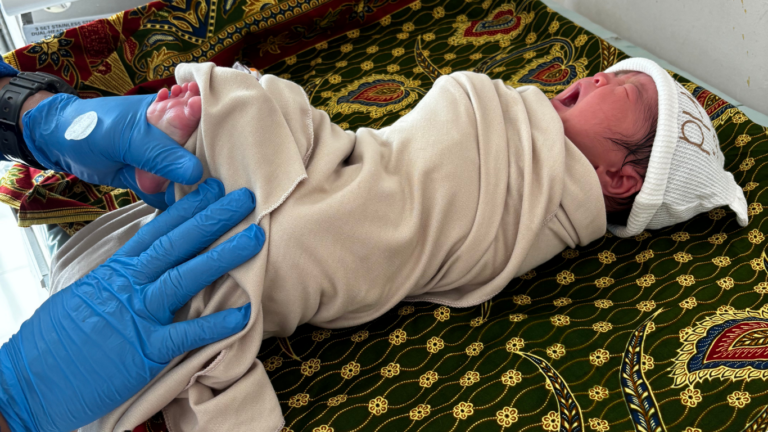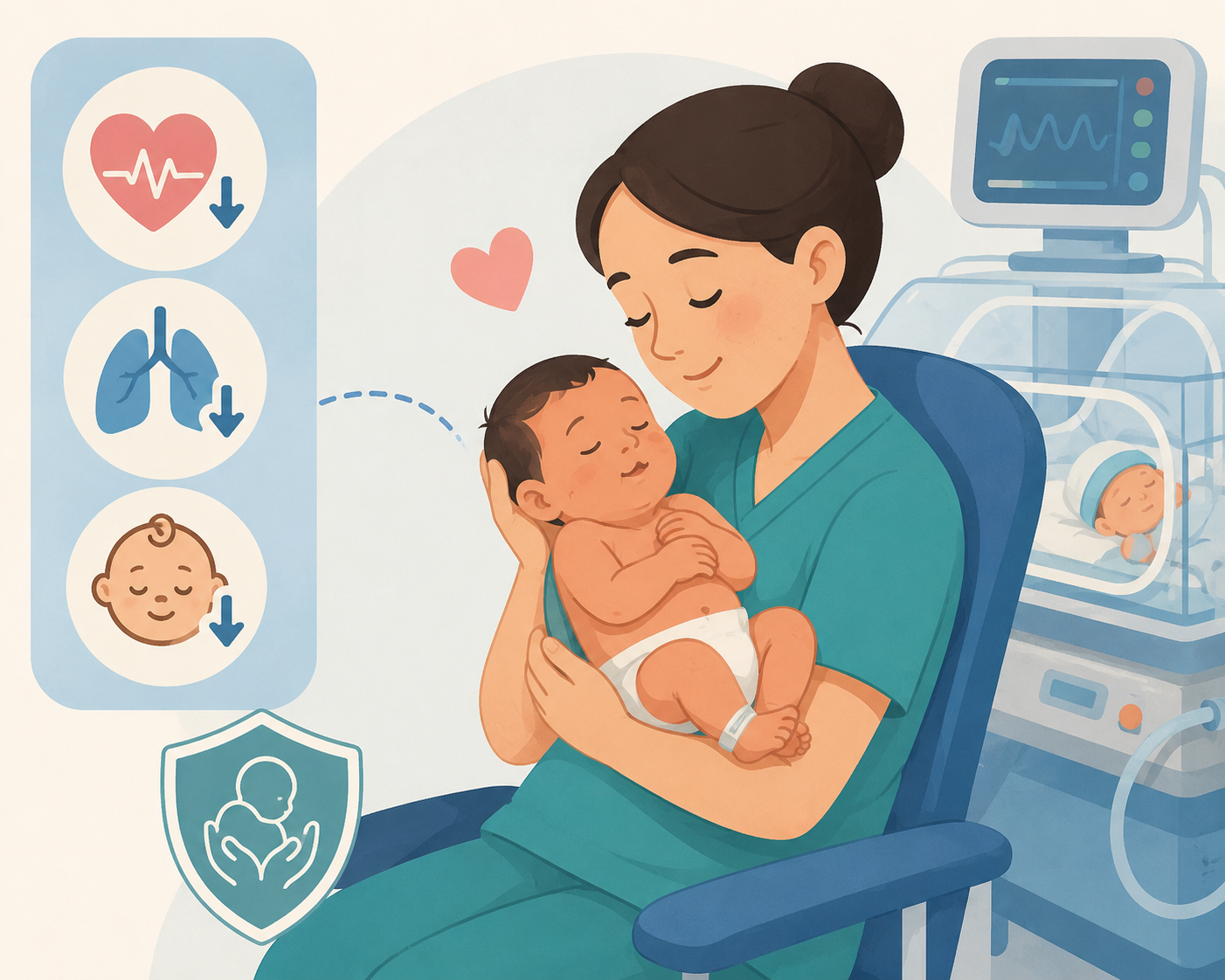

MAKASSAR, Indonesia, 28 Oktober 2025/NNRG – A newborn’s cry is more than just a sound. It can be a signal of hunger, discomfort, loneliness, pain, or stress. For babies receiving care in a Neonatal Intensive Care Unit (NICU), these stressors may be intensified by bright lights, noise, separation from parents, and repeated medical or nursing procedures. Because newborns—particularly premature babies—are still developing, finding safe and simple ways to comfort them is an important part of neonatal care.
A study titled “Semi-seated holding position to reduce stress responses in spontaneously crying newborns in the neonatal intensive care unit: A randomised experimental study” offers a practical approach. The article was authored by Andi Dwi Bahagia Febriani, Ema Alasiry, Besse Sarmila, Adhariana Kaddas, Suni Hariati, Melda Warliani, Abdul Kadir, Asriaty, Andi Yaumil Chaeriyah, and Mirsha Hijriana. It was published in Acta Biomedica, by Mattioli 1885, on 28 October 2025.
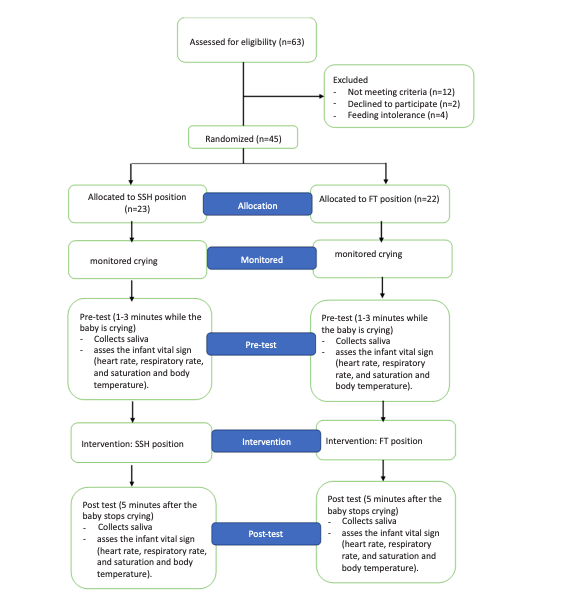
The researchers explored whether simply changing how a crying newborn is held could help reduce stress. Conducted at the NICU of Dr. Wahidin Sudirohusodo Hospital in Makassar, Indonesia, the randomized experimental study involved 45 clinically stable newborns. Twenty-three babies received a semi-seated holding position (SSHP), while 22 received facilitated tucking in a side-lying position (FTP), a positioning approach already used in NICU care.
In the semi-seated approach, the baby was gently held in a partially upright position, with the head, neck, and shoulders supported and the arms positioned across the chest. Researchers assessed heart rate, breathing rate, oxygen saturation, body temperature, and two stress-related hormones—cortisol and oxytocin—before and after positioning.
The results were encouraging. Both positions significantly reduced babies’ heart and respiratory rates. Cortisol levels tended to decrease after semi-seated holding, although this change was not statistically significant. Most importantly, there was no significant difference between the two approaches in their overall changes in stress responses. The researchers therefore concluded that semi-seated holding was as effective as facilitated tucking for minimizing stress responses in spontaneously crying newborns.
What makes this finding especially meaningful is its simplicity. Semi-seated holding requires no sophisticated technology or additional equipment. A gentle, supportive hold may help provide security and comfort when a newborn becomes distressed. The authors describe it as a practical, equipment-free alternative for promptly soothing crying babies in the NICU.
This research directly supports Sustainable Development Goal (SDG) 3: Good Health and Well-Being, particularly efforts to improve newborn health and quality of care. By introducing a simple non-pharmacological approach to reducing neonatal stress, the study highlights how compassionate, evidence-based care can complement advanced medical treatment.
Sometimes, improving neonatal care does not begin with another machine or medicine. It can begin with something much simpler: how we hold and comfort a crying baby.
Reference:
DOI: https://doi.org/10.23750/abm.v96i5.16901
Contact:
Suni Hariati
+6281387192990
sunihariati@unhas.ac.id