
MAKASSAR, Indonesia, 21 Oktober 2025/NNRG – Stunting is more than a child being shorter than expected for their age. It can affect immunity, learning capacity, development, and health later in life. The challenge is particularly important for children born to adolescent mothers, who may enter pregnancy with limited knowledge and experience related to nutrition, pregnancy care, and infant health. Recognizing this vulnerability, researchers developed an innovative approach that combines personal interaction with digital technology to help young mothers protect their children’s growth from the earliest stages of life.
The study, titled “Development and Evaluation of Blended Interventions to Prevent Stunting in Children of Adolescent Mothers: A Mixed Methods Study,” was published in the Journal of Pediatric Nursing, Volume 85 (2025), pages 697–705, by Elsevier, with a publication date of 21 October 2025. The research was conducted by Erfina Erfina, Suni Hariati, Suryani Tawali, Nurmaulid Nurmaulid, Kolsoom Safari, and Lisa McKenna. It focused on developing and evaluating nursing interventions specifically designed to prevent stunting among children of adolescent mothers.
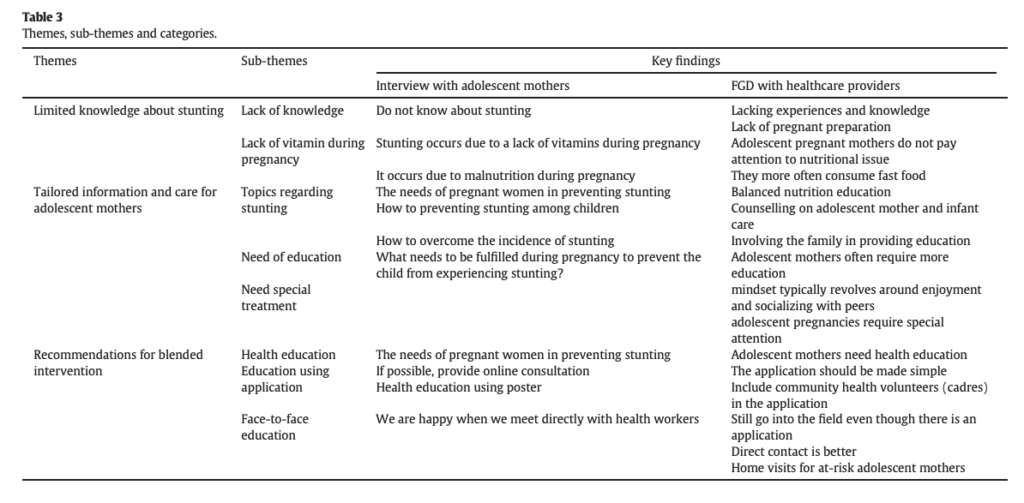
The researchers used a mixed-methods approach. First, they listened to adolescent mothers and healthcare providers to understand their experiences and needs. Interviews with 14 adolescent mothers and focus group discussions involving 20 healthcare workers revealed three important issues: limited knowledge about stunting, the need for information and care tailored to adolescent mothers, and a preference for blended education. Many young mothers wanted practical information that was easy to understand and accessible through both direct interaction and digital media.
Based on these findings, the researchers developed a blended intervention combining 30 minutes of face-to-face education with a mobile application containing educational videos and an online consultation feature. Participants continued using the application for two weeks, allowing them to learn beyond their visit to the community health center. This approach made health education more flexible while maintaining valuable personal contact with healthcare professionals.
The results were encouraging. Among 60 adolescent pregnant women in the quantitative phase, the intervention significantly improved knowledge about stunting and maternal nutrition. Food consumption frequency also improved significantly, while no significant change was found in attitudes toward stunting prevention. These findings suggest that combining digital technology with direct education can influence what young mothers know and how they practice healthier nutrition, although changing attitudes may require longer or more intensive interventions.
This research directly supports Sustainable Development Goal 3 (SDG 3): Good Health and Well-Being, particularly efforts to improve maternal and child health and prevent avoidable health problems. Blended interventions can make health education more accessible, personalized, and responsive to the realities of adolescent motherhood. By equipping young mothers with appropriate knowledge and nutritional practices during pregnancy, healthcare providers can strengthen an important foundation for healthier child growth and development.
Ultimately, preventing stunting begins long before a child’s growth is measured. It starts by ensuring that mothers—including adolescent mothers—receive the right information, support, and care at the right time. When human connection and digital innovation work together, health education can become a powerful investment in healthier mothers and healthier generations.
Reference:
DOI: https://doi.org/10.1016/j.pedn.2025.10.003
Contact:
Suni Hariati
+6281387192990
sunihariati@unhas.ac.id