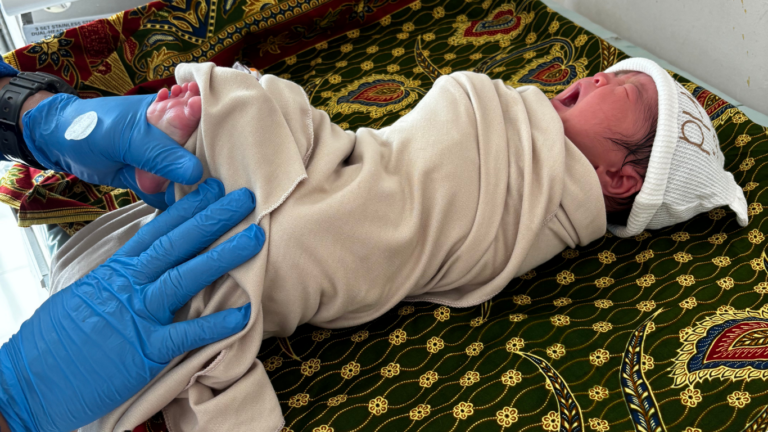

MAKASSAR, Indonesia, 23 Agustus 2025/NNRG – For most newborns, feeding may seem like a natural and simple activity. For low-birth-weight (LBW) infants, however, learning to feed safely can be a major challenge. Babies born weighing less than 2,500 grams, particularly those born prematurely, may have difficulty coordinating three essential actions: sucking, swallowing, and breathing. When oral feeding begins before a baby is developmentally ready, it can lead to distress, choking, low oxygen levels, poor weight gain, and other complications.
This challenge inspired the study “Adaptation and Validation of the Indonesian Version of the Early Feeding Skill Assessment Tool for Low Birth Weight Infants,” written by Suni Hariati, Erfina, Andi Dwi Bahagia Febriani, Ema Alasiry, Asriaty, and Haerani. The article was published in Scientific Reports, Volume 15, Article 31028, on 23 August 2025. The journal is part of the Springer Nature portfolio.
The researchers focused on adapting the Early Feeding Skills Assessment (EFS) into Indonesian. The EFS is a structured tool designed to help healthcare professionals assess whether an infant is ready and able to feed orally. Its 19 items examine five important areas: respiratory regulation, oral-motor function, swallowing coordination, engagement during feeding, and physiological stability. In simple terms, the tool helps nurses understand not only whether a baby can drink milk, but also how safely and effectively the baby is feeding.
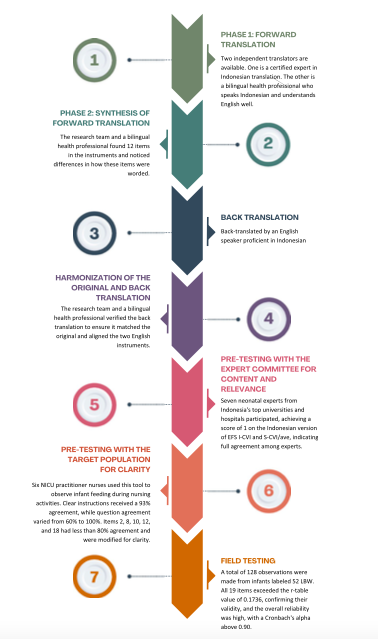
Creating the Indonesian version involved much more than translating words. The researchers conducted forward translation, back translation, cultural harmonization, expert assessment, evaluation by neonatal nurses, and field testing. As illustrated in the adaptation process on page 3 of the article, these stages were designed to ensure that the instrument remained scientifically accurate while being understandable and appropriate for Indonesian clinical practice.
The results were encouraging. Field testing included 128 feeding observations involving 52 LBW infants. All 19 items were found to be valid, while the overall Indonesian EFS demonstrated excellent reliability, with a Cronbach’s alpha of 0.918. This means the adapted tool can provide healthcare professionals with a more consistent and objective way to evaluate infant feeding skills.
The importance of this innovation goes beyond measurement. Early and accurate assessment may help healthcare workers determine the right time to begin oral feeding, reduce unnecessary stress and complications, and support better growth and development. It can also create a common language among members of the healthcare team when discussing a baby’s feeding progress.
This research directly contributes to Sustainable Development Goal 3 (SDG 3): Good Health and Well-being, particularly efforts to improve newborn health and quality of care. A simple, culturally appropriate assessment tool can support safer decisions for some of the most vulnerable newborns.
For LBW infants, successful feeding is more than receiving enough milk—it is an important step toward growing stronger, going home safely, and beginning life with better opportunities to thrive.
Reference:
DOI: https://doi.org/10.1038/s41598-025-15342-9
Contact:
Suni Hariati
+6281387192990
sunihariati@unhas.ac.id