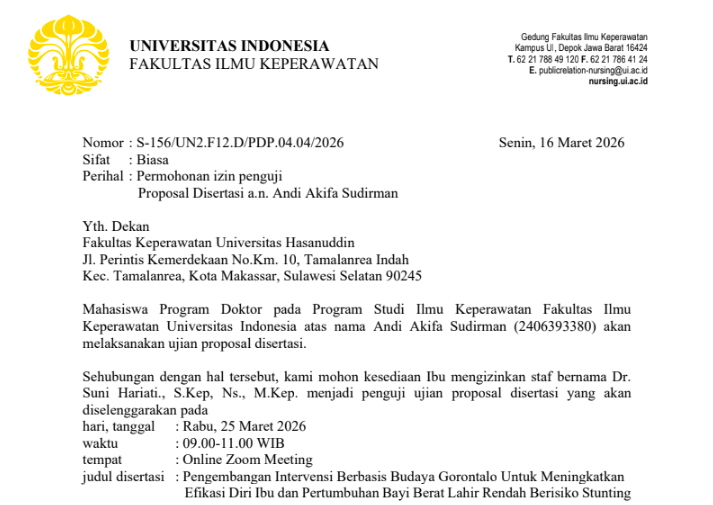
The Leader of Neonatal Nursing Research Group, Dr. Suni Hariati, was appointed as a panel assessor in a doctoral dissertation proposal examination at the Faculty of Nursing, Universitas Indonesia. The examination provided an academic platform to assess the scientific direction, methodological foundation, and potential contribution of a proposed nursing research project. The examination focused on a dissertation entitled “Development of a Gorontalo Culture-Based Intervention to Improve Maternal Self-Efficacy and Growth of Low Birth Weight Infants at Risk of Stunting.”
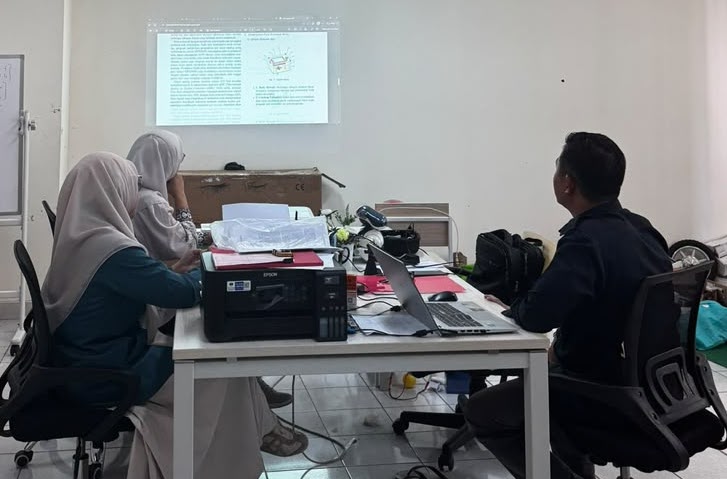
The examination was conducted virtually via Zoom on Wednesday, 25 March 2026, with 10 participants consisting of academic experts, researchers, and postgraduate participants. The doctoral candidate, Andi Akifa Sudirman, a student in the Doctoral Program of Nursing Science at the Faculty of Nursing, Universitas Indonesia, presented the rationale, objectives, and proposed methodological approach of the dissertation. The examination provided an opportunity for academic discussion regarding the development of culturally responsive interventions for mothers caring for low birth weight infants.
Low birth weight remains an important concern in maternal and child health because infants born with low birth weight may experience challenges related to growth, nutrition, and vulnerability to health complications. Following hospital discharge, mothers and families play a central role in maintaining infant health and supporting healthy development. Their ability to provide appropriate care may be influenced by their knowledge, confidence, access to healthcare services, and the cultural values that shape family practices.
The proposed dissertation explores the development of an intervention based on Gorontalo culture to improve maternal self-efficacy and the growth of low birth weight infants at risk of stunting. Maternal self-efficacy refers to a mother’s confidence in her ability to perform caregiving activities and respond to her infant’s needs. Strengthening this confidence may support mothers in providing appropriate nutrition, recognizing potential health problems, and seeking professional assistance when necessary.
During the examination, Dr. Suni Hariati contributed to the academic assessment of the proposed research, including its relevance, scientific rationale, intervention development, and methodological considerations. The discussion provided an opportunity to examine the coherence between the research problem, objectives, intervention components, and expected outcomes. Academic feedback was intended to strengthen the scientific rigor, feasibility, and potential applicability of the proposed study.
The examination also highlighted the importance of integrating cultural considerations into nursing research and maternal-child healthcare. Culturally responsive interventions may help ensure that health education and caregiving support are relevant to the experiences, values, and needs of local communities. Such approaches can contribute to the development of more meaningful and sustainable health interventions.
The activity contributes to SDG 3: Good Health and Well-Being by supporting research aimed at improving maternal and infant health outcomes. It also supports SDG 4: Quality Education through doctoral-level academic development and rigorous research assessment. Furthermore, the examination reflects SDG 17: Partnerships for the Goals, emphasizing collaboration among universities, academic experts, and researchers in advancing nursing science and public health.
The examination concluded with academic feedback and recommendations to support the continued development of the dissertation proposal. The activity represents an important contribution to strengthening culturally responsive nursing research and supporting efforts to improve the health and well-being of low birth weight infants and their families in Indonesia.