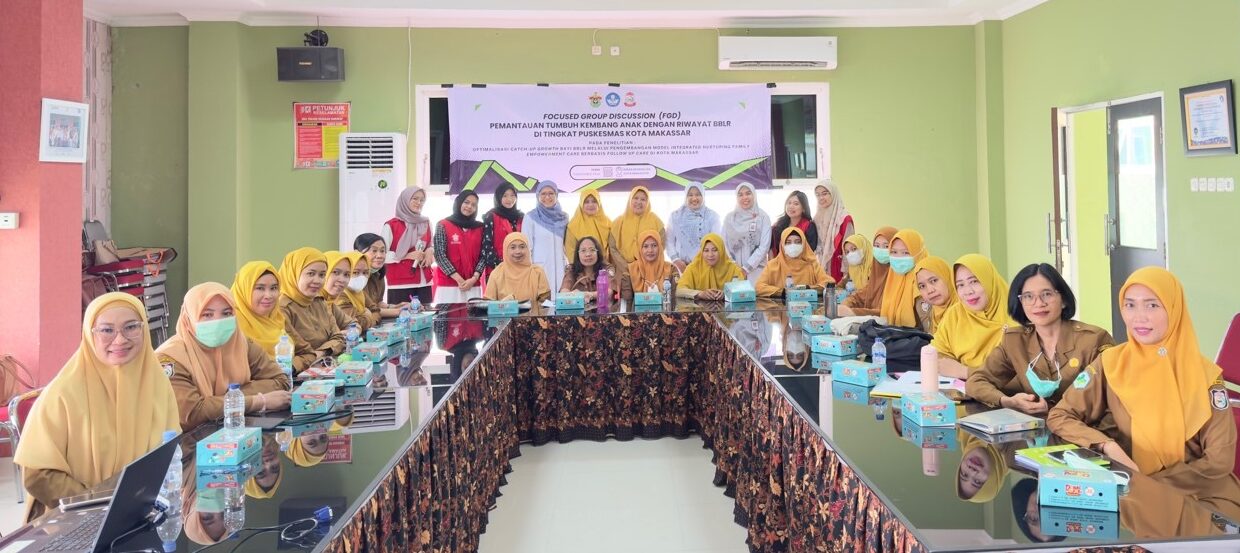

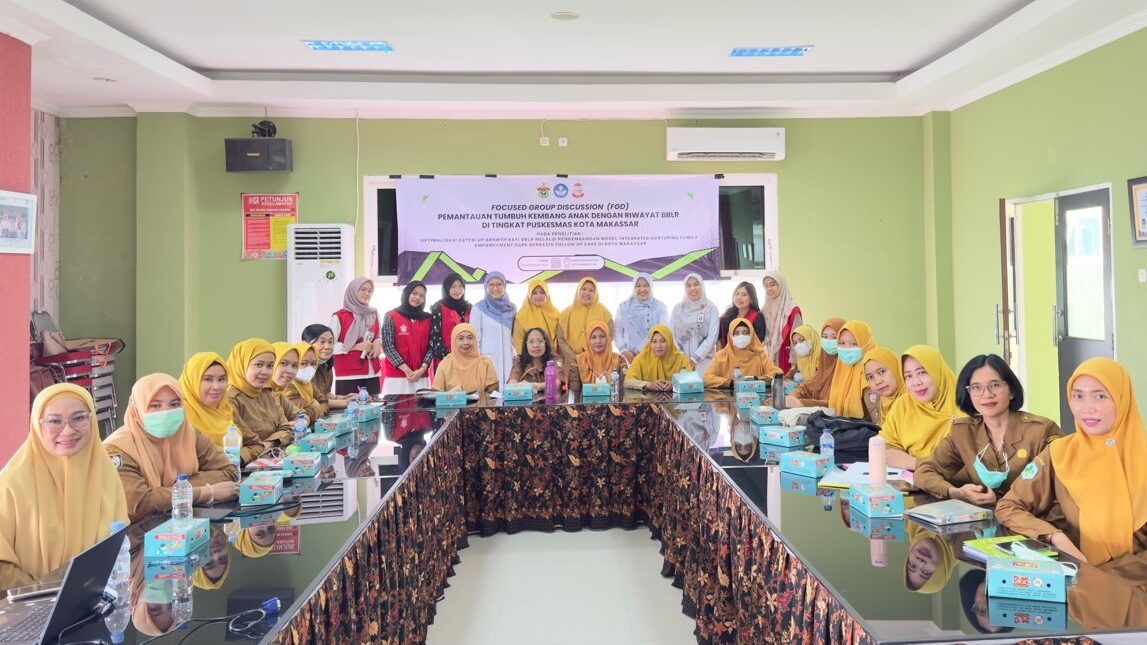
A Focus Group Discussion (FGD) involving maternal and child health coordinators at the primary healthcare center (Puskesmas) level was conducted in Makassar City, South Sulawesi, Indonesia, as part of efforts to strengthen growth and development monitoring for children with a history of low birth weight (LBW). The activity brought together 21 participants, consisting of maternal and child health coordinators representing 21 Puskesmas with the highest LBW rates in Makassar City.
Low birth weight remains an important maternal and child health concern because children born with a birth weight below 2,500 grams may face increased risks of growth and developmental problems. Appropriate follow-up after birth is therefore essential to identify potential growth faltering or developmental delays as early as possible. Primary healthcare centers have a strategic role in ensuring continuity of care through regular monitoring, health education, early detection, and appropriate referral when additional assessment or intervention is required.
The objective of the FGD was to explore the perceptions and experiences of maternal and child health coordinators responsible for managing LBW cases at Puskesmas regarding the implementation of growth and development monitoring among children with a history of LBW. The discussion provided an opportunity for participants to share experiences from their respective healthcare centers, identify challenges encountered during follow-up, and describe existing practices related to monitoring the growth and developmental progress of children after they return to their families and communities.
Through an interactive discussion process, participants explored several aspects of LBW follow-up services, including continuity of monitoring, communication with families, coordination among healthcare professionals and community health workers, and barriers that may affect regular access to child health services. The FGD also highlighted the importance of understanding conditions at the primary healthcare level, as effective monitoring requires not only appropriate clinical procedures but also active family participation and coordinated support from healthcare providers.
The activity represents an important step toward generating contextual information that can be used to strengthen future strategies for monitoring children with a history of LBW in Makassar City. Insights from frontline maternal and child health coordinators are particularly valuable because they reflect practical experiences in delivering services directly to children and families within the community.
This activity also contributes explicitly to the Sustainable Development Goals (SDGs). It supports SDG 1: No Poverty by strengthening early health interventions that may help reduce the long-term social and economic burden associated with childhood health problems. It directly advances SDG 3: Good Health and Well-Being through efforts to improve continuity of care and early monitoring of vulnerable children. It contributes to SDG 4: Quality Education by facilitating professional knowledge exchange and shared learning among maternal and child health coordinators. Furthermore, it supports SDG 17: Partnerships for the Goals by strengthening collaboration among Puskesmas, healthcare professionals, researchers, families, and relevant stakeholders.
Through this FGD, the experiences of 21 maternal and child health coordinators from 21 Puskesmas provide an important foundation for developing more responsive, coordinated, and sustainable growth and development monitoring for children with a history of LBW in Makassar City.