
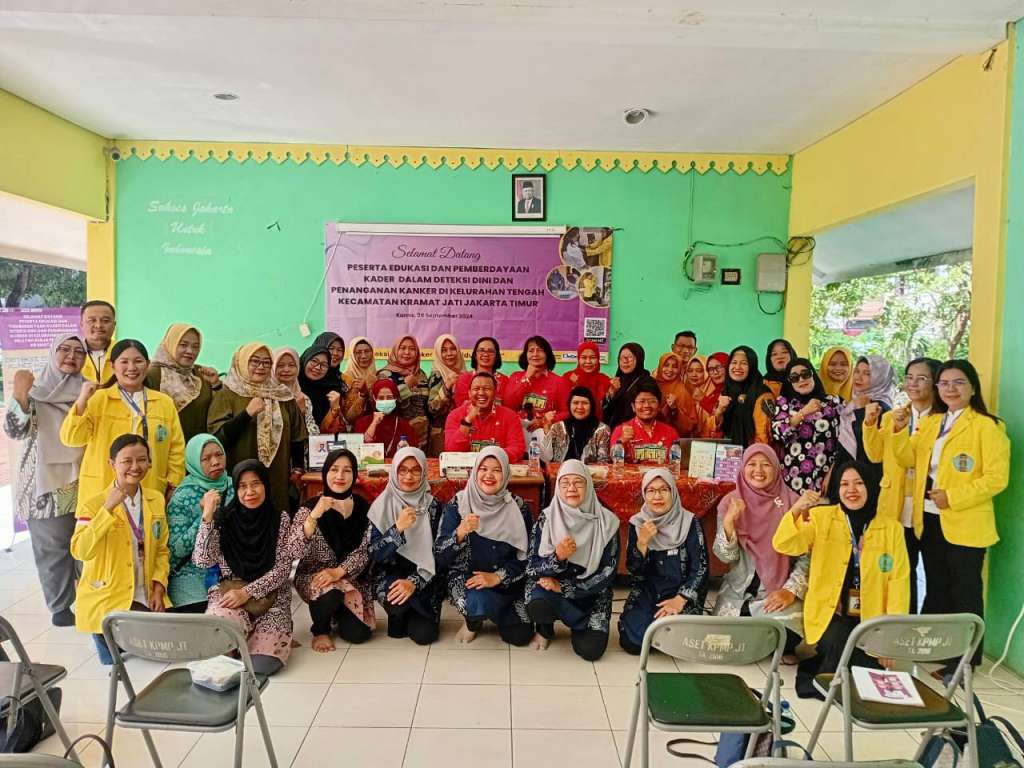

On 26 September 2024, an important community health outreach program entitled “Strengthening Early Cancer Detection Through Education and Empowerment of Community Health Cadres” was successfully conducted at Balai Pertemuan RPTRA Kramat Jati, East Jakarta. The activity involved 20 participants, consisting of community health cadres, local residents, and invited community representatives. This program was designed to improve public awareness of cancer prevention while strengthening the role of community-based health volunteers in promoting early detection practices.
Cancer remains a major public health challenge in many countries, including Indonesia. Many cancer cases are diagnosed in advanced stages due to limited awareness, delayed screening, fear, and lack of access to reliable health information. Early detection is one of the most effective strategies to reduce mortality and improve treatment outcomes. Therefore, empowering trusted community members such as health cadres is a strategic approach to reaching households directly and promoting preventive behavior at the grassroots level.
During the program, participants received educational sessions covering common types of cancer, risk factors, warning signs, and practical steps for early screening. Facilitators explained the importance of recognizing symptoms early, attending regular health checks, and seeking medical consultation without delay. Special attention was given to cancers that can benefit significantly from timely diagnosis, including breast cancer, cervical cancer, colorectal cancer, and prostate cancer.
The empowerment component of the activity focused on strengthening the communication skills of health cadres so they can serve as local agents of change. Participants learned how to deliver accurate health messages, address myths and misconceptions, encourage screening participation, and support families who may feel anxious about cancer diagnosis or treatment. Interactive discussions and case-based learning helped cadres develop confidence in conducting health promotion activities within their neighborhoods.
This initiative also emphasized that cancer prevention is closely linked to healthy lifestyles. Participants were encouraged to promote smoking cessation, balanced nutrition, physical activity, reduced alcohol exposure, and routine medical check-ups. Such preventive measures can significantly lower the risk of many non-communicable diseases, including cancer.
The program strongly contributes to the Sustainable Development Goals (SDGs), particularly SDG 1: No Poverty, SDG 3: Good Health and Well-being, SDG 4: Quality Education, and SDG 17: Partnerships for the Goals. Cancer often creates financial hardship for families due to treatment costs and loss of productivity; therefore, prevention and early detection help reduce long-term economic burden (SDG 1). By promoting health awareness and timely diagnosis, the activity supports healthier communities and reduced disease burden (SDG 3). Through inclusive and evidence-based public education, it advances lifelong learning and health literacy (SDG 4). Furthermore, collaboration between community stakeholders, local cadres, and health professionals reflects the importance of partnerships in solving public health challenges (SDG 17).
In conclusion, “Strengthening Early Cancer Detection Through Education and Empowerment of Community Health Cadres” demonstrated that community participation is essential in building a responsive and informed health system. By equipping local cadres with knowledge and communication skills, the initiative created a sustainable pathway for wider cancer awareness, earlier diagnosis, and improved quality of life for the community.


