
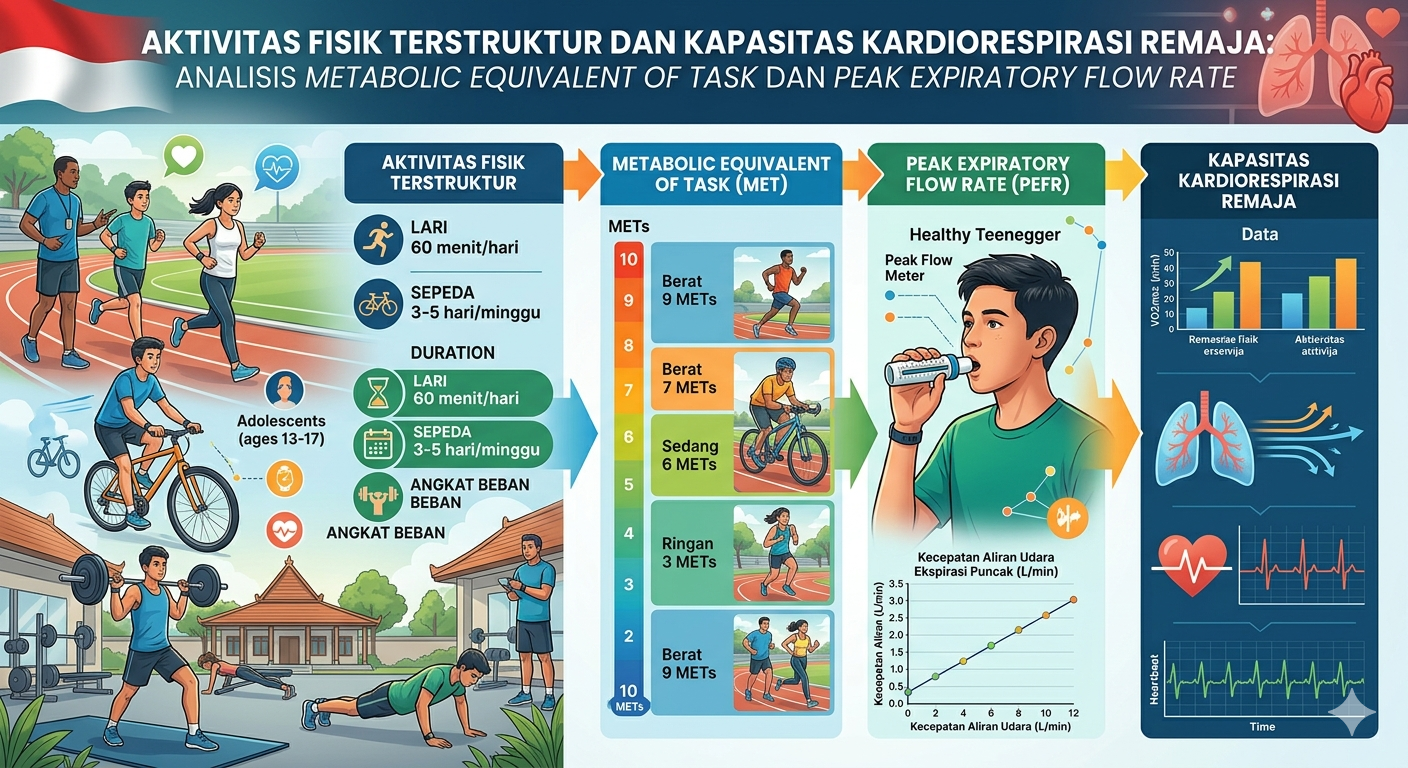

Makassar, Indonesia April 18 2026/MWR-RG/- In an era where screens dominate daily life, many teenagers are moving less and sitting more. Smartphones, online games, and long study hours often replace running, cycling, and outdoor play. While technology offers many benefits, it also creates a silent health challenge: declining physical fitness among adolescents. A recent scientific article shows that structured physical activity—especially school sports programs—can significantly improve teenagers’ respiratory fitness and overall health.
The source article titled “AKTIVITAS FISIK TERSTRUKTUR DAN KAPASITAS KARDIORESPIRASI REMAJA: ANALISIS METABOLIC EQUIVALENT OF TASK DAN PEAK EXPIRATORY FLOW RATE” was published in Media Fisioterapi Poltekkes Makassar, issued by the Department of Physiotherapy, Politeknik Kesehatan Makassar, on 7 December 2025. The study explored how regular sports participation affects physical activity levels and lung performance among teenagers.
Researchers involved 186 junior high school students and divided them into two groups: students who joined sports extracurricular activities and those who did not. To measure movement levels, the team used the Metabolic Equivalent of Task (MET), a standard way to estimate energy use during activity. Lung function was measured through Peak Expiratory Flow Rate (PEFR), which shows how fast a person can exhale air.
The results were striking. Teenagers involved in sports had much higher physical activity scores, averaging 4312.96 MET-minutes/week, compared with only 1066.15 MET-minutes/week among non-sports students. They also had stronger respiratory performance, with an average PEFR of 560.75 L/min, while the non-sports group averaged 440.00 L/min. In simple terms, active students moved more and breathed better.
Why does this matter? Healthy lungs and strong cardiorespiratory fitness are essential for energy, concentration, endurance, and long-term disease prevention. Teenagers who are physically active are more likely to maintain healthy body weight, stronger muscles, and better emotional well-being. Exercise also helps reduce stress and improves confidence.
This study sends a clear message to schools and families: structured sports programs are not just extracurricular entertainment—they are health investments. Football, volleyball, badminton, athletics, and other school activities can become practical tools to protect youth from sedentary lifestyles.
The findings strongly support several Sustainable Development Goals. First, SDG 3: Good Health and Well-being, because regular exercise improves physical and respiratory health. Second, SDG 4: Quality Education, because healthier students are often more focused, energetic, and ready to learn. Third, SDG 1: No Poverty, because healthier young people may reduce future healthcare costs and increase productivity later in life. Finally, SDG 17: Partnerships for the Goals, as collaboration among schools, healthcare professionals, families, and communities is essential to promote active lifestyles.
The lesson is simple but powerful: when teenagers are given opportunities to move, compete, and enjoy structured exercise, their bodies respond positively. Better stamina, stronger lungs, and healthier futures begin not in hospitals—but in school fields, gymnasiums, and playgrounds.
As communities prepare the next generation, encouraging movement may be one of the smartest investments we can make. Active teens today can become healthier adults tomorrow.
Reference :
DOI : https://doi.org/10.32382/fis.v17i2.1805
Contact:
Dr. Takdir Tahir, S.Kep., Ns., M.Kes.
+62 816-4384-948
takdirtahir@unhas.ac.id


